
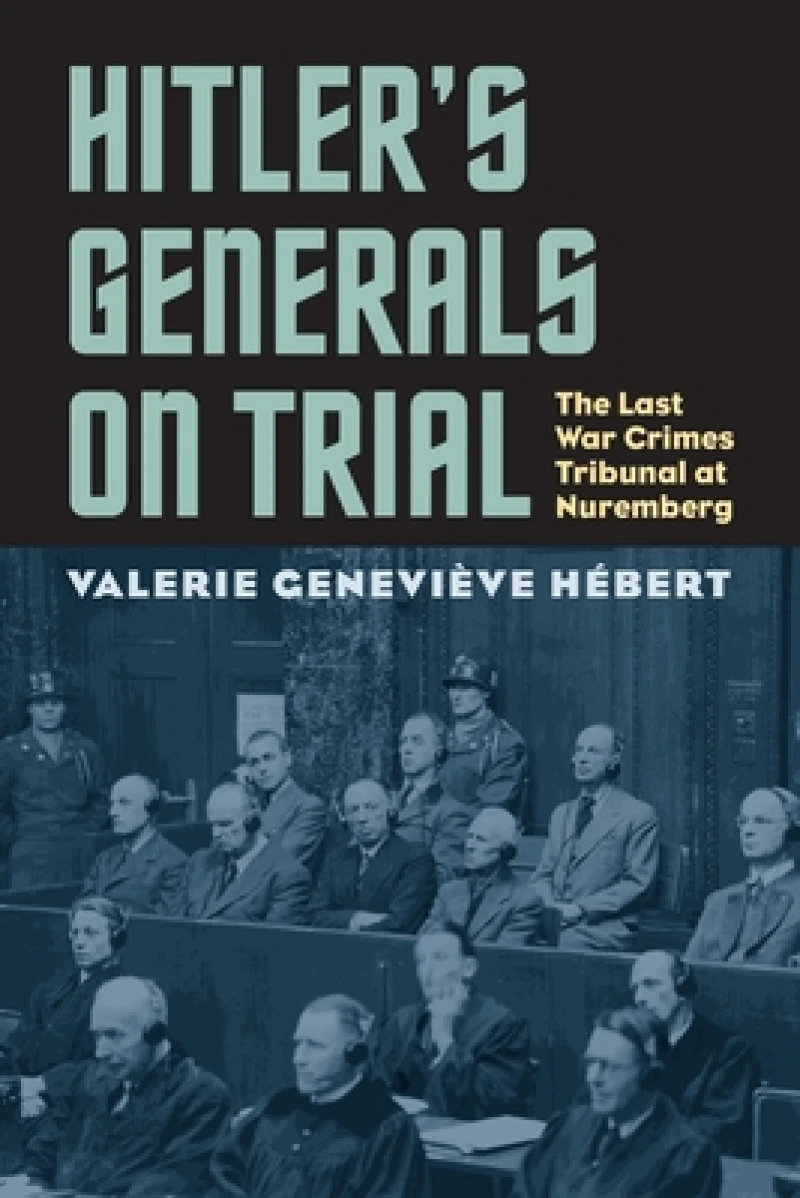
Hitler''s Generals on Trial : The Last War Crimes Tribunal at Nuremberg
Book Details
Format
Paperback / Softback
ISBN-10
0700632670
ISBN-13
9780700632671
Publisher
University Press of Kansas
Imprint
University Press of Kansas
Country of Manufacture
GB
Country of Publication
GB
Publication Date
Feb 12th, 2021
Print length
376 Pages
Weight
568 grams
Dimensions
15.00 x 23.00 x 2.30 cms
Product Classification:
European historyThe HolocaustSecond World WarEuropean historyThe HolocaustSecond World War
Ksh 5,650.00
Temporarily out of stock, due soon
0 in stock
Delivery Location
Delivery fee: Select location
Secure
Quality
Fast
Superbly researched and impeccably told, Hitler's Generals on Trial addresses fundamental questions concerning the meaning of justice after atrocity and genocide, the moral imperative of punishment for these crimes, the link between justice and memory, and the relevance of the Nuremberg trials for transitional justice processes today.
By prosecuting war crimes, the Nuremberg trials sought to educate West Germans about their criminal past, provoke their total rejection of Nazism, and convert them to democracy. More than all of the other Nuremberg proceedings, the High Command Case against fourteen of Hitler’s generals embraced these goals, since the charges—the murder of POWs, the terrorizing of civilians, the extermination of Jews—also implicated the 20 million ordinary Germans who had served in the military. This trial was the true test of Nuremberg’s potential to inspire national reflection on Nazi crime.
Its importance notwithstanding, the High Command Case has been largely neglected by historians. Valerie HÉbert’s study—the only book in English on the subject—draws extensively on the voluminous trial records to reconstruct these proceedings in full: prosecution and defense strategies; evidence for and against the defendants and the military in general; the intricacies of the judgment; and the complex legal issues raised, such as the defense of superior orders, military necessity, and command responsibility. Crucially, she also examines the West German reaction to the trial and the intense debate over its fairness and legitimacy, ignited by the sentencing of soldiers who were seen by the public as having honorably defended their country.
HÉbert argues that the High Command Trial was itself a success, producing eleven guilty verdicts along with an incontrovertible record of the German military’s crimes. But, viewing the trial from beyond the courtroom, she also contends that it made no lasting imprint on the German public’s consciousness. And because the United States was eager to secure West Germany as an ally in the Cold War, American officials eventually consented to parole and clemency programs for all of the convicted officers, so that by the late 1950s not one remained imprisoned.
Superbly researched and impeccably told, Hitler’s Generals on Trial addresses fundamental questions concerning the meaning of justice after atrocity and genocide, the moral imperative of punishment for these crimes, the link between justice and memory, and the relevance of the Nuremberg trials for transitional justice processes today. Inasmuch as these trials coined the vocabulary of modern international criminal law and set an agenda for transitional justice that remains in place today, HÉbert’s book marks a major contribution to military and legal history.
Its importance notwithstanding, the High Command Case has been largely neglected by historians. Valerie HÉbert’s study—the only book in English on the subject—draws extensively on the voluminous trial records to reconstruct these proceedings in full: prosecution and defense strategies; evidence for and against the defendants and the military in general; the intricacies of the judgment; and the complex legal issues raised, such as the defense of superior orders, military necessity, and command responsibility. Crucially, she also examines the West German reaction to the trial and the intense debate over its fairness and legitimacy, ignited by the sentencing of soldiers who were seen by the public as having honorably defended their country.
HÉbert argues that the High Command Trial was itself a success, producing eleven guilty verdicts along with an incontrovertible record of the German military’s crimes. But, viewing the trial from beyond the courtroom, she also contends that it made no lasting imprint on the German public’s consciousness. And because the United States was eager to secure West Germany as an ally in the Cold War, American officials eventually consented to parole and clemency programs for all of the convicted officers, so that by the late 1950s not one remained imprisoned.
Superbly researched and impeccably told, Hitler’s Generals on Trial addresses fundamental questions concerning the meaning of justice after atrocity and genocide, the moral imperative of punishment for these crimes, the link between justice and memory, and the relevance of the Nuremberg trials for transitional justice processes today. Inasmuch as these trials coined the vocabulary of modern international criminal law and set an agenda for transitional justice that remains in place today, HÉbert’s book marks a major contribution to military and legal history.
Get Hitler''s Generals on Trial by at the best price and quality guaranteed only at Werezi Africa's largest book ecommerce store. The book was published by University Press of Kansas and it has pages.

