
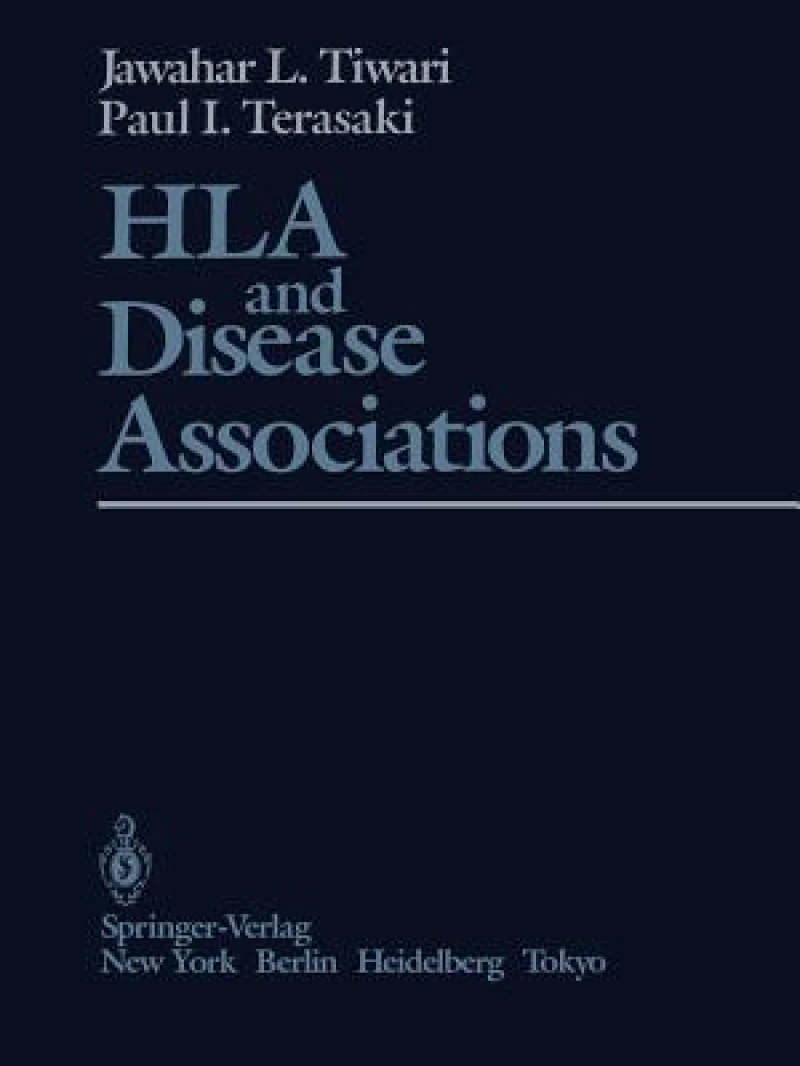
HLA and Disease Associations
Softcover reprint of the original 1st ed. 1985
Book Details
Format
Paperback / Softback
ISBN-10
1461385474
ISBN-13
9781461385479
Edition
Softcover reprint of the original 1st ed. 1985
Publisher
Springer-Verlag New York Inc.
Imprint
Springer-Verlag New York Inc.
Country of Manufacture
US
Country of Publication
GB
Publication Date
Nov 9th, 2011
Print length
472 Pages
Weight
1,248 grams
Dimensions
21.30 x 28.30 x 2.90 cms
Product Classification:
Medical geneticsImmunologyAllergiesMedicine: Allergies
Ksh 16,200.00
Temporarily out of stock, due soon
0 in stock
Delivery Location
Delivery fee: Select location
Secure
Quality
Fast
Although iden tification of HLA antigens was of primary clinical importance in transplantation 2 and of great basic interest in human genetics and anthropology, a rather un expected bonus has been the determination that HLA antigens are associated with disease susceptibility to a greater extent than any other known genetic marker in man.
The human leukocyte antigen (HLA) or tissue types are the products of a rapidly developing field of knowledge within the last 20 years. In the early stages of the research many investigators suspected the existence of a complex series of transplantation antigens, but it was widely believed that these antigens would not be well-defined even in this century. Yet in the last two decades as many as 124 different HLA antigens determined by at least 7 very closely linked genes located on the short arm of chromosome 6 have been identified and subsequently agreed upon by an international nomenclature committee. 1 Extensive international collaboration fueled by the potential clinical application of these antigens to clinical transplantation has advanced the field rapidly. There were nine inter national histocompatibility workshops held during this period. Although iden tification of HLA antigens was of primary clinical importance in transplantation 2 and of great basic interest in human genetics and anthropology, a rather un expected bonus has been the determination that HLA antigens are associated with disease susceptibility to a greater extent than any other known genetic marker in man. In the past, many genetic polymorphisms have been suspected to be associated with diseases. The most extensively studied markers are blood groups, enzymes, and serum proteins. A comprehensive account of published studies, totalling approximately 1,000, of these markers is available in a book by Mourant et al.
Get HLA and Disease Associations by at the best price and quality guaranteed only at Werezi Africa's largest book ecommerce store. The book was published by Springer-Verlag New York Inc. and it has pages.

