
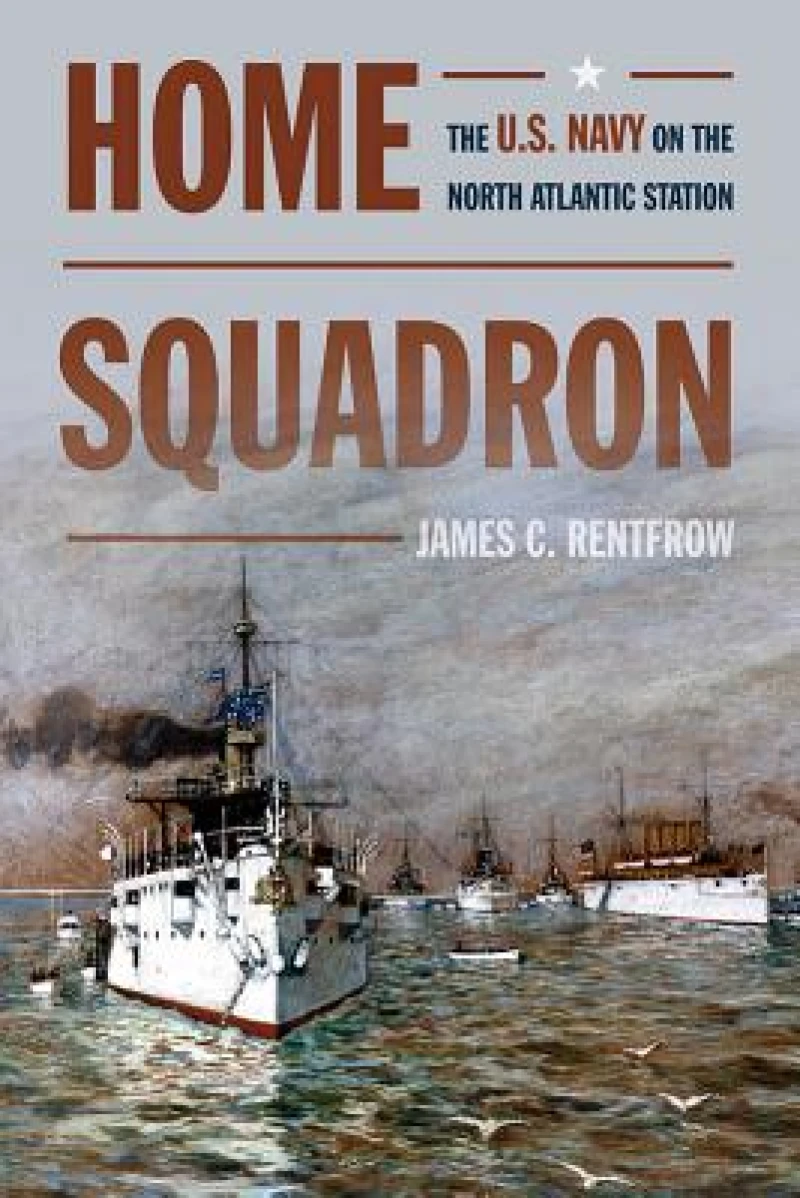
Home Squadron : The U.S. Navy on the North Atlantic Station
Book Details
Format
Hardback or Cased Book
ISBN-10
1612514472
ISBN-13
9781612514475
Publisher
Naval Institute Press
Imprint
Naval Institute Press
Country of Manufacture
US
Country of Publication
GB
Publication Date
May 29th, 2014
Print length
240 Pages
Weight
558 grams
Dimensions
16.50 x 24.30 x 2.50 cms
Product Classification:
History of the AmericasMilitary historyNaval forces & warfare
Ksh 7,550.00
Re-Printing
0 in stock
Delivery Location
Delivery fee: Select location
Secure
Quality
Fast
This study examines the transformation of the United States Navy as a fighting organisation that took place on the North Atlantic Station between 1874 and 1897. At the beginning of this period, the warships assigned to this station were collectively administered by a rear-admiral, but were operationally deployed as individual units, each of whose actions were directed by their captains. By 1897 the North Atlantic, or “Home” Squadron as it was known, was a group of warships constituting a protean battle fleet – that is, an organised body moving and fighting in close-order, which meant that the actions of the captains were directed by a commanding admiral. The process of the development of an American battle fleet resulted in the construction of a new organisational identity for the North Atlantic Squadron. This process was as critical as the eventual outcome. It was not linear, but one in which progress in critical areas was modulated by conflicting demands that caused distraction. From 1874-1888, exercises in fleet tactics under steam were carried out sporadically utilising existing wooden cruising vessels. From 1889-1894, the last wooden cruisers were decommissioned and the Squadron consisted entirely of new steel warships. Ad-hoc concentrations of vessels for purposes besides exercise and training retarded the continued development of doctrine and tactics necessary for a multi-ship fighting capability during this time. However, much work was done to develop a concept of multi-ship operations. From 1895-1897, the identity of the North Atlantic Squadron as a combat unit solidified. Tactical exercises were held that had specific offensive and defensive wartime applications. These exercises were necessary to develop a combat capability. The results of this study demonstrate that the United States government had an interest in developing an offensive naval combat capability as early as the 1870’s. Based on the record of the North Atlantic Squadron, it is argued that imperial aspirations, in the sense of possessing a capability to restrict the actions of other great powers in the Caribbean region, existed prior to the War of 1898. However, the process of change often resulted in the appearance of capability without the rigorous exercise necessary to possess it.
This study examines the transformation of the United States Navy as a fighting organization that took place on the North Atlantic Station between 1874 and 1897. At the beginning of this period, the warships assigned to this station were collectively administered by a rear-admiral, but were operationally deployed as individual units, each of whose actions were directed by their captains. By 1897 the North Atlantic, or “Home” Squadron as it was known, was a group of warships constituting a protean battle fleet - that is, an organized body moving and fighting in close-order, which meant that the actions of the captains were directed by a commanding admiral. The process of the development of an American battle fleet resulted in the construction of a new organizational identity for the North Atlantic Squadron. This process was as critical as the eventual outcome. It was not linear, but one in which progress in critical areas was modulated by conflicting demands that caused distraction. From 1874-1888, exercises in fleet tactics under steam were carried out sporadically utilizing existing wooden cruising vessels. From 1889-1894, the last wooden cruisers were decommissioned and the Squadron consisted entirely of new steel warships. Ad-hoc concentrations of vessels for purposes besides exercise and training retarded the continued development of doctrine and tactics necessary for a multi-ship fighting capability during this time. However, much work was done to develop a concept of multi-ship operations. From 1895-1897, the identity of the North Atlantic Squadron as a combat unit solidified. Tactical exercises were held that had specific offensive and defensive wartime applications. These exercises were necessary to develop a combat capability. The results of this study demonstrate that the United States government had an interest in developing an offensive naval combat capability as early as the 1870''s. Based on the record of the North Atlantic Squadron, it is argued that imperial aspirations, in the sense of possessing a capability to restrict the actions of other great powers in the Caribbean region, existed prior to the War of 1898. However, the process of change often resulted in the appearance of capability without the rigorous exercise necessary to possess it.
Get Home Squadron by at the best price and quality guaranteed only at Werezi Africa's largest book ecommerce store. The book was published by Naval Institute Press and it has pages.

