
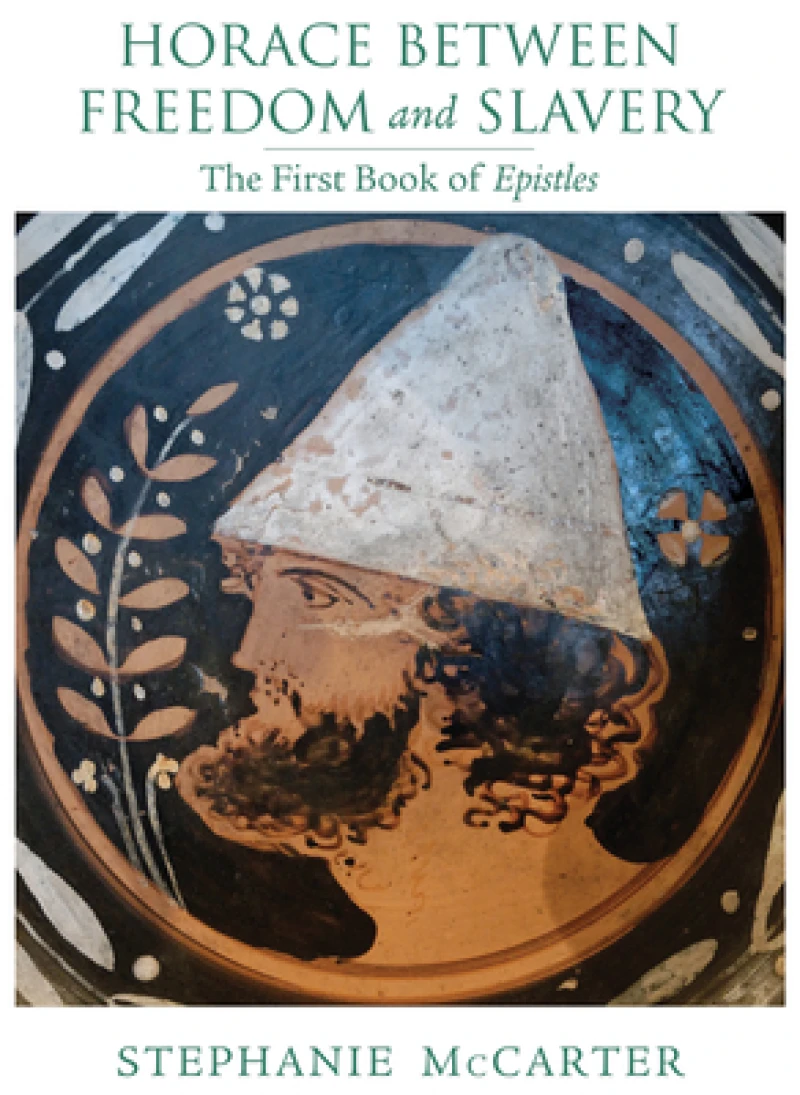
Horace Between Freedom and Slavery : The First Book of Epistles
Book Details
Format
Hardback or Cased Book
Book Series
Wisconsin Studies in Classics
ISBN-10
0299305708
ISBN-13
9780299305703
Publisher
University of Wisconsin Press
Imprint
University of Wisconsin Press
Country of Manufacture
US
Country of Publication
GB
Publication Date
Dec 8th, 2015
Print length
384 Pages
Weight
708 grams
Dimensions
23.90 x 16.00 x 2.90 cms
Ksh 9,650.00
Temporarily out of stock, due soon
0 in stock
Delivery Location
Delivery fee: Select location
Secure
Quality
Fast
During the Roman transition from Republic to Empire in the first century B.C.E., the poet Horace found his own public success in the era of Emperor Augustus at odds with his desire for greater independence. In Horace between Freedom and Slavery, Stephanie McCarter offers new insights into Horace’s complex presentation of freedom in the first book of his Epistles and connects it to his most enduring and celebrated moral exhortation, the golden mean.
She argues that, although Horace commences the Epistles with an uncompromising insistence on freedom, he ultimately adopts a middle course. She shows how Horace explores in the poems the application of moderate freedom first to philosophy, then to friendship, poetry, and place. Rather than rejecting philosophical masters, Horace draws freely on them without swearing permanent allegiance to any—a model for compromise that allows him to enjoy poetic renown and friendships with the city’s elite while maintaining a private sphere of freedom. This moderation and adaptability, McCarter contends, become the chief ethical lessons that Horace learns for himself and teaches to others. She reads Horace’s reconfiguration of freedom as a political response to the transformations of the new imperial age.
She argues that, although Horace commences the Epistles with an uncompromising insistence on freedom, he ultimately adopts a middle course. She shows how Horace explores in the poems the application of moderate freedom first to philosophy, then to friendship, poetry, and place. Rather than rejecting philosophical masters, Horace draws freely on them without swearing permanent allegiance to any—a model for compromise that allows him to enjoy poetic renown and friendships with the city’s elite while maintaining a private sphere of freedom. This moderation and adaptability, McCarter contends, become the chief ethical lessons that Horace learns for himself and teaches to others. She reads Horace’s reconfiguration of freedom as a political response to the transformations of the new imperial age.
Get Horace Between Freedom and Slavery by at the best price and quality guaranteed only at Werezi Africa's largest book ecommerce store. The book was published by University of Wisconsin Press and it has pages.

