
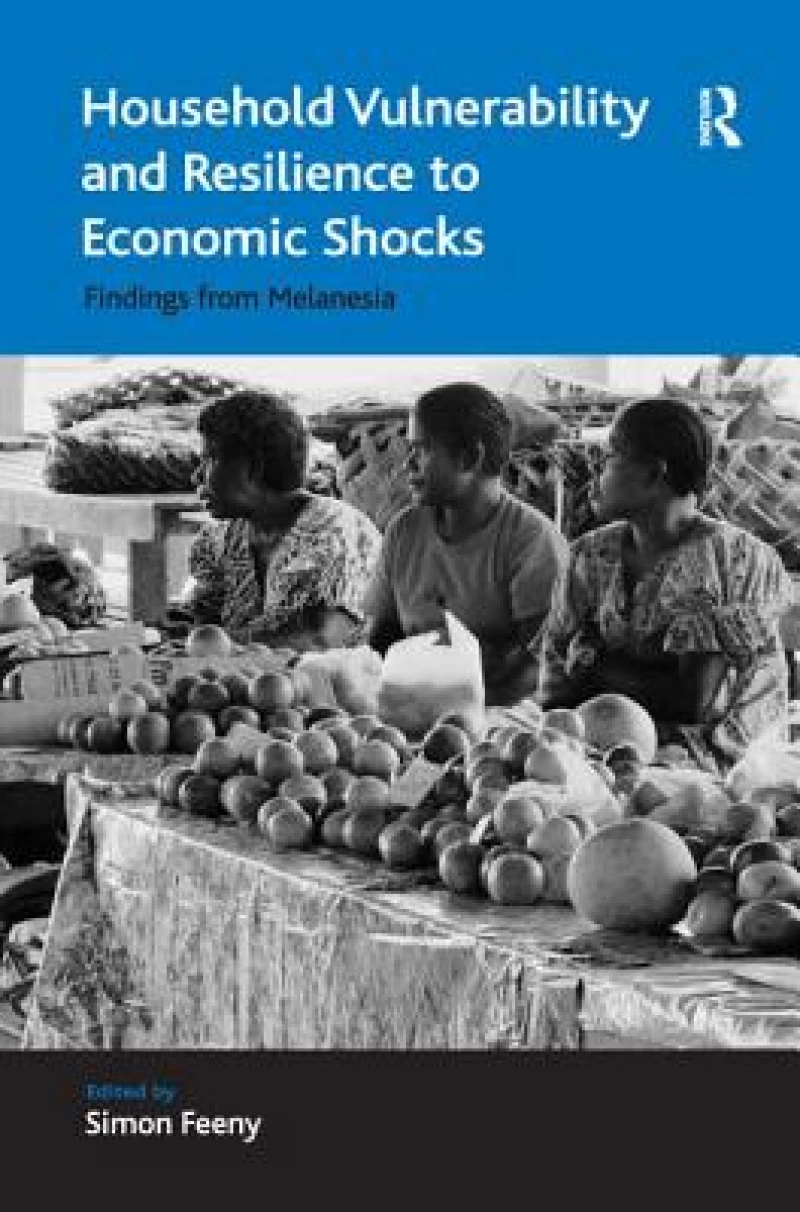
Household Vulnerability and Resilience to Economic Shocks : Findings from Melanesia
by
Simon Feeny
Book Details
Format
Paperback / Softback
ISBN-10
1138276693
ISBN-13
9781138276697
Publisher
Taylor & Francis Ltd
Imprint
Routledge
Country of Manufacture
GB
Country of Publication
GB
Publication Date
Nov 28th, 2016
Print length
166 Pages
Weight
453 grams
Ksh 11,000.00
Werezi Extended Catalogue
0 in stock
Delivery Location
Delivery fee: Select location
Secure
Quality
Fast
Focusing on the vulnerability and resilience to economic shocks at the household level, this book draws on extensive research activities carried out in two Melanesia countries: the Solomon Islands and Vanuatu. In particular, it identifies the household impacts of the recent food, fuel and economic crises. The contributors also examine resilience by identifying how households responded to these recent economic events in order to cope with their impacts. Findings indicate that households are vulnerable to a range of shocks and often struggle to cope with their impacts. Shocks are making it harder for households to meet their basic needs. Households in Melanesia are facing increasing demands for money, in particular for school fees, basic foodstuffs and customary obligations. Concurrently, there are limited domestic opportunities for formal employment. Traditional social support networks are strong and are an important form of resilience. However, there is evidence that they are disintegrating. Of particular focus are the gendered impacts. Women are found to bear a disproportionate share of the burden in adjusting to household shocks. The authors highlight key areas in which public policy and development programmes can reduce household vulnerability and increase their resilience to future economic shocks.
Get Household Vulnerability and Resilience to Economic Shocks by at the best price and quality guaranteed only at Werezi Africa's largest book ecommerce store. The book was published by Taylor & Francis Ltd and it has pages.

