
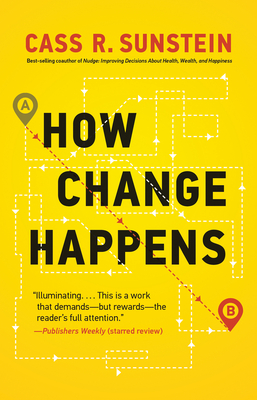
How Change Happens
Book Details
Format
Paperback / softback
Book Series
The MIT Press
ISBN-10
0262538989
ISBN-13
9780262538985
Publisher
MIT Press Ltd
Imprint
MIT Press
Country of Manufacture
US
Country of Publication
GB
Publication Date
Apr 14th, 2020
Print length
344 Pages
Weight
452 grams
Dimensions
22.30 x 14.50 x 2.30 cms
Product Classification:
Media studiesSocial and ethical issuesMedia studiesSocial issues & processes
KSh 3,050.00
Werezi Extended Catalogue
Delivery in 12 days
2 copies in stock
Delivery Location
Delivery fee: Select location
Delivery in 12 days
Secure
Quality
Fast
An “illuminating” study that reveals the different ways social change occurs—for readers of Freakonomics and Thinking, Fast and Slow (The New York Times)
How does social change happen? When do social movements take off? Sexual harassment was once something that women had to endure; now a movement has risen up against it. White nationalist sentiments, on the other hand, were largely kept out of mainstream discourse; now there is no shortage of media outlets for them. In this book, with the help of behavioral economics, psychology, and other fields, Cass Sunstein casts a bright new light on how change happens.
Sunstein focuses on the crucial role of social norms—and on their frequent collapse. When norms lead people to silence themselves, even an unpopular status quo can persist. Then one day, someone challenges the norm—a child who exclaims that the emperor has no clothes; a woman who says “me too.” Sometimes suppressed outrage is unleashed, and long-standing practices fall.
Sometimes change is more gradual, as “nudges” help produce new and different decisions—apps that count calories; texted reminders of deadlines; automatic enrollment in green energy or pension plans. Sunstein explores what kinds of nudges are effective and shows why nudges sometimes give way to bans and mandates. Finally, he considers social divisions, social cascades, and “partyism,” when identification with a political party creates a strong bias against all members of an opposing party—which can both fuel and block social change.
How does social change happen? When do social movements take off? Sexual harassment was once something that women had to endure; now a movement has risen up against it. White nationalist sentiments, on the other hand, were largely kept out of mainstream discourse; now there is no shortage of media outlets for them. In this book, with the help of behavioral economics, psychology, and other fields, Cass Sunstein casts a bright new light on how change happens.
Sunstein focuses on the crucial role of social norms—and on their frequent collapse. When norms lead people to silence themselves, even an unpopular status quo can persist. Then one day, someone challenges the norm—a child who exclaims that the emperor has no clothes; a woman who says “me too.” Sometimes suppressed outrage is unleashed, and long-standing practices fall.
Sometimes change is more gradual, as “nudges” help produce new and different decisions—apps that count calories; texted reminders of deadlines; automatic enrollment in green energy or pension plans. Sunstein explores what kinds of nudges are effective and shows why nudges sometimes give way to bans and mandates. Finally, he considers social divisions, social cascades, and “partyism,” when identification with a political party creates a strong bias against all members of an opposing party—which can both fuel and block social change.
Get How Change Happens by Cass R. Sunstein at the best price and quality guaranteed only at Werezi Africa's largest book ecommerce store. The book was published by MIT Press Ltd and it has 344 pages.
Customers Who Bought This Also Bought
The Sovereign Individual
KSh 3,600.00
Message
KSh 3,400.00

Covering Islam
KSh 2,350.00
Stranger Faces
KSh 2,500.00
Careless People
KSh 2,000.00
Careless People
KSh 3,950.00

Medium is the Massage
KSh 2,000.00

Let Me Tell You What I Mean
KSh 2,000.00

Manufacturing Consent
KSh 2,350.00
A Web of Our Own Making
KSh 4,650.00
Understanding Media
KSh 5,750.00

Chokepoint Capitalism
KSh 2,000.00
More by Cass R. Sunstein
Noise
KSh 2,000.00
Noise
KSh 2,000.00
Nudge
KSh 5,000.00
Noise Ex
KSh 1,450.00

The Ethics of Influence
KSh 3,400.00

On Liberalism
KSh 3,800.00

How to Become Famous
KSh 4,350.00

Climate Justice
KSh 4,150.00

Animals Matter
KSh 3,600.00

The Price of Happiness
KSh 5,800.00
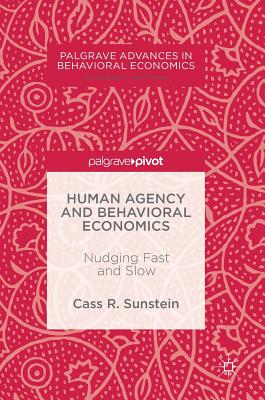
Human Agency and Behavioral Economics
KSh 9,900.00
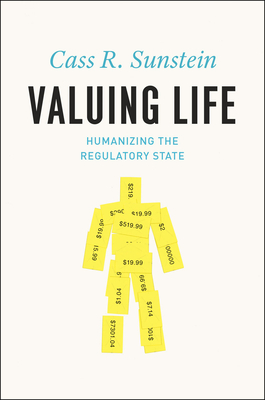
Valuing Life – Humanizing the Regulatory State
KSh 4,200.00
