
Cart 0
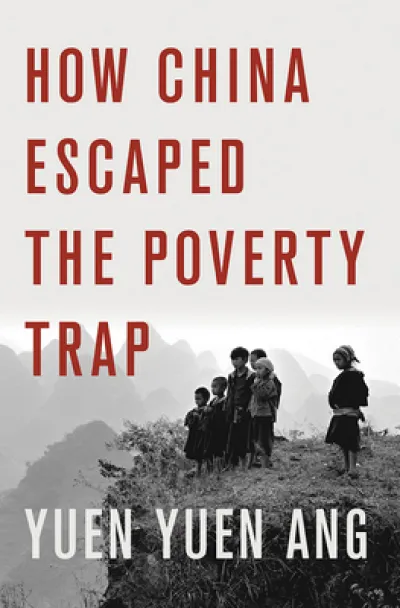
How China Escaped the Poverty Trap
Click to zoom

Share this book

How China Escaped the Poverty Trap

Book Details

Format Paperback / Softback
ISBN-10 150176456X
ISBN-13 9781501764561
Publisher Cornell University Press
Imprint Cornell University Press
Country of Manufacture US
Country of Publication GB
Publication Date Mar 15th, 2022
Print length 277 Pages
Weight 518 grams
Dimensions 15.10 x 22.90 x 2.50 cms
Product Classification: Political economy
Ksh 4,500.00
Werezi Extended Catalogue Delivery in 14 days

Delivery Location

Delivery fee: Select location

Delivery in 14 days

Secure
Quality
Fast
WINNER OF THE 2017 PETER KATZENSTEIN BOOK PRIZE "BEST OF BOOKS IN 2017" BY FOREIGN AFFAIRS WINNER OF THE 2018 VIVIAN ZELIZER PRIZE BEST BOOK AWARD IN ECONOMIC SOCIOLOGY "How China Escaped the Poverty Trap truly offers game-changing ideas for the analysis and implementation of socio-economic development and should have a major impact across many social sciences." - Zelizer Best Book in Economic Sociology Prize Committee Acclaimed as "game changing" and "field shifting," How China Escaped the Poverty Trap advances a new paradigm in the political economy of development and sheds new light on China's rise. How can poor and weak societies escape poverty traps? Political economists have traditionally offered three answers: "stimulate growth first," "build good institutions first," or "some fortunate nations inherited good institutions that led to growth." Yuen Yuen Ang rejects all three schools of thought and their underlying assumptions: linear causation, a mechanistic worldview, and historical determinism. Instead, she launches a new paradigm grounded in complex adaptive systems, which embraces the reality of interdependence and humanity's capacity to innovate. Combining this original lens with more than 400 interviews with Chinese bureaucrats and entrepreneurs, Ang systematically reenacts the complex process that turned China from a communist backwater into a global juggernaut in just 35 years. Contrary to popular misconceptions, she shows that what drove China's great transformation was not centralized authoritarian control, but "directed improvisation"-top-down directions from Beijing paired with bottom-up improvisation among local officials. Her analysis reveals two broad lessons on development. First, transformative change requires an adaptive governing system that empowers ground-level actors to create new solutions for evolving problems. Second, the first step out of the poverty trap is to "use what you have"-harnessing existing resources to kick-start new markets, even if that means defying first-world norms. Bold and meticulously researched, How China Escaped the Poverty Trap opens up a whole new avenue of thinking for scholars, practitioners, and anyone seeking to build adaptive systems.

WINNER OF THE 2017 PETER KATZENSTEIN BOOK PRIZE
"BEST OF BOOKS IN 2017" BY FOREIGN AFFAIRS
WINNER OF THE 2018 VIVIAN ZELIZER PRIZE BEST BOOK AWARD IN ECONOMIC SOCIOLOGY

"How China Escaped the Poverty Trap truly offers game-changing ideas for the analysis and implementation of socio-economic development and should have a major impact across many social sciences."
― Zelizer Best Book in Economic Sociology Prize Committee

Acclaimed as "game changing" and "field shifting," How China Escaped the Poverty Trap advances a new paradigm in the political economy of development and sheds new light on China''s rise.

How can poor and weak societies escape poverty traps? Political economists have traditionally offered three answers: "stimulate growth first," "build good institutions first," or "some fortunate nations inherited good institutions that led to growth."

Yuen Yuen Ang rejects all three schools of thought and their underlying assumptions: linear causation, a mechanistic worldview, and historical determinism. Instead, she launches a new paradigm grounded in complex adaptive systems, which embraces the reality of interdependence and humanity''s capacity to innovate.

Combining this original lens with more than 400 interviews with Chinese bureaucrats and entrepreneurs, Ang systematically reenacts the complex process that turned China from a communist backwater into a global juggernaut in just 35 years. Contrary to popular misconceptions, she shows that what drove China''s great transformation was not centralized authoritarian control, but "directed improvisation"—top-down directions from Beijing paired with bottom-up improvisation among local officials.

Her analysis reveals two broad lessons on development. First, transformative change requires an adaptive governing system that empowers ground-level actors to create new solutions for evolving problems. Second, the first step out of the poverty trap is to "use what you have"—harnessing existing resources to kick-start new markets, even if that means defying first-world norms.

Bold and meticulously researched, How China Escaped the Poverty Trap opens up a whole new avenue of thinking for scholars, practitioners, and anyone seeking to build adaptive systems.


Get How China Escaped the Poverty Trap by at the best price and quality guaranteed only at Werezi Africa's largest book ecommerce store. The book was published by Cornell University Press and it has pages.


Mind, Body, & Spirit

Price

Ksh 4,500.00

Shopping Cart

Africa largest book store

Sub Total:
Ebooks

Digital Library
Coming Soon

Our digital collection is currently being curated to ensure the best possible reading experience on Werezi. We'll be launching our Ebooks platform shortly.