

How Data Need People : The Social and Epistemic Practice of a Data-Rich Science
by
Gotz Hoeppe
Book Details
Format
Paperback / softback
ISBN-10
1009686739
ISBN-13
9781009686730
Publisher
Cambridge University Press
Imprint
Cambridge University Press
Country of Manufacture
GB
Country of Publication
GB
Publication Date
Jun 18th, 2026
Print length
300 Pages
Weight
440 grams
Dimensions
22.80 x 15.20 x 1.90 cms
KSh 5,300.00
Currently unavailable
0 in stock
Delivery Location
Delivery fee: Select location
Secure
Quality
Fast
Taking an anthropological approach to data-rich science, this book examines the social interactions, relations, and accountabilities that shape how scientists and technicians make, use, publish, and reuse digital data. It is an essential reading for researchers, students, and others interested in data science and science and technology studies.
From genome sequencing to large sky surveys, digital technologies produce massive datasets that promise unprecedented scientific insights. But data, for being good to use and reuse, need people – scientists, technicians, and administrators – as embodied, evaluative, social humans. In this book, anthropologist Götz Hoeppe draws on an ethnography of astronomical research to examine the media and practices that scientists and technicians use to instruct graduate students, make diagrams for data calibration and discovery, organize collaborative work, negotiate the ethics of open access, encode their knowledge in datasets – and undertake social inquiries along the way. This book offers a reflection on the sociality of data-rich research that will benefit attempts to integrate human and machine learning. It will be of interest for students and scholars in data science and science and technology studies, as well as in anthropology, sociology, history, and the philosophy of science. This book is also available Open Access on Cambridge Core.
Get How Data Need People by Gotz Hoeppe at the best price and quality guaranteed only at Werezi Africa's largest book ecommerce store. The book was published by Cambridge University Press and it has 300 pages.
Customers Who Bought This Also Bought

How to Win the Premier League
KSh 3,000.00

Marketing Analytics
KSh 6,600.00

Data Analysis
KSh 35,100.00

Elementary Statistics
KSh 20,350.00
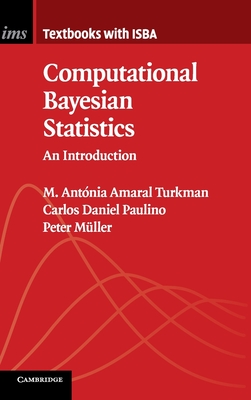
Computational Bayesian Statistics
KSh 21,600.00

Orthonormal Series Estimators
KSh 16,200.00
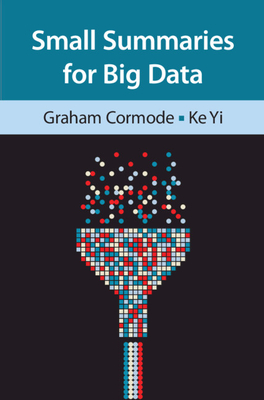
Small Summaries for Big Data
KSh 9,550.00
Applied Advanced Analytics
KSh 27,000.00

Getting Data Science Done
KSh 3,950.00

Attacking the Space
KSh 4,500.00

Accelerating Deep Neural Networks
KSh 7,350.00
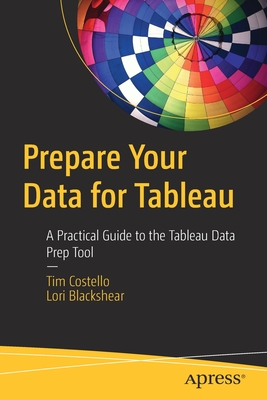
Prepare Your Data for Tableau
KSh 5,400.00

