
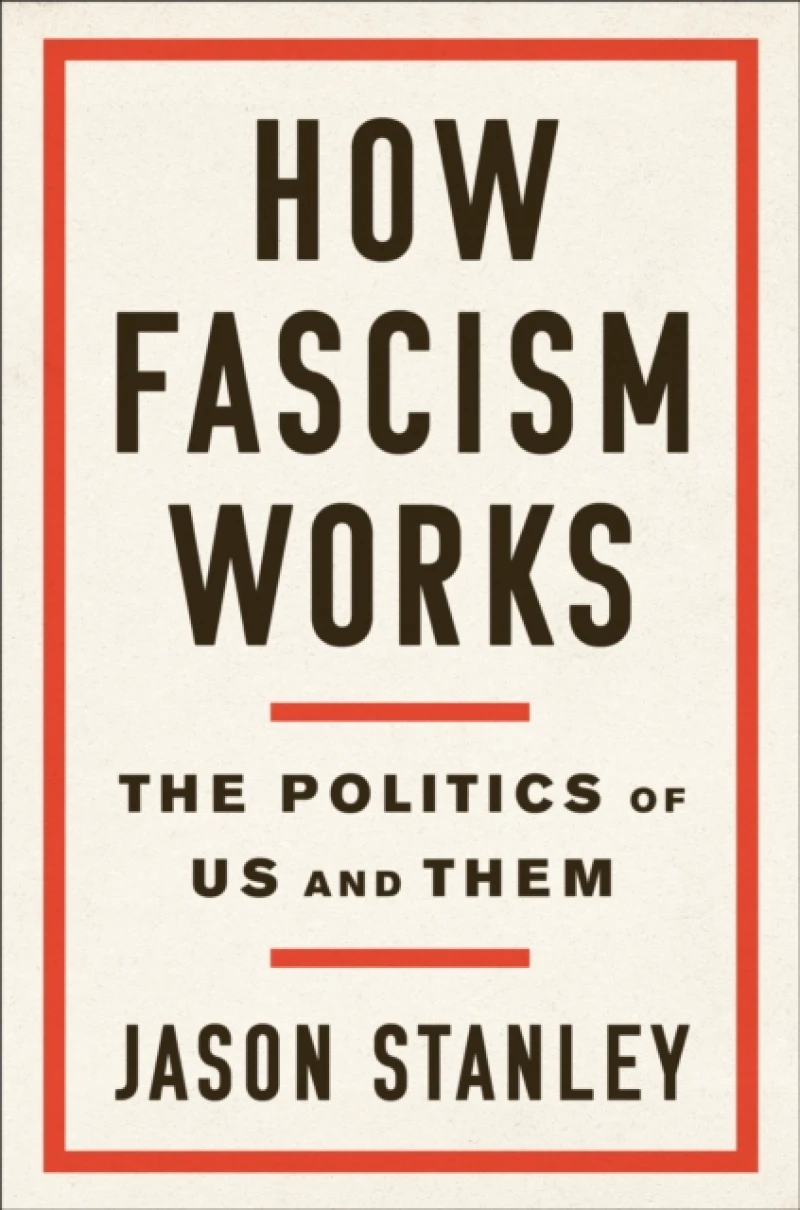
How Fascism Works
Book Details
Format
Hardback or Cased Book
ISBN-10
0525511830
ISBN-13
9780525511830
Publisher
Random House USA Inc
Imprint
Random House USA Inc
Country of Manufacture
US
Country of Publication
GB
Publication Date
Sep 4th, 2018
Print length
208 Pages
Weight
298 grams
Dimensions
19.60 x 18.80 x 2.10 cms
Product Classification:
General & world history20th century history: c 1900 to c 2000Social & political philosophyPolitical structures / systems: autocracy, totalitarianism and dictatorshipPolitical structures: totalitarianism & dictatorshipHistoryGeneral and world historySocial and political philosophy
Ksh 3,400.00
Werezi Extended Catalogue
Delivery in 14 days
7 copies in stock
Delivery Location
Delivery fee: Select location
Delivery in 14 days
Secure
Quality
Fast
NEW YORK TIMES BESTSELLER • “No single book is as relevant to the present moment.”—Claudia Rankine, author of Citizen
“With unsettling insight and disturbing clarity, How Fascism Works is an essential guidebook to our current national dilemma of democracy vs. authoritarianism.”—Jelani Cobb, New Yorker staff writer
A Yale philosopher identifies the ten pillars of fascist politics, and charts their horrifying rise and deep history.
As a scholar of philosophy and propaganda and the child of refugees of WWII Europe, Jason Stanley has long understood that democratic societies, including the United States, can be vulnerable to fascism. In How Fascism Works, he identifies ten pillars of fascist politics—an appeal to the mythic past, propaganda, anti-intellectualism, unreality, hierarchy, victimhood, law and order, sexual anxiety, favoring “the heartland,” and a dismantling of public goods and unions—that amount to an urgent diagnosis of the tactics right-wing politicians use to break down democracies and a critical lens on the current moment.
Stanley knits together reflections on history, philosophy, sociology, and critical race theory with stories from contemporary Hungary, Poland, India, Myanmar, and the United States, among other nations, making clear the immense dangers of language and beliefs that separate people into an “us” and a “them.” By uncovering disturbing patterns that are as prevalent today as ever, Stanley reveals that the stuff of politics—rhetoric and myth—can become policy and reality all too quickly. Only by recognizing them, he argues, can we begin to resist their most harmful effects and return to democratic ideals.
“With unsettling insight and disturbing clarity, How Fascism Works is an essential guidebook to our current national dilemma of democracy vs. authoritarianism.”—Jelani Cobb, New Yorker staff writer
A Yale philosopher identifies the ten pillars of fascist politics, and charts their horrifying rise and deep history.
As a scholar of philosophy and propaganda and the child of refugees of WWII Europe, Jason Stanley has long understood that democratic societies, including the United States, can be vulnerable to fascism. In How Fascism Works, he identifies ten pillars of fascist politics—an appeal to the mythic past, propaganda, anti-intellectualism, unreality, hierarchy, victimhood, law and order, sexual anxiety, favoring “the heartland,” and a dismantling of public goods and unions—that amount to an urgent diagnosis of the tactics right-wing politicians use to break down democracies and a critical lens on the current moment.
Stanley knits together reflections on history, philosophy, sociology, and critical race theory with stories from contemporary Hungary, Poland, India, Myanmar, and the United States, among other nations, making clear the immense dangers of language and beliefs that separate people into an “us” and a “them.” By uncovering disturbing patterns that are as prevalent today as ever, Stanley reveals that the stuff of politics—rhetoric and myth—can become policy and reality all too quickly. Only by recognizing them, he argues, can we begin to resist their most harmful effects and return to democratic ideals.
Get How Fascism Works by at the best price and quality guaranteed only at Werezi Africa's largest book ecommerce store. The book was published by Random House USA Inc and it has pages.

