
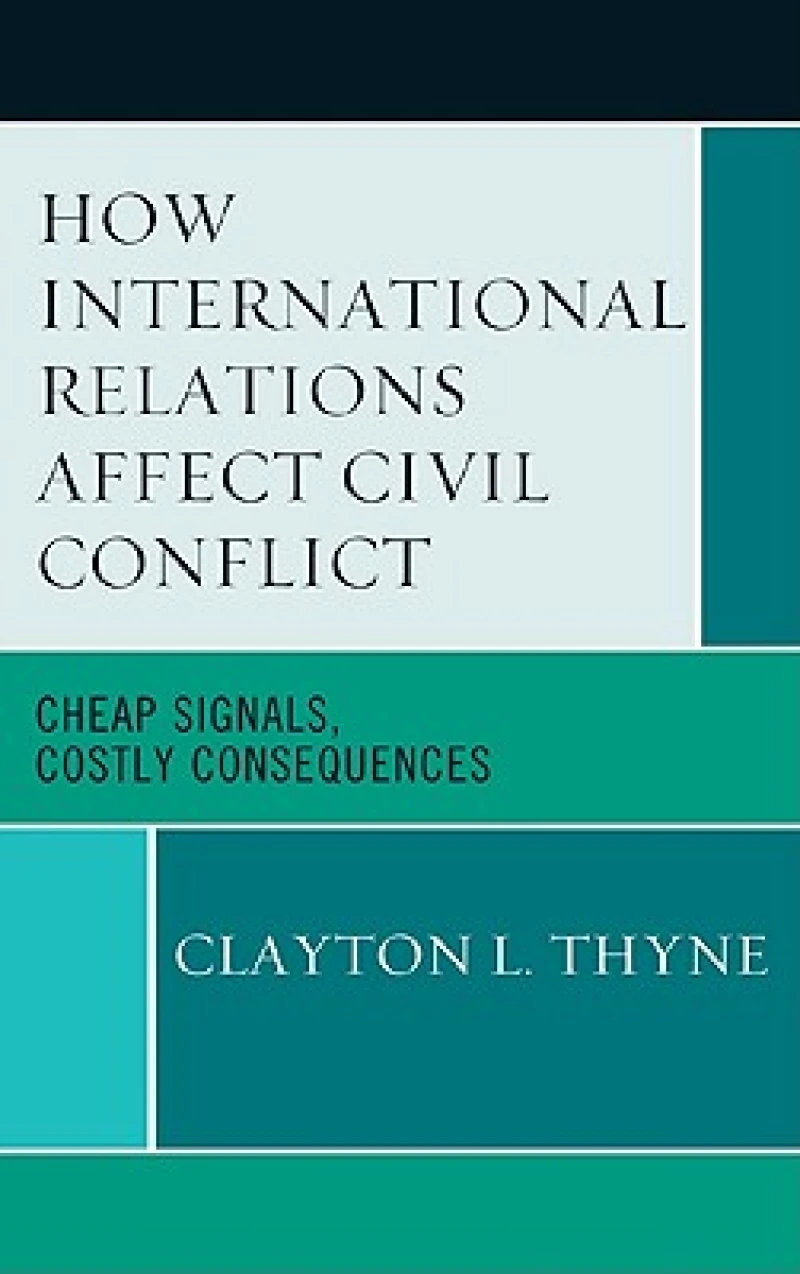
How International Relations Affect Civil Conflict : Cheap Signals, Costly Consequences
Book Details
Format
Hardback or Cased Book
Book Series
Innovations in the Study of World Politics
ISBN-10
0739135465
ISBN-13
9780739135464
Publisher
Bloomsbury Publishing Plc
Imprint
Lexington Books
Country of Manufacture
GB
Country of Publication
GB
Publication Date
Sep 24th, 2009
Print length
254 Pages
Weight
528 grams
Dimensions
24.00 x 16.30 x 2.40 cms
Product Classification:
Political science & theoryPolitical science and theoryInternational relations
Ksh 19,400.00
Manufactured on Demand
0 in stock
Delivery Location
Delivery fee: Select location
Secure
Quality
Fast
Given the appalling consequences of civil wars, why are the competing actors within a state unable to come to a settlement to avoid the costs of conflict? How might external parties affect the likelihood that a civil war begins? How do their actions affect the duration and outcome of civil conflicts that are already underway? How International Relations Affect Civil Conflict draws on three main approaches—bargaining theory, signaling theory, and rational expectations—to examine how external actors might affect the onset, duration and outcome of civil wars. Signals from external actors are important because they represent a potential increase (or decrease) in fighting capabilities for the government or the opposition if a war were to begin. Costly signals should not affect the probability of civil war onset because they are readily observable ex ante, which allows the government and opposition to peacefully adjust their bargaining positions based on changes in relative capabilities. In contrast, cheap hostile signals make civil war more likely by increasing the risk that an opposition group overestimates its ability to stage a successful rebellion with external support. Cheap supportive signals work in the opposite manner because they represent increased fighting capabilities for the government. Furthermore, signals sent in the pre-war period have important implications for the duration and outcome of civil conflicts because competing intrastate actors develop expectations for future interventions prior to deciding to fight. In this book, Clayton L. Thyne tests this theory by examining the likelihood of civil war onset, the duration, and the outcome of all civil wars since 1945, finding strong support from empirical tests for each component of this theory. The conclusion offers specific advice to US policy-makers to prevent the outbreak of civil conflict in states most at-risk for civil war and to help end those that are currently underway. This book will appeal to undergraduate and graduat
Get How International Relations Affect Civil Conflict by at the best price and quality guaranteed only at Werezi Africa's largest book ecommerce store. The book was published by Bloomsbury Publishing Plc and it has pages.

