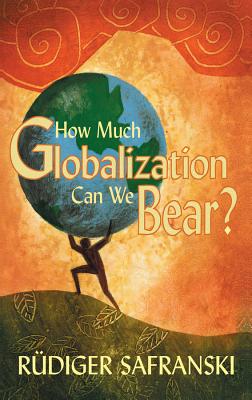
How Much Globalization Can We Bear?
Book Details
Format
Hardback
ISBN-10
0745633889
ISBN-13
9780745633886
Publisher
John Wiley and Sons Ltd
Imprint
Polity Press
Country of Manufacture
GB
Country of Publication
GB
Publication Date
Nov 20th, 2005
Print length
100 Pages
Weight
224 grams
Dimensions
14.30 x 22.30 x 1.30 cms
Product Classification:
GlobalizationGlobalization
KSh 8,100.00
Currently unavailable
0 in stock
Delivery Location
Delivery fee: Select location
Secure
Quality
Fast
According to current deabtes, 'individualization' has frequently been proposed as the conceptual counterpart to 'globalization'. It has often seemed that nothing would be left once these processes have fully unfolded, other than individual human atoms dispersed on a globe without any political, economic or cultural structures.
According to current debates, ’individualization’ has frequently been proposed as the conceptual counterpart to ’globalization’. It has often seemed that nothing would be left once these processes have fully unfolded, other than individual human atoms dispersed on a globe without any political, economic or cultural structures. Regardless of whether this description is based on any good and valid observation, nobody drew the conclusion that suddenly emerges as evident after reading Rüdiger Safranski’s lucid and timely exploration of the issue: globalization, if it occurs, means a radical change in the human condition. It brings human being in direct confrontation with the world in its totality. Almost unnoticed in broader debate, the scenario of globalization entails a return - in new a radical guise - of the time-honoured question of the ways of being-in-the-world of human beings. In this compelling new book, the philosopher Rüdiger Safranski grapples with the pressing problems of the global age: ‘Big Brother’ states, terrorism, international security and the seeming impossibility of ‘world’ peace. He suggests that the era ofglobalization should not be thought of as that epoch in world history in which all human beings will see themselves in the same, indistinct situation. There will always be, Sanfranski argues, some need for understanding one’s own situation by drawing boundaries and conceptualizing ‘otherness’ and individuality.
Get How Much Globalization Can We Bear? by Rudiger Safranski at the best price and quality guaranteed only at Werezi Africa's largest book ecommerce store. The book was published by John Wiley and Sons Ltd and it has 100 pages.
Customers Who Bought This Also Bought

Age of Revolutions
KSh 2,350.00

New Confessions of an Economic Hit Man
KSh 2,700.00

Good Economics for Hard Times
KSh 2,350.00

Winners Take All
KSh 2,350.00

Progress
KSh 3,950.00

No Logo
KSh 2,000.00

World is Flat
KSh 3,050.00

Mouth Full of Blood
KSh 2,350.00
Straight Talk on Trade – Ideas for a Sane World Economy
KSh 2,900.00
Globalization and Its Discontents
KSh 2,500.00

Globalisation, Democracy And Terrorism
KSh 2,350.00

Decolonising My Body
KSh 2,350.00