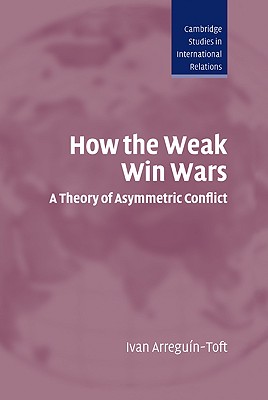
How the Weak Win Wars : A Theory of Asymmetric Conflict
Book Details
Format
Paperback / softback
Book Series
Cambridge Studies in International Relations
ISBN-10
0521548691
ISBN-13
9780521548694
Publisher
Cambridge University Press
Imprint
Cambridge University Press
Country of Manufacture
GB
Country of Publication
GB
Publication Date
Dec 8th, 2005
Print length
274 Pages
Weight
422 grams
Dimensions
23.00 x 15.30 x 1.60 cms
KSh 4,450.00
Currently unavailable
0 in stock
Delivery Location
Delivery fee: Select location
Secure
Quality
Fast
How do the weak defeat the strong? In this 2005 book, Ivan Arreguín-Toft argues that although many factors affect asymmetric conflict outcomes, the interaction of each actor's strategy is the best explanation. This book has implications for scholars of international relations, and policy makers grappling with interstate and civil wars, as well as terrorism.
How do the weak win wars? The likelihood of victory and defeat in asymmetric conflicts depends on the interaction of the strategies weak and strong actors use. Using statistical and in-depth historical analyses of conflicts spanning two hundred years, in this 2005 book Ivan Arregúin-Toft shows that, independent of regime type and weapons technology, the interaction of similar strategic approaches favors strong actors, while opposite strategic approaches favors the weak. This approach to understanding asymmetric conflicts allows us to makes sense of how the United States was able to win its war in Afghanistan (2002) in a few months, while the Soviet Union lost after a decade of brutal war (1979–89). Arreguín-Toft's strategic interaction theory has implications not only for international relations theory, but for policy makers grappling with interstate and civil wars, as well as terrorism.
Get How the Weak Win Wars by Ivan Arreguín-Toft at the best price and quality guaranteed only at Werezi Africa's largest book ecommerce store. The book was published by Cambridge University Press and it has 274 pages.
Customers Who Bought This Also Bought
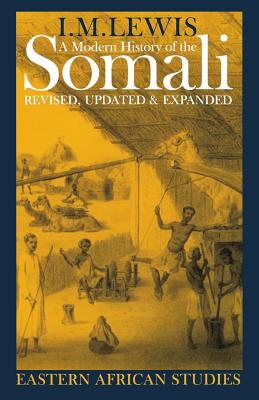
A Modern History of the Somali
KSh 5,300.00
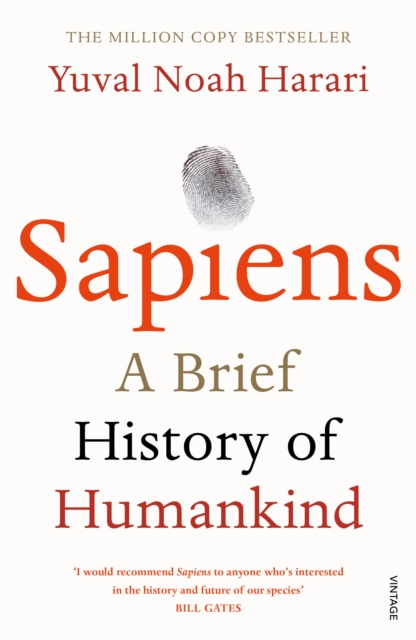
Sapiens
KSh 2,350.00

Rise Fall Great Powers
KSh 3,050.00

Legacy of Violence
KSh 3,150.00
Chip War
KSh 2,000.00
Covering Islam
KSh 2,350.00
They Came Before Columbus
KSh 3,400.00

Hiroshima
KSh 2,000.00
Guns, Germs and Steel
KSh 2,400.00

Silk Roads
KSh 3,050.00

Empire
KSh 2,700.00

Strategy
KSh 4,350.00