
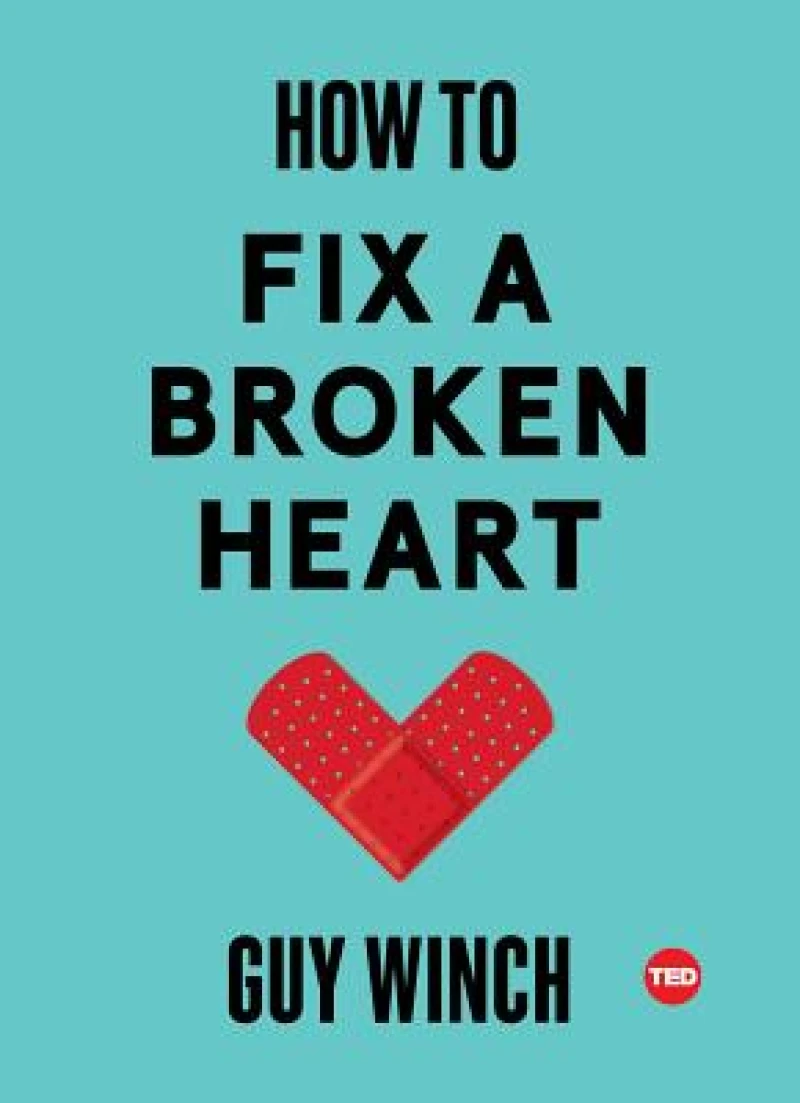
How to Fix a Broken Heart
by
Guy Winch
Book Details
Format
Hardback or Cased Book
Book Series
TED Books
ISBN-10
1501120123
ISBN-13
9781501120121
Publisher
Simon & Schuster/ TED
Imprint
Simon & Schuster/ TED
Country of Manufacture
GB
Country of Publication
GB
Publication Date
Feb 13th, 2018
Print length
128 Pages
Weight
222 grams
Dimensions
13.30 x 18.80 x 1.70 cms
Product Classification:
Psychology: emotions
Ksh 3,600.00
Publisher Out of Stock
0 in stock
Delivery Location
Delivery fee: Select location
Secure
Quality
Fast
Imagine if we treated broken hearts with the same respect and concern we have for broken arms? Psychologist Guy Winch urges us to rethink the way we deal with emotional pain, offering warm, wise, and witty advice for the broken-hearted.
Real heartbreak is unmistakable. We think of nothing else. We feel nothing else. We care about nothing else. Yet while we wouldn't expect someone to return to daily activities immediately after suffering a broken limb, heartbroken people are expected to function normally in their lives, despite the emotional pain they feel. Now psychologist Guy Winch imagines how different things would be if we paid more attention to this unique emotionif only we can understand how heartbreak works, we can begin to fix it.
Through compelling research and new scientific studies, Winch reveals how and why heartbreak impacts our brain and our behavior in dramatic and unexpected ways, regardless of our age. Emotional pain lowers our ability to reason, to think creatively, to problem solve, and to function at our best. In How to Fix a Broken Heart he focuses on two types of emotional painromantic heartbreak and the heartbreak that results from the loss of a cherished pet. These experiences are both accompanied by severe grief responses, yet they are not deemed as important as, for example, a formal divorce or the loss of a close relative. As a result, we are often deprived of the recognition, support, and compassion afforded to those whose heartbreak is considered more significant.
Our heart might be broken, but we do not have to break with it. Winch reveals that recovering from heartbreak always starts with a decision, a determination to move on when our mind is fighting to keep us stuck. We can take control of our lives and our minds and put ourselves on the path to healing. Winch offers a toolkit on how to handle and cope with a broken heart and how to, eventually, move on.
Real heartbreak is unmistakable. We think of nothing else. We feel nothing else. We care about nothing else. Yet while we wouldn't expect someone to return to daily activities immediately after suffering a broken limb, heartbroken people are expected to function normally in their lives, despite the emotional pain they feel. Now psychologist Guy Winch imagines how different things would be if we paid more attention to this unique emotionif only we can understand how heartbreak works, we can begin to fix it.
Through compelling research and new scientific studies, Winch reveals how and why heartbreak impacts our brain and our behavior in dramatic and unexpected ways, regardless of our age. Emotional pain lowers our ability to reason, to think creatively, to problem solve, and to function at our best. In How to Fix a Broken Heart he focuses on two types of emotional painromantic heartbreak and the heartbreak that results from the loss of a cherished pet. These experiences are both accompanied by severe grief responses, yet they are not deemed as important as, for example, a formal divorce or the loss of a close relative. As a result, we are often deprived of the recognition, support, and compassion afforded to those whose heartbreak is considered more significant.
Our heart might be broken, but we do not have to break with it. Winch reveals that recovering from heartbreak always starts with a decision, a determination to move on when our mind is fighting to keep us stuck. We can take control of our lives and our minds and put ourselves on the path to healing. Winch offers a toolkit on how to handle and cope with a broken heart and how to, eventually, move on.
Imagine if we treated broken hearts with the same respect and concern we have for broken arms? Psychologist Guy Winch urges us to rethink the way we deal with emotional pain, offering warm, wise, and witty advice for the broken-hearted.
Real heartbreak is unmistakable. We think of nothing else. We feel nothing else. We care about nothing else. Yet while we wouldn’t expect someone to return to daily activities immediately after suffering a broken limb, heartbroken people are expected to function normally in their lives, despite the emotional pain they feel. Now psychologist Guy Winch imagines how different things would be if we paid more attention to this unique emotion—if only we can understand how heartbreak works, we can begin to fix it.
Through compelling research and new scientific studies, Winch reveals how and why heartbreak impacts our brain and our behavior in dramatic and unexpected ways, regardless of our age. Emotional pain lowers our ability to reason, to think creatively, to problem solve, and to function at our best. In How to Fix a Broken Heart he focuses on two types of emotional pain—romantic heartbreak and the heartbreak that results from the loss of a cherished pet. These experiences are both accompanied by severe grief responses, yet they are not deemed as important as, for example, a formal divorce or the loss of a close relative. As a result, we are often deprived of the recognition, support, and compassion afforded to those whose heartbreak is considered more significant.
Our heart might be broken, but we do not have to break with it. Winch reveals that recovering from heartbreak always starts with a decision, a determination to move on when our mind is fighting to keep us stuck. We can take control of our lives and our minds and put ourselves on the path to healing. Winch offers a toolkit on how to handle and cope with a broken heart and how to, eventually, move on.
Real heartbreak is unmistakable. We think of nothing else. We feel nothing else. We care about nothing else. Yet while we wouldn’t expect someone to return to daily activities immediately after suffering a broken limb, heartbroken people are expected to function normally in their lives, despite the emotional pain they feel. Now psychologist Guy Winch imagines how different things would be if we paid more attention to this unique emotion—if only we can understand how heartbreak works, we can begin to fix it.
Through compelling research and new scientific studies, Winch reveals how and why heartbreak impacts our brain and our behavior in dramatic and unexpected ways, regardless of our age. Emotional pain lowers our ability to reason, to think creatively, to problem solve, and to function at our best. In How to Fix a Broken Heart he focuses on two types of emotional pain—romantic heartbreak and the heartbreak that results from the loss of a cherished pet. These experiences are both accompanied by severe grief responses, yet they are not deemed as important as, for example, a formal divorce or the loss of a close relative. As a result, we are often deprived of the recognition, support, and compassion afforded to those whose heartbreak is considered more significant.
Our heart might be broken, but we do not have to break with it. Winch reveals that recovering from heartbreak always starts with a decision, a determination to move on when our mind is fighting to keep us stuck. We can take control of our lives and our minds and put ourselves on the path to healing. Winch offers a toolkit on how to handle and cope with a broken heart and how to, eventually, move on.
Get How to Fix a Broken Heart by at the best price and quality guaranteed only at Werezi Africa's largest book ecommerce store. The book was published by Simon & Schuster/ TED and it has pages.

