
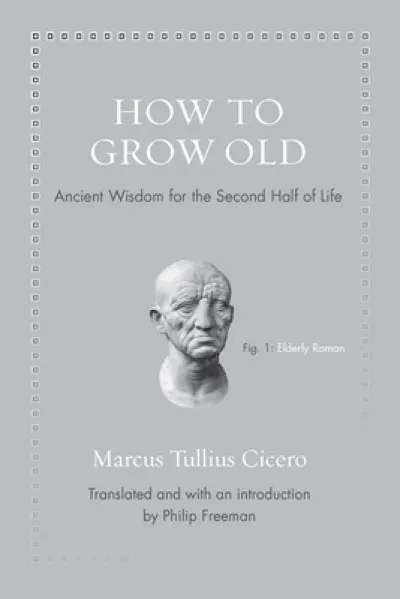
How to Grow Old – Ancient Wisdom for the Second Half of Life : Ancient Wisdom for the Second Half of Life
Book Details
Format
Hardback or Cased Book
Book Series
Ancient Wisdom for Modern Readers
ISBN-10
0691167702
ISBN-13
9780691167701
Publisher
Princeton University Press
Imprint
Princeton University Press
Country of Manufacture
US
Country of Publication
GB
Publication Date
Mar 29th, 2016
Print length
216 Pages
Weight
274 grams
Dimensions
17.90 x 12.40 x 2.20 cms
Ksh 2,700.00
Temporarily out of stock, due soon
0 in stock
Delivery Location
Delivery fee: Select location
Secure
Quality
Fast
Worried that old age will inevitably mean losing your libido, your health, and possibly your marbles too?
Worried that old age will inevitably mean losing your libido, your health, and possibly your marbles too? Well, Cicero has some good news for you. In How to Grow Old, the great Roman orator and statesman eloquently describes how you can make the second half of life the best part of all--and why you might discover that reading and gardening are actually far more pleasurable than sex ever was. Filled with timeless wisdom and practical guidance, Cicero's brief, charming classic--written in 44 BC and originally titled On Old Age--has delighted and inspired readers, from Saint Augustine to Thomas Jefferson, for more than two thousand years. Presented here in a lively new translation with an informative new introduction and the original Latin on facing pages, the book directly addresses the greatest fears of growing older and persuasively argues why these worries are greatly exaggerated--or altogether mistaken. Montaigne said Cicero's book "gives one an appetite for growing old." The American founding father John Adams read it repeatedly in his later years. And today its lessons are more relevant than ever in a world obsessed with the futile pursuit of youth.
Get How to Grow Old – Ancient Wisdom for the Second Half of Life by at the best price and quality guaranteed only at Werezi Africa's largest book ecommerce store. The book was published by Princeton University Press and it has pages.

