
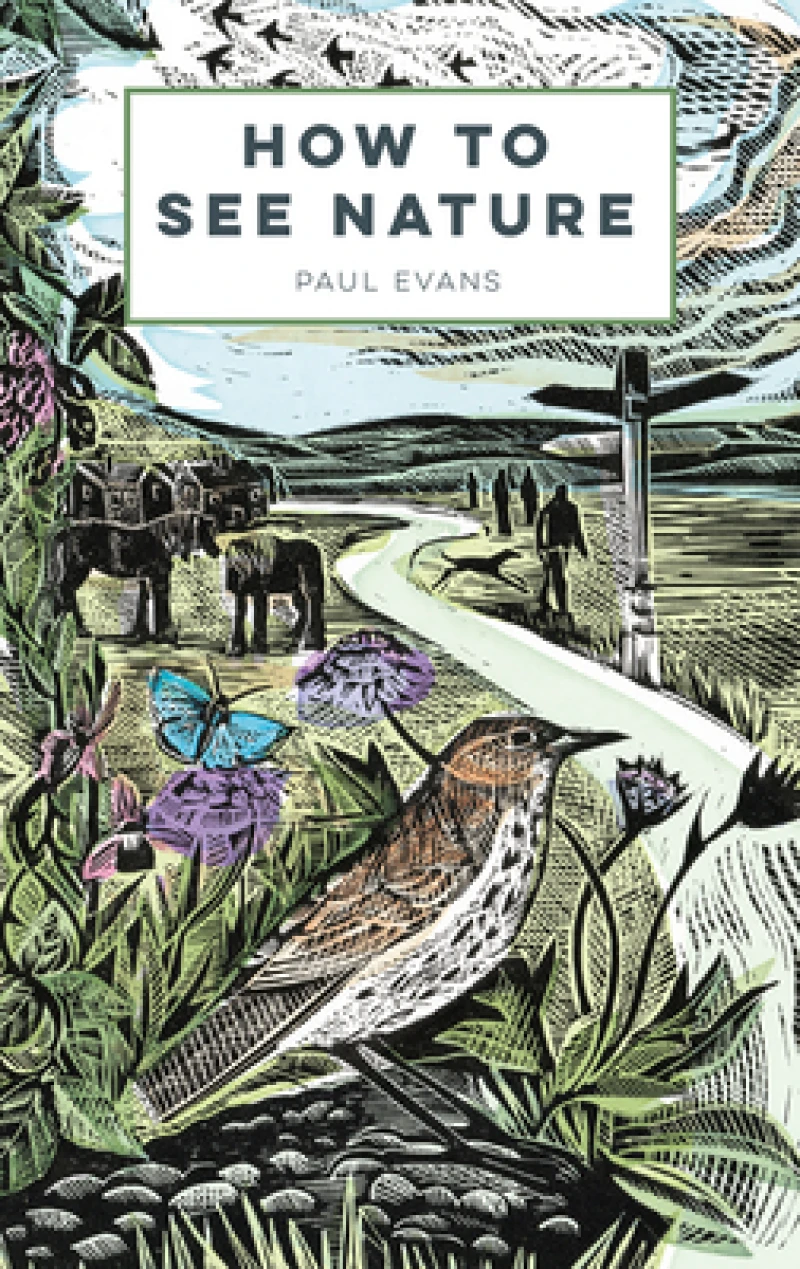
How to See Nature
by
Paul Evans
Book Details
Format
Paperback / Softback
ISBN-10
1849945810
ISBN-13
9781849945813
Publisher
Batsford
Imprint
Batsford
Country of Manufacture
CN
Country of Publication
GB
Publication Date
Jul 9th, 2020
Print length
176 Pages
Weight
256 grams
Dimensions
13.50 x 21.40 x 2.00 cms
Product Classification:
Biography and non-fiction proseProse: non-fictionWildlife: general interest
Ksh 1,600.00
Werezi Extended Catalogue
Delivery in 14 days
3 copies in stock
Delivery Location
Delivery fee: Select location
Delivery in 14 days
Secure
Quality
Fast
A beautifully lyrical collection of observations on the natural world in Britain by the Guardian's country diary writer Paul Evans.
"Pack soup, cheese and a copy of How To See Nature by the Bard of Wenlock Edge and Guardian diarist." John Vidal
With a title taken from the 1940 Batsford book, this is nature writing for the modern reader. Evans weaves historical, cultural and literary references into his writing, ranging from TS Eliot to Bridget Riley, from Hieronymus Bosch to Napoleon.
It is a book both for those that live in the country and those that don''t, but experience nature every day through brownfield edge lands, transport corridors, urban greenspace, industrialised agriculture and fragments of ancient countryside.
The essays include the The Weedling Wild, on the wildlife of the wasteland: ragwort, rosebay willowherb, giant hogweed and the cinnabar moth; Gardens of Light, about the creatures to be found under moonlight: pipistrelle bats, lacewings and orb-weaver spider; The Flow, with tales from the riverbank, estuaries and seas, including kingfisher, minnow, otter and heron. The Commons looks at meadowland with a human footprint, with the Adonis blue butterfly, horseshoe vetch, skylark, black knapweed and the six-belted clearwing moth. The author also looks at the wildlife returned to Britain, such as wild boar and polecats, and finds nature in and around landscapes as varied as a domestic garden or a wild moor.
The book ends with an alphabetical bestiary, an idiosyncratic selection of British wildlife based on the author''s personal encounters.
With a title taken from the 1940 Batsford book, this is nature writing for the modern reader. Evans weaves historical, cultural and literary references into his writing, ranging from TS Eliot to Bridget Riley, from Hieronymus Bosch to Napoleon.
It is a book both for those that live in the country and those that don''t, but experience nature every day through brownfield edge lands, transport corridors, urban greenspace, industrialised agriculture and fragments of ancient countryside.
The essays include the The Weedling Wild, on the wildlife of the wasteland: ragwort, rosebay willowherb, giant hogweed and the cinnabar moth; Gardens of Light, about the creatures to be found under moonlight: pipistrelle bats, lacewings and orb-weaver spider; The Flow, with tales from the riverbank, estuaries and seas, including kingfisher, minnow, otter and heron. The Commons looks at meadowland with a human footprint, with the Adonis blue butterfly, horseshoe vetch, skylark, black knapweed and the six-belted clearwing moth. The author also looks at the wildlife returned to Britain, such as wild boar and polecats, and finds nature in and around landscapes as varied as a domestic garden or a wild moor.
The book ends with an alphabetical bestiary, an idiosyncratic selection of British wildlife based on the author''s personal encounters.
Get How to See Nature by at the best price and quality guaranteed only at Werezi Africa's largest book ecommerce store. The book was published by Batsford and it has pages.

