
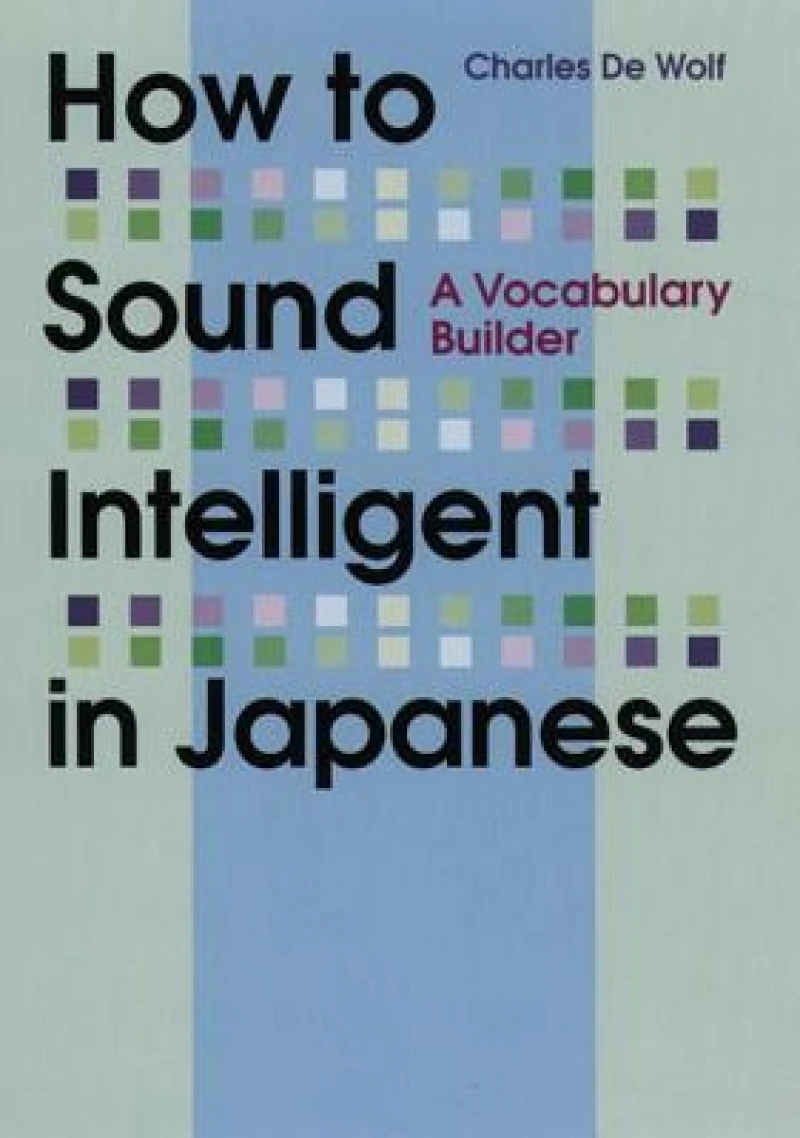
How to Sound Intelligent in Japanese : A Vocabulary Builder
Book Details
Format
Paperback / Softback
ISBN-10
1568364180
ISBN-13
9781568364186
Publisher
Kodansha America, Inc
Imprint
Kodansha America, Inc
Country of Manufacture
KR
Country of Publication
GB
Publication Date
Aug 3rd, 2012
Print length
160 Pages
Weight
242 grams
Dimensions
18.60 x 18.10 x 1.30 cms
Product Classification:
Grammar & vocabulary
Ksh 3,050.00
Re-Printing
0 in stock
Delivery Location
Delivery fee: Select location
Secure
Quality
Fast
After learning the basics, how do you go about acquiring the specialized vocabulary (most of which consists of kanji compounds) that allows you to discuss more complex subjects? This book is an attempt to shorten the lengthy and often tedious learning process by collecting many of the more commonly used key words from crucial areas of human endeavor, including business, the humanities, philosophy, religion, politics, science, economics, and law. Now, without spending years mastering the written language, you can come up with the right word at the right moment in a conversation. For every student, a time eventually comes when basic grammar is no longer the problem. You can say a few words about the weather, or the fact that, yes, you are feeling hungry, or explain that you are going out for the day - and actually be understood. Beyond that, however, the going gets tough. You cannot make pertinent comments about philosophy, politics, art, science, law, or business - simply because you lack the necessary vocabulary. In fact, you may not be able to say that you are interested in 'philosophy' at all, because you don't know the Japanese word for it. How do you go about acquiring this specialized vocabulary (most of which consists of kanji compounds)? Usually by spending hundreds of hours reading Japanese books or picking through a dictionary. This book is an attempt to shorten that process by collecting a good number of the more commonly used key words from crucial areas of human endeavor. Now, without spending years mastering the written language, you can occasionally come up with the right word at the right moment in a conversation that is striving toward comprehensibility. This can even be done by students who do not have a strong grasp of kanji, for they can learn the words as sounds. The areas covered in the book are ideas and theories; philosophy and religion; politics and government; the fine arts, humanities, and social sciences; science and technology; law and justice; and business and economics. This division allows the student to go the category where vocabulary is needed and learn the key words given there, rather than floundering around in a dictionary and hoping one has found what is needed. A further advantage of this arrangement is that certain kanji tend to be repeated over and over in certain categories: for example, the kanji read 'gaku' in the science section of the book. This type of repetition allows the student to get a feeling for certain kanji and usages. Beginning students can pick up individual words and put them in sentences of their own making, no matter how simple, and advanced students can get a better understanding of context by reading the sample sentences in the book. Since no one, even in their native tongue, can hope to be proficient in every field, advance students can quickly pick up key words in areas they are unfamiliar with. Previously published in the Power Japanese series under the same title.
After learning the basics, how do you go about acquiring the specialized vocabulary (most of which consists of kanji compounds) that allows you to discuss more complex subjects? This book is an attempt to shorten the lengthy and often tedious learning process by collecting many of the more commonly used key words from crucial areas of human endeavor, including business, the humanities, philosophy, religion, politics, science, economics, and law. Now, without spending years mastering the written language, you can come up with the right word at the right moment in a conversation. For every student, a time eventually comes when basic grammar is no longer the problem. You can say a few words about the weather, or the fact that, yes, you are feeling hungry, or explain that you are going out for the day - and actually be understood. Beyond that, however, the going gets tough. You cannot make pertinent comments about philosophy, politics, art, science, law, or business - simply because you lack the necessary vocabulary. In fact, you may not be able to say that you are interested in ''philosophy'' at all, because you don''t know the Japanese word for it. How do you go about acquiring this specialized vocabulary (most of which consists of kanji compounds)? Usually by spending hundreds of hours reading Japanese books or picking through a dictionary. This book is an attempt to shorten that process by collecting a good number of the more commonly used key words from crucial areas of human endeavor. Now, without spending years mastering the written language, you can occasionally come up with the right word at the right moment in a conversation that is striving toward comprehensibility. This can even be done by students who do not have a strong grasp of kanji, for they can learn the words as sounds. The areas covered in the book are ideas and theories; philosophy and religion; politics and government; the fine arts, humanities, and social sciences; science and technology; law and justice; and business and economics. This division allows the student to go the category where vocabulary is needed and learn the key words given there, rather than floundering around in a dictionary and hoping one has found what is needed. A further advantage of this arrangement is that certain kanji tend to be repeated over and over in certain categories: for example, the kanji read ''gaku'' in the science section of the book. This type of repetition allows the student to get a feeling for certain kanji and usages. Beginning students can pick up individual words and put them in sentences of their own making, no matter how simple, and advanced students can get a better understanding of context by reading the sample sentences in the book. Since no one, even in their native tongue, can hope to be proficient in every field, advance students can quickly pick up key words in areas they are unfamiliar with. Previously published in the Power Japanese series under the same title.
Get How to Sound Intelligent in Japanese by at the best price and quality guaranteed only at Werezi Africa's largest book ecommerce store. The book was published by Kodansha America, Inc and it has pages.

