
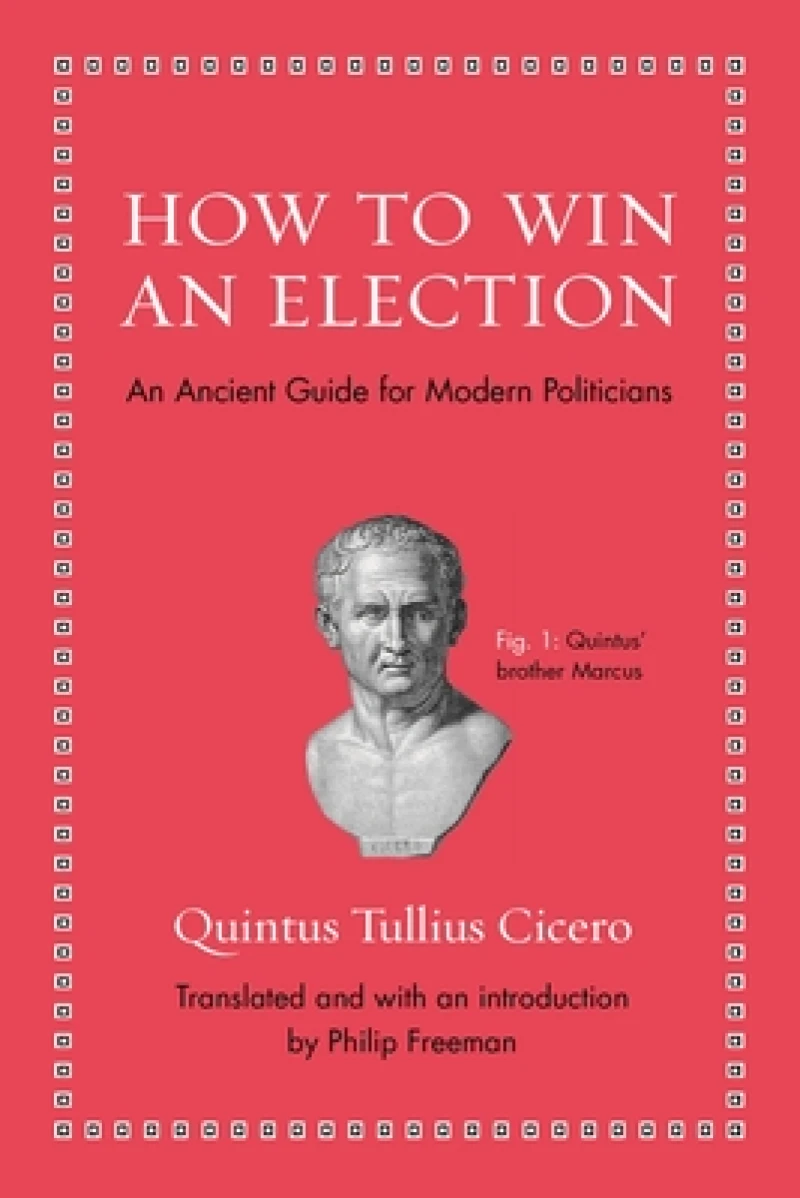
How to Win an Election – An Ancient Guide for Modern Politicians : An Ancient Guide for Modern Politicians
Book Details
Format
Hardback or Cased Book
Book Series
Ancient Wisdom for Modern Readers
ISBN-10
0691154082
ISBN-13
9780691154084
Publisher
Princeton University Press
Imprint
Princeton University Press
Country of Manufacture
US
Country of Publication
GB
Publication Date
Feb 13th, 2012
Print length
128 Pages
Weight
188 grams
Dimensions
12.10 x 17.90 x 1.50 cms
Ksh 2,700.00
Werezi Extended Catalogue
Delivery in 14 days
3 copies in stock
Delivery Location
Delivery fee: Select location
Delivery in 14 days
Secure
Quality
Fast
A Roman guide for campaigning. It is suitable for politicians and those who enjoys watching them try to manipulate their way into office.
How to Win an Election is an ancient Roman guide for campaigning that is as up-to-date as tomorrow's headlines. In 64 BC when idealist Marcus Cicero, Rome's greatest orator, ran for consul (the highest office in the Republic), his practical brother Quintus decided he needed some no-nonsense advice on running a successful campaign. What follows in his short letter are timeless bits of political wisdom, from the importance of promising everything to everybody and reminding voters about the sexual scandals of your opponents to being a chameleon, putting on a good show for the masses, and constantly surrounding yourself with rabid supporters. Presented here in a lively and colorful new translation, with the Latin text on facing pages, this unashamedly pragmatic primer on the humble art of personal politicking is dead-on (Cicero won)--and as relevant today as when it was written. A little-known classic in the spirit of Machiavelli's Prince, How to Win an Election is required reading for politicians and everyone who enjoys watching them try to manipulate their way into office.
Get How to Win an Election – An Ancient Guide for Modern Politicians by at the best price and quality guaranteed only at Werezi Africa's largest book ecommerce store. The book was published by Princeton University Press and it has pages.

