
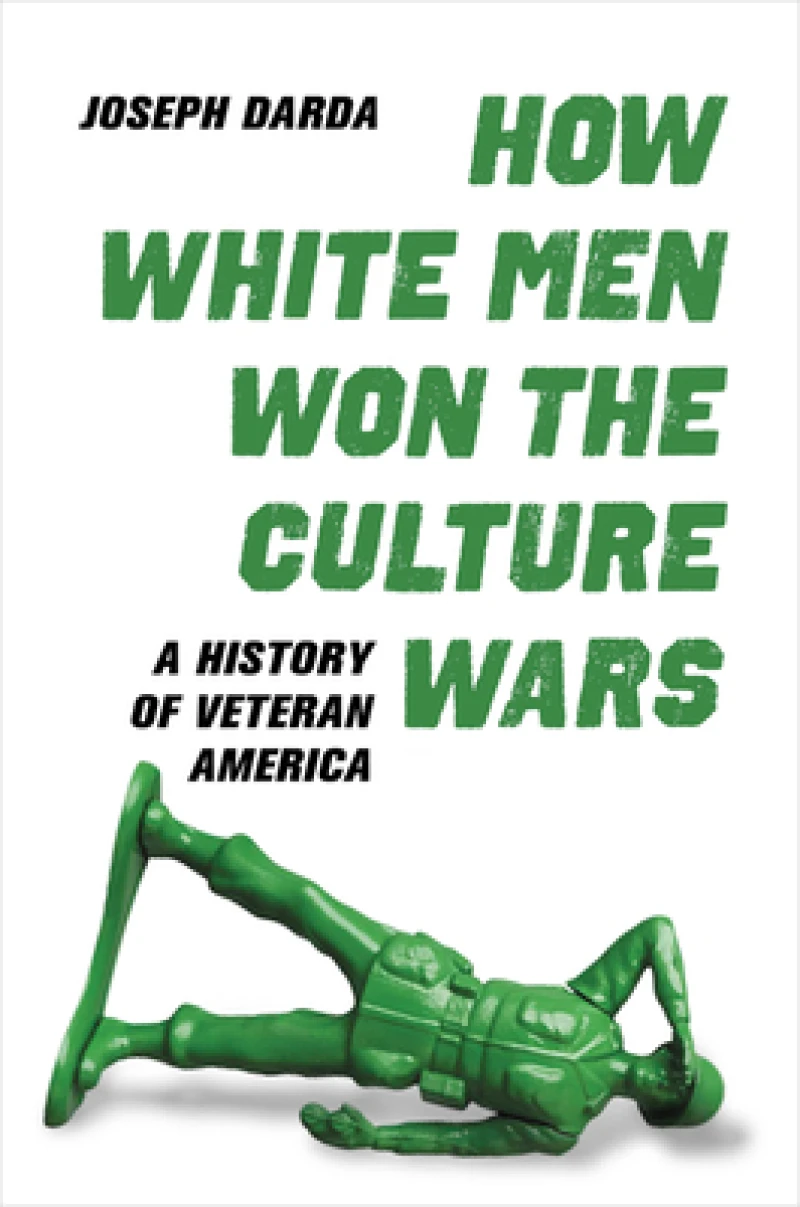
How White Men Won the Culture Wars : A History of Veteran America
by
Joseph Darda
Book Details
Format
Hardback or Cased Book
ISBN-10
0520381440
ISBN-13
9780520381445
Publisher
University of California Press
Imprint
University of California Press
Country of Manufacture
US
Country of Publication
GB
Publication Date
May 25th, 2021
Print length
280 Pages
Weight
552 grams
Dimensions
23.50 x 16.00 x 2.80 cms
Ksh 4,300.00
Werezi Extended Catalogue
0 in stock
Delivery Location
Delivery fee: Select location
Secure
Quality
Fast
CHOICE Outstanding Academic Title, 2022A cultural history of how white men exploited the image of the Vietnam veteran to roll back civil rights and restake their claim on the nation “If war among the whites brought peace and liberty to the blacks,” Frederick Douglass asked in 1875, peering into the nation’s future, “what will peace among the whites bring?” The answer then and now, after civil war and civil rights: a white reunion disguised as a veterans’ reunion. How White Men Won the Culture Wars shows how a broad contingent of white men––conservative and liberal, hawk and dove, vet and nonvet––transformed the Vietnam War into a staging ground for a post–civil rights white racial reconciliation. Conservatives could celebrate white vets as raceless embodiments of the nation. Liberals could treat them as minoritized heroes whose voices must be heard. Erasing Americans of color, Southeast Asians, and women from the war, white men with stories of vets on their mind could agree, after civil rights and feminism, that they had suffered and deserved more. From the POW/MIA and veterans’ mental health movements to Rambo and “Born in the U.S.A.,” they remade their racial identities for an age of color blindness and multiculturalism in the image of the Vietnam vet. No one wins in a culture war—except, Joseph Darda argues, white men dressed in army green.
Get How White Men Won the Culture Wars by at the best price and quality guaranteed only at Werezi Africa's largest book ecommerce store. The book was published by University of California Press and it has pages.

