
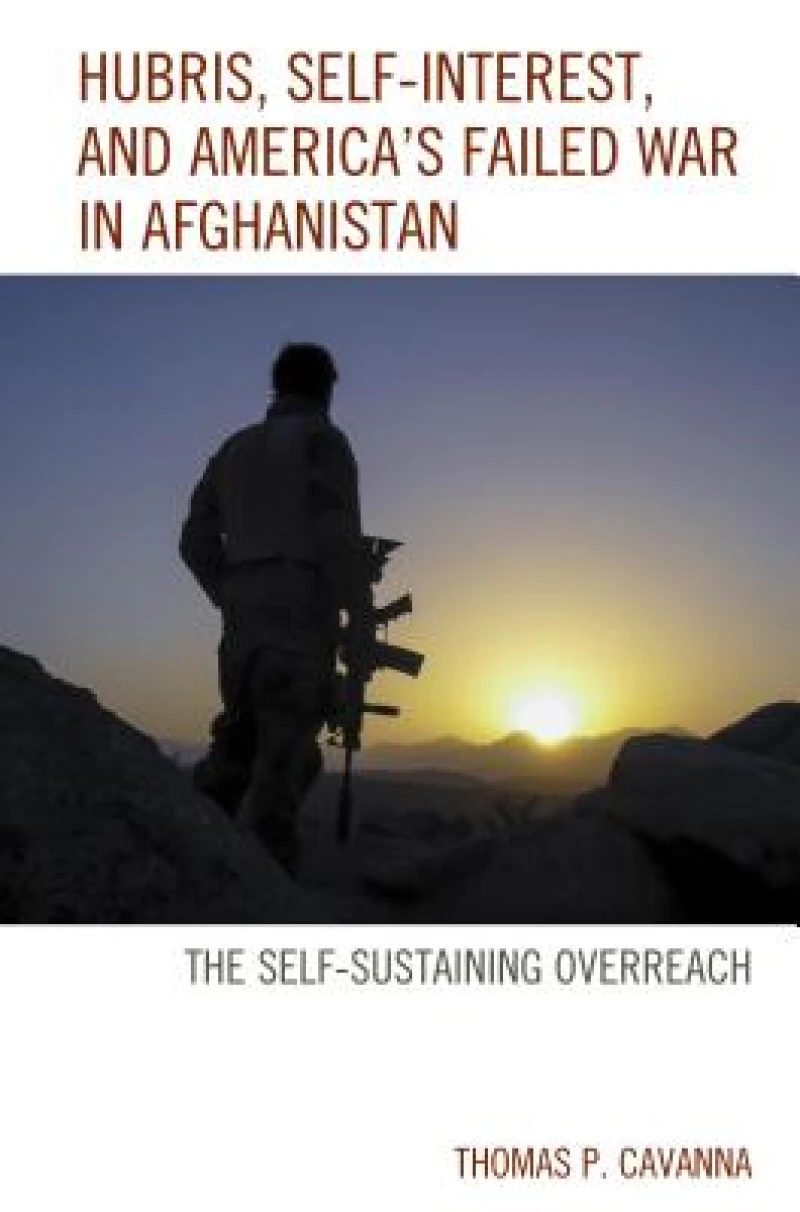
Hubris, Self-Interest, and America's Failed War in Afghanistan : the Self-Sustaining Overreach
Book Details
Format
Hardback or Cased Book
ISBN-10
1498506194
ISBN-13
9781498506199
Publisher
Bloomsbury Publishing Plc
Imprint
Lexington Books
Country of Manufacture
GB
Country of Publication
GB
Publication Date
Jul 22nd, 2015
Print length
362 Pages
Weight
698 grams
Dimensions
16.20 x 23.70 x 3.10 cms
Product Classification:
NationalismConstitution: government & the stateInternational relationsTerrorism, armed struggle
Ksh 23,350.00
Manufactured on Demand
0 in stock
Delivery Location
Delivery fee: Select location
Secure
Quality
Fast
This book describes the conduct of the U.S.-led post-9/11 war in Afghanistan via a long-term historical perspective. It investigates the reasons behind Washington’s entrapment in a self-sustaining overreach, emphasizing policy mistakes made in late 2001 and the contradictions associated with foreign-led democratization and state-building.
This book describes the conduct of the US-led post-9/11 war in Afghanistan. Adopting a long-term perspective, it argues that even though Washington initially had an opportunity to achieve its security goals and give Afghanistan a chance to enter a new era, it compromised any possibility of success from the very moment it let bin Laden escape to Pakistan in December 2001, and found itself locked in a strategic overreach. Given the bureaucratic and rhetorical momentum triggered by the war on terror in America, the Bush Administration was bound to deploy more resources in Afghanistan sooner or later (despite its focus on Iraq). The need to satisfy unfulfilled counter-terrorism objectives made the US dependent on Afghanistan’s warlords, which compromised the country’s stability and tarnished its new political system. The extension of the US military presence made Washington lose its leverage on the Pakistan army leaders, who, aware of America’s logistical dependency on Islamabad, supported the Afghan insurgents – their historical proxies - more and more openly. The extension of the war also contributed to radicalize segments of the Afghan and Pakistani populations, destabilizing the area further. In the meantime, the need to justify the extension of its military presence influenced the US-led coalition into proclaiming its determination to democratize and reconstruct Afghanistan. While highly opportunistic, the emergence of these policies proved both self-defeating and unsustainable due to an inescapable collision between the US-led coalition’s inherent self-interest, hubris, limited knowledge, limited attention span and limited resources, and, on the other hand, Afghanistan’s inherent complexity. As the critical contradictions at the very heart of the campaign increased with the extension of the latter’s duration, scale, and cost, America’s leaders, entrapped in path-dependence, lost their strategic flexibility. Despite debates on troops/resource allocation and more sophisticated doctrines, they repeated the same structural mistakes over and over again. The strategic overreach became self-sustaining, until its costs became intolerable, leading to a drawdown which has more to do with a pervasive sense of failure than with the accomplishment of any noble purpose or strategic breakthrough.
Get Hubris, Self-Interest, and America's Failed War in Afghanistan by at the best price and quality guaranteed only at Werezi Africa's largest book ecommerce store. The book was published by Bloomsbury Publishing Plc and it has pages.

