
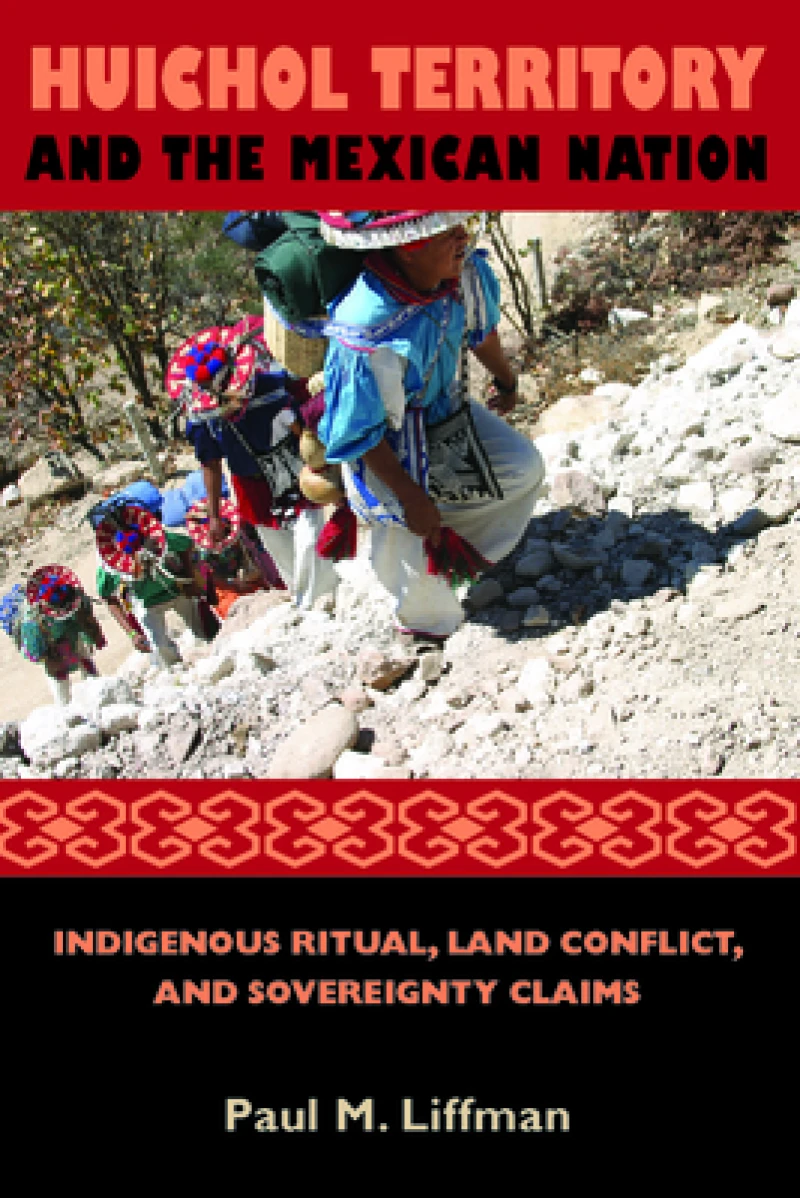
Huichol Territory and the Mexican Nation : Indigenous Ritual, Land Conflict, and Sovereignty Claims
Book Details
Format
Paperback / Softback
ISBN-10
0816531218
ISBN-13
9780816531219
Publisher
University of Arizona Press
Imprint
University of Arizona Press
Country of Manufacture
US
Country of Publication
GB
Publication Date
Apr 1st, 2014
Print length
296 Pages
Weight
412 grams
Dimensions
22.80 x 15.50 x 1.60 cms
Ksh 5,050.00
Werezi Extended Catalogue
0 in stock
Delivery Location
Delivery fee: Select location
Secure
Quality
Fast
Based on six years of collaboration with a land-rights organization, interviews, and participant observation in meetings, ceremonies, and extended stays on remote rancherías, this book analyzes the sites where people define Huichol territory. Liffman's local, regional, and national perspective informs every chapter and expands the toolkit for researchers working with indigenous communities.
The Huichol (Wixarika) people claim a vast expanse of Mexico''s western Sierra Madre and northern highlands as a territory called kiekari, which includes parts of the states of Nayarit, Jalisco, Durango, Zacatecas, and San Luis Potosí. This territory forms the heart of their economic and spiritual lives. But indigenous land struggle is a central fact of Mexican history, and in this fascinating new work Paul Liffman expands our understanding of it. Drawing on contemporary anthropological theory, he explains how Huichols assert their sovereign rights to collectively own the 1,500 square miles they inhabit and to practice rituals across the 35,000 square miles where their access is challenged. Liffman places current access claims in historical perspective, tracing Huichol communities'' long-term efforts to redress the inequitable access to land and other resources that their neighbors and the state have imposed on them.
Liffman writes that ""the cultural grounds for territorial claims were what the people I wanted to study wanted me to work on."" Based on six years of collaboration with a land-rights organization, interviews, and participant observation in meetings, ceremonies, and extended stays on remote rancherías, Huichol Territory and the Mexican Nation analyzes the sites where people define Huichol territory. The book''s innovative structure echoes Huichols'' own approach to knowledge and examines the nation and state, not just the community. Liffman''s local, regional, and national perspective informs every chapter and expands the toolkit for researchers working with indigenous communities. By describing Huichols'' ceremonially based placemaking to build a theory of ""historical territoriality,"" he raises provocative questions about what ""place"" means for native peoples worldwide.
Liffman writes that ""the cultural grounds for territorial claims were what the people I wanted to study wanted me to work on."" Based on six years of collaboration with a land-rights organization, interviews, and participant observation in meetings, ceremonies, and extended stays on remote rancherías, Huichol Territory and the Mexican Nation analyzes the sites where people define Huichol territory. The book''s innovative structure echoes Huichols'' own approach to knowledge and examines the nation and state, not just the community. Liffman''s local, regional, and national perspective informs every chapter and expands the toolkit for researchers working with indigenous communities. By describing Huichols'' ceremonially based placemaking to build a theory of ""historical territoriality,"" he raises provocative questions about what ""place"" means for native peoples worldwide.
Get Huichol Territory and the Mexican Nation by at the best price and quality guaranteed only at Werezi Africa's largest book ecommerce store. The book was published by University of Arizona Press and it has pages.

