

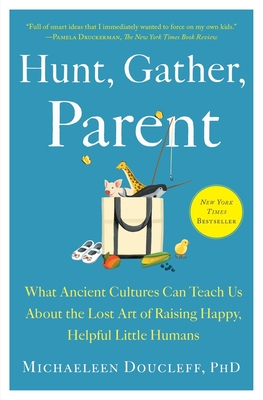
Hunt, Gather, Parent : What Ancient Cultures Can Teach Us About the Lost Art of Raising Happy, Helpful Little Humans
Book Details
Format
Paperback / softback
ISBN-10
1982172401
ISBN-13
9781982172404
Publisher
Avid Reader Press / Simon & Schuster
Imprint
Avid Reader Press / Simon & Schuster
Country of Manufacture
US
Country of Publication
GB
Publication Date
Mar 2nd, 2021
Print length
352 Pages
Weight
418 grams
Dimensions
23.40 x 15.70 x 2.40 cms
KSh 2,900.00
Publisher Out of Stock
0 in stock
Delivery Location
Delivery fee: Select location
Secure
Quality
Fast
NEW YORK TIMES BESTSELLER
The oldest cultures in the world have mastered the art of raising happy, well-adjusted children. What can we learn from them?
';Hunt, Gather, Parent is full of smart ideas that I immediately wanted to force on my own kids.' Pamela Druckerman, The New York Times Book Review
When Dr. Michaeleen Doucleff becomes a mother, she examines the studies behind modern parenting guidance and finds the evidence frustratingly limited and often ineffective. Curious to learn about more effective parenting approaches, she visits a Maya village in the Yucatn Peninsula. There she encounters moms and dads who parent in a totally different way than we doand raise extraordinarily kind, generous, and helpful children without yelling, nagging, or issuing timeouts. What else, Doucleff wonders, are Western parents missing out on?
In Hunt, Gather, Parent, Doucleff sets out with her three-year-old daughter in tow to learn and practice parenting strategies from families in three of the world's most venerable communities: Maya families in Mexico, Inuit families above the Arctic Circle, and Hadzabe families in Tanzania. She sees that these cultures don't have the same problems with children that Western parents do. Most strikingly, parents build a relationship with young children that is vastly different from the one many Western parents developit's built on cooperation instead of control, trust instead of fear, and personalized needs instead of standardized development milestones.
Maya parents are masters at raising cooperative children. Without resorting to bribes, threats, or chore charts, Maya parents rear loyal helpers by including kids in household tasks from the time they can walk. Inuit parents have developed a remarkably effective approach for teaching children emotional intelligence. When kids cry, hit, or act out, Inuit parents respond with a calm, gentle demeanor that teaches children how to settle themselves down and think before acting. Hadzabe parents are experts on raising confident, self-driven kids with a simple tool that protects children from stress and anxiety, so common now among American kids.
Not only does Doucleff live with families and observe their methods firsthand, she also applies them with her own daughter, with striking results. She learns to discipline without yelling. She talks to psychologists, neuroscientists, anthropologists, and sociologists and explains how these strategies can impact children's mental health and development. Filled with practical takeaways that parents can implement immediately, Hunt, Gather, Parent helps us rethink the ways we relate to our children, and reveals a universal parenting paradigm adapted for American families.
The oldest cultures in the world have mastered the art of raising happy, well-adjusted children. What can we learn from them?
';Hunt, Gather, Parent is full of smart ideas that I immediately wanted to force on my own kids.' Pamela Druckerman, The New York Times Book Review
When Dr. Michaeleen Doucleff becomes a mother, she examines the studies behind modern parenting guidance and finds the evidence frustratingly limited and often ineffective. Curious to learn about more effective parenting approaches, she visits a Maya village in the Yucatn Peninsula. There she encounters moms and dads who parent in a totally different way than we doand raise extraordinarily kind, generous, and helpful children without yelling, nagging, or issuing timeouts. What else, Doucleff wonders, are Western parents missing out on?
In Hunt, Gather, Parent, Doucleff sets out with her three-year-old daughter in tow to learn and practice parenting strategies from families in three of the world's most venerable communities: Maya families in Mexico, Inuit families above the Arctic Circle, and Hadzabe families in Tanzania. She sees that these cultures don't have the same problems with children that Western parents do. Most strikingly, parents build a relationship with young children that is vastly different from the one many Western parents developit's built on cooperation instead of control, trust instead of fear, and personalized needs instead of standardized development milestones.
Maya parents are masters at raising cooperative children. Without resorting to bribes, threats, or chore charts, Maya parents rear loyal helpers by including kids in household tasks from the time they can walk. Inuit parents have developed a remarkably effective approach for teaching children emotional intelligence. When kids cry, hit, or act out, Inuit parents respond with a calm, gentle demeanor that teaches children how to settle themselves down and think before acting. Hadzabe parents are experts on raising confident, self-driven kids with a simple tool that protects children from stress and anxiety, so common now among American kids.
Not only does Doucleff live with families and observe their methods firsthand, she also applies them with her own daughter, with striking results. She learns to discipline without yelling. She talks to psychologists, neuroscientists, anthropologists, and sociologists and explains how these strategies can impact children's mental health and development. Filled with practical takeaways that parents can implement immediately, Hunt, Gather, Parent helps us rethink the ways we relate to our children, and reveals a universal parenting paradigm adapted for American families.
NEW YORK TIMES BESTSELLER
The oldest cultures in the world have mastered the art of raising happy, well-adjusted children. What can we learn from them?
“Hunt, Gather, Parent is full of smart ideas that I immediately wanted to force on my own kids.” —Pamela Druckerman, The New York Times Book Review
When Dr. Michaeleen Doucleff becomes a mother, she examines the studies behind modern parenting guidance and finds the evidence frustratingly limited and often ineffective. Curious to learn about more effective parenting approaches, she visits a Maya village in the Yucatán Peninsula. There she encounters moms and dads who parent in a totally different way than we do—and raise extraordinarily kind, generous, and helpful children without yelling, nagging, or issuing timeouts. What else, Doucleff wonders, are Western parents missing out on?
In Hunt, Gather, Parent, Doucleff sets out with her three-year-old daughter in tow to learn and practice parenting strategies from families in three of the world’s most venerable communities: Maya families in Mexico, Inuit families above the Arctic Circle, and Hadzabe families in Tanzania. She sees that these cultures don’t have the same problems with children that Western parents do. Most strikingly, parents build a relationship with young children that is vastly different from the one many Western parents develop—it’s built on cooperation instead of control, trust instead of fear, and personalized needs instead of standardized development milestones.
Maya parents are masters at raising cooperative children. Without resorting to bribes, threats, or chore charts, Maya parents rear loyal helpers by including kids in household tasks from the time they can walk. Inuit parents have developed a remarkably effective approach for teaching children emotional intelligence. When kids cry, hit, or act out, Inuit parents respond with a calm, gentle demeanor that teaches children how to settle themselves down and think before acting. Hadzabe parents are experts on raising confident, self-driven kids with a simple tool that protects children from stress and anxiety, so common now among American kids.
Not only does Doucleff live with families and observe their methods firsthand, she also applies them with her own daughter, with striking results. She learns to discipline without yelling. She talks to psychologists, neuroscientists, anthropologists, and sociologists and explains how these strategies can impact children’s mental health and development. Filled with practical takeaways that parents can implement immediately, Hunt, Gather, Parent helps us rethink the ways we relate to our children, and reveals a universal parenting paradigm adapted for American families.
The oldest cultures in the world have mastered the art of raising happy, well-adjusted children. What can we learn from them?
“Hunt, Gather, Parent is full of smart ideas that I immediately wanted to force on my own kids.” —Pamela Druckerman, The New York Times Book Review
When Dr. Michaeleen Doucleff becomes a mother, she examines the studies behind modern parenting guidance and finds the evidence frustratingly limited and often ineffective. Curious to learn about more effective parenting approaches, she visits a Maya village in the Yucatán Peninsula. There she encounters moms and dads who parent in a totally different way than we do—and raise extraordinarily kind, generous, and helpful children without yelling, nagging, or issuing timeouts. What else, Doucleff wonders, are Western parents missing out on?
In Hunt, Gather, Parent, Doucleff sets out with her three-year-old daughter in tow to learn and practice parenting strategies from families in three of the world’s most venerable communities: Maya families in Mexico, Inuit families above the Arctic Circle, and Hadzabe families in Tanzania. She sees that these cultures don’t have the same problems with children that Western parents do. Most strikingly, parents build a relationship with young children that is vastly different from the one many Western parents develop—it’s built on cooperation instead of control, trust instead of fear, and personalized needs instead of standardized development milestones.
Maya parents are masters at raising cooperative children. Without resorting to bribes, threats, or chore charts, Maya parents rear loyal helpers by including kids in household tasks from the time they can walk. Inuit parents have developed a remarkably effective approach for teaching children emotional intelligence. When kids cry, hit, or act out, Inuit parents respond with a calm, gentle demeanor that teaches children how to settle themselves down and think before acting. Hadzabe parents are experts on raising confident, self-driven kids with a simple tool that protects children from stress and anxiety, so common now among American kids.
Not only does Doucleff live with families and observe their methods firsthand, she also applies them with her own daughter, with striking results. She learns to discipline without yelling. She talks to psychologists, neuroscientists, anthropologists, and sociologists and explains how these strategies can impact children’s mental health and development. Filled with practical takeaways that parents can implement immediately, Hunt, Gather, Parent helps us rethink the ways we relate to our children, and reveals a universal parenting paradigm adapted for American families.
Get Hunt, Gather, Parent by Michaeleen Doucleff at the best price and quality guaranteed only at Werezi Africa's largest book ecommerce store. The book was published by Avid Reader Press / Simon & Schuster and it has 352 pages.
Customers Who Bought This Also Bought

The Children who Fought Hitler
KSh 2,350.00
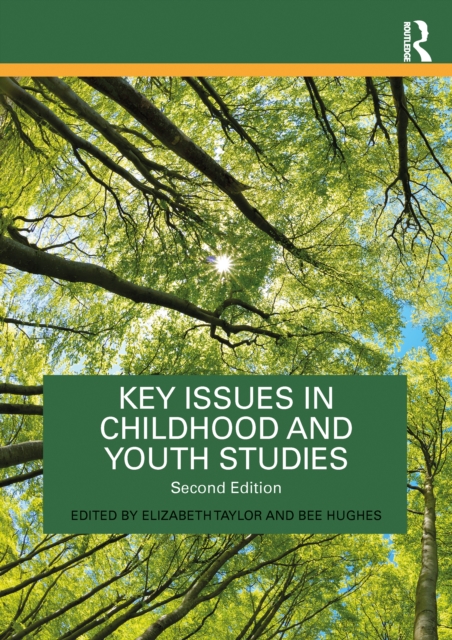
Key Issues in Childhood and Youth Studies
KSh 8,000.00
Key Issues in Childhood and Youth Studies
KSh 30,950.00
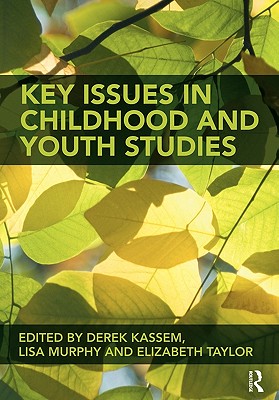
Key Issues in Childhood and Youth Studies
KSh 6,950.00
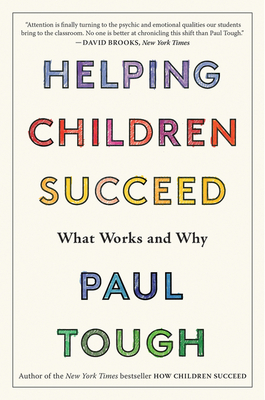
Helping Children Succeed
KSh 3,050.00

Sense and Sensibility in Social Work with Families and Children European Perspectives on Developments in Child Protection and Welfare
KSh 15,300.00

Children's Rights in the United States
KSh 26,450.00

Children's Rights in the United States
KSh 38,150.00
The Children''s Table
KSh 15,850.00
The Child and the World
KSh 22,600.00
Begging as a Path to Progress
KSh 4,500.00
Suffering Childhood in Early America
KSh 10,850.00



More in This Genre
The Children who Fought Hitler
KSh 2,350.00
Key Issues in Childhood and Youth Studies
KSh 8,000.00
Key Issues in Childhood and Youth Studies
KSh 30,950.00
Key Issues in Childhood and Youth Studies
KSh 6,950.00
Helping Children Succeed
KSh 3,050.00
Sense and Sensibility in Social Work with Families and Children European Perspectives on Developments in Child Protection and Welfare
KSh 15,300.00
