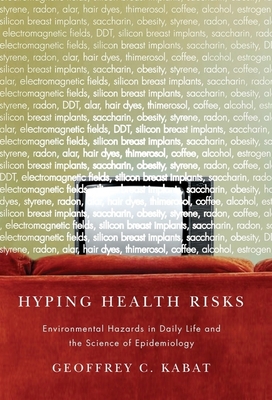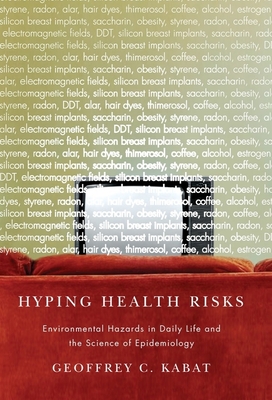
Hyping Health Risks : Environmental Hazards in Daily Life and the Science of Epidemiology
Book Details
Format
Paperback / softback
ISBN-10
0231141491
ISBN-13
9780231141499
Publisher
Columbia University Press
Imprint
Columbia University Press
Country of Manufacture
US
Country of Publication
GB
Publication Date
Dec 6th, 2011
Print length
272 Pages
Weight
392 grams
Dimensions
22.90 x 15.60 x 1.50 cms
Product Classification:
Family & health
KSh 5,050.00
Currently unavailable
0 in stock
Delivery Location
Delivery fee: Select location
Secure
Quality
Fast
The media constantly bombard us with news of health hazards lurking in our everyday lives, but many of these hazards turn out to have been greatly overblown. According to author and epidemiologist Geoffrey C. Kabat, this hyping of low-level environmental hazards leads to needless anxiety and confusion on the part of the public concerning which exposures have important effects on health and which are likely to have minimal or no effect. Kabat approaches health scares as "social facts" and shows that a variety of factors can contribute to the inflating of a hazard. These include skewed reporting by the media, but also, surprisingly, the actions of researchers who may emphasize certain findings while ignoring others; regulatory and health agencies eager to show their responsiveness to the health concerns of the public; and politicians and advocates with a stake in a particular outcome. By means of four case studies, Kabat demonstrates how a powerful confluence of interests can lead to overstating or distorting the scientific evidence. He considers the health risks of pollutants such as DDT as a cause of breast cancer, electromagnetic fields from power lines, radon within residences, and secondhand tobacco smoke. Tracing the trajectory of each of these hazards from its initial emergence to the present, Kabat shows how publication of more rigorous studies and critical assessments ultimately help put hazards in perspective.
Get Hyping Health Risks by Geoffrey C Kabat at the best price and quality guaranteed only at Werezi Africa's largest book ecommerce store. The book was published by Columbia University Press and it has 272 pages.
Customers Who Bought This Also Bought
Body Keeps the Score
KSh 2,700.00

Wealth Money Can''t Buy
KSh 2,000.00

Hidden Valley Road
KSh 2,350.00
I Am, I Am, I Am: Seventeen Brushes With Death
KSh 2,350.00

The Lazarus Strategy
KSh 2,350.00

Age of Anxiety
KSh 15,100.00

Anti-Eviction
KSh 14,400.00

Jack and Me: One Clueless Dad, One Lost Son
KSh 2,350.00

Everything Elderberry
KSh 4,100.00
The Healing Power of Faith
KSh 4,150.00
A Patient''s Guide to Knee and Hip Replacement
KSh 3,250.00

Estrogen: Is It Right For You? Thorough, Factual Guide To Help You Decide
KSh 2,350.00