
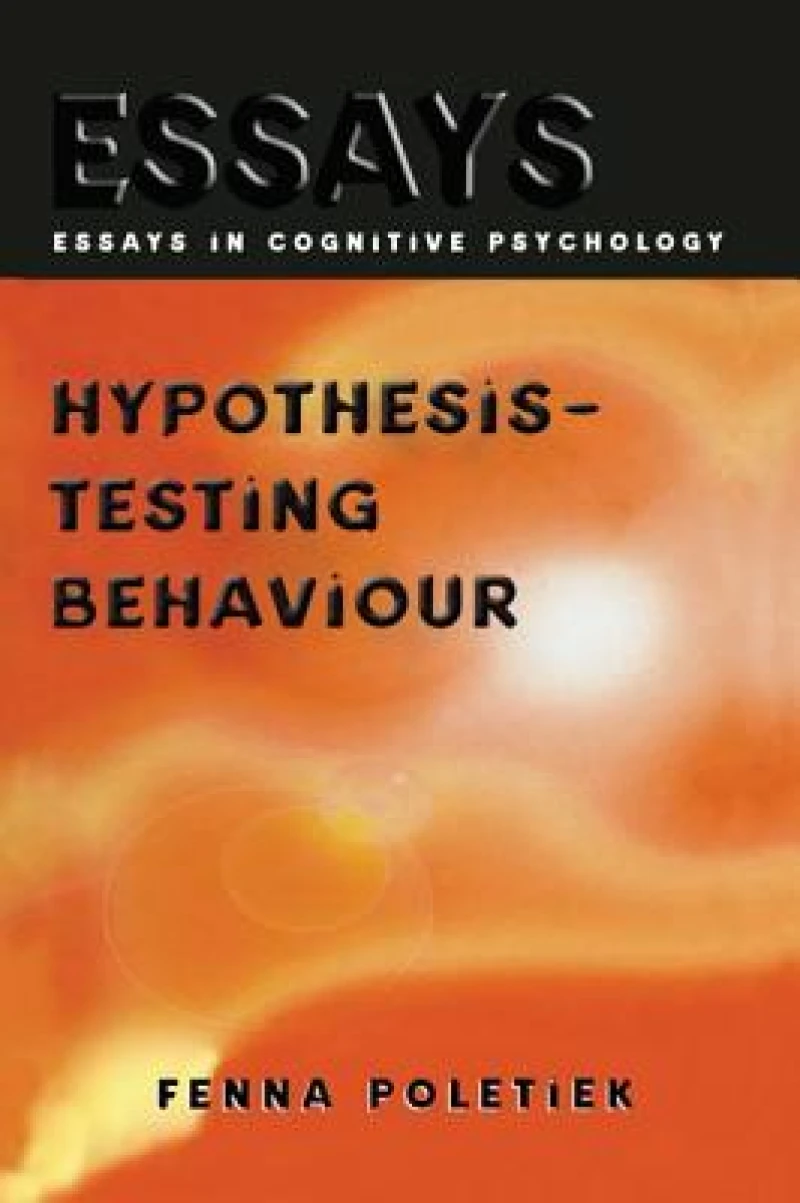
Hypothesis-testing Behaviour
Book Details
Format
Paperback / Softback
Book Series
Essays in Cognitive Psychology
ISBN-10
1138877387
ISBN-13
9781138877382
Publisher
Taylor & Francis Ltd
Imprint
Psychology Press Ltd
Country of Manufacture
GB
Country of Publication
GB
Publication Date
Jun 25th, 2015
Print length
182 Pages
Weight
272 grams
Product Classification:
Cognition & cognitive psychologyCognition and cognitive psychology
Ksh 4,550.00
Werezi Extended Catalogue
0 in stock
Delivery Location
Delivery fee: Select location
Secure
Quality
Fast
How do people search evidence for a hypothesis? A well documented answer in cognitive psychology is that they search for confirming evidence. However, the rational strategy is to try to falsify the hypothesis. This contradiction is evaluated.
How do people search evidence for a hypothesis? A well documented answer in cognitive psychology is that they search for confirming evidence. However, the rational strategy is to try to falsify the hypothesis. This book critically evaluates this contradiction. Experimental research is discussed against the background of philosophical and formal theories of hypothesis testing with striking results: Falsificationism and verificationism - the two main rival philosophies of testing - come down to one and the same principle for concrete testing behaviour, eluding the contrast between rational falsification and confirmation bias.
In this book, the author proposes a new perspective for describing hypothesis testing behaviour - the probability-value model - which unifies the contrasting views. According to this model, hypothesis testers pragmatically consider what evidence and how much evidence will convince them to reject or accept the hypothesis. They might either require highly probative evidence for its acceptance, at the risk of its rejection, or protect it against rejection and go for minor confirming observations. Interestingly, the model refines the classical opposition between rationality and pragmaticity because pragmatic considerations are a legitimate aspect of ''rational'' hypothesis testing. Possible future research and applications of the ideas advanced are discussed, such as the modelling of expert hypothesis testing.
In this book, the author proposes a new perspective for describing hypothesis testing behaviour - the probability-value model - which unifies the contrasting views. According to this model, hypothesis testers pragmatically consider what evidence and how much evidence will convince them to reject or accept the hypothesis. They might either require highly probative evidence for its acceptance, at the risk of its rejection, or protect it against rejection and go for minor confirming observations. Interestingly, the model refines the classical opposition between rationality and pragmaticity because pragmatic considerations are a legitimate aspect of ''rational'' hypothesis testing. Possible future research and applications of the ideas advanced are discussed, such as the modelling of expert hypothesis testing.
Get Hypothesis-testing Behaviour by at the best price and quality guaranteed only at Werezi Africa's largest book ecommerce store. The book was published by Taylor & Francis Ltd and it has pages.

