
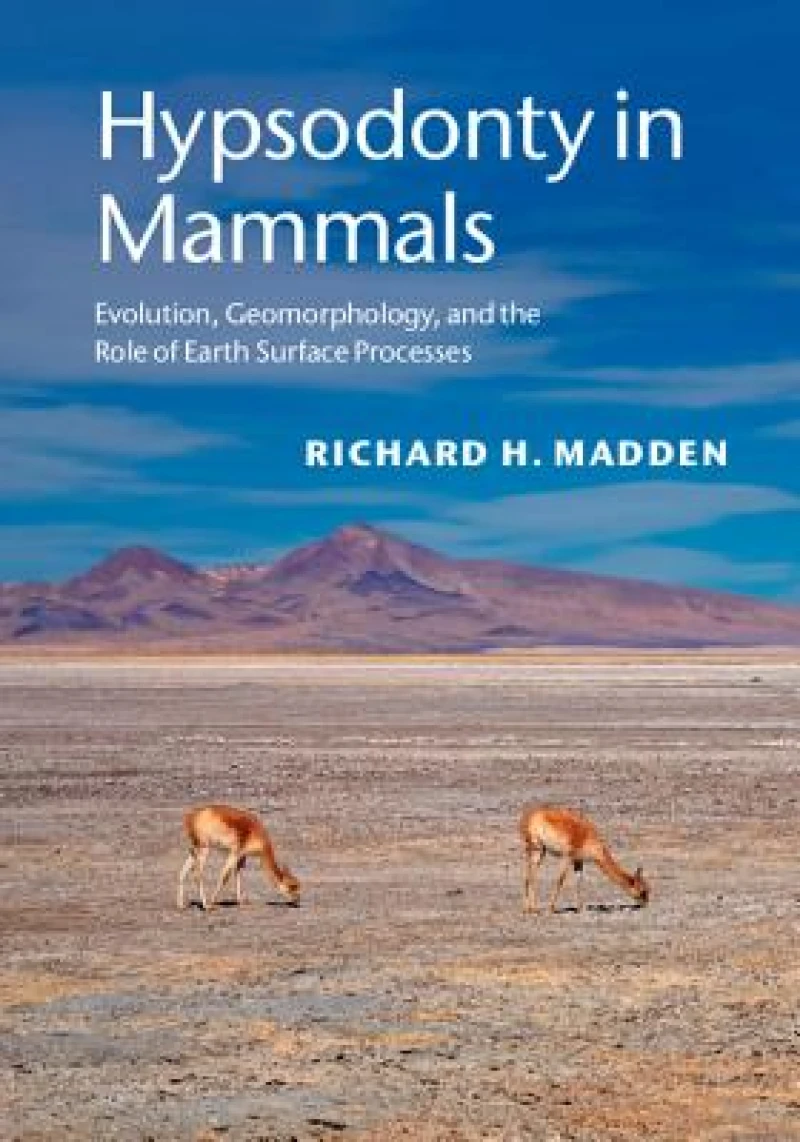
Hypsodonty in Mammals : Evolution, Geomorphology, and the Role of Earth Surface Processes
Book Details
Format
Hardback or Cased Book
ISBN-10
1107012937
ISBN-13
9781107012936
Publisher
Cambridge University Press
Imprint
Cambridge University Press
Country of Manufacture
US
Country of Publication
GB
Publication Date
Dec 11th, 2014
Print length
443 Pages
Weight
1,020 grams
Dimensions
25.30 x 18.00 x 2.50 cms
Product Classification:
EvolutionZoology: Mammals
Ksh 23,600.00
Publisher Out of Stock
0 in stock
Delivery Location
Delivery fee: Select location
Secure
Quality
Fast
This book demonstrates how the natural ingestion of sediment acts as a forceful evolutionary determinant of mammalian tooth shape. With case-studies from around the globe, the author highlights the connections between large-scale surface processes and specific tooth wear patterns, drawing from examples both in the fossil record and present day.
The evolution of high-crowned teeth, hypsodonty, is a defining characteristic of many terrestrial herbivores. To date, the most prominent focus in the study of the teeth of grazing herbivores has been co-evolution with grasses and grasslands. This book develops the idea further and looks at the myriad ways that soil can enter the diet. Madden then expands this analysis to examine the earth surface processes that mobilize sediment in the environment. The text delivers a global perspective on tooth wear and soil erosion, with examples from the islands of New Zealand to the South American Andes, highlighting how similar geological processes worldwide result in convergent evolution. The final chapter includes a review of elodonty in the fossil record and its environmental consequences. Offering new insights into geomorphology and adaptive and evolutionary morphology, this text will be of value to any researcher interested in the evolution of tooth size and shape.
Get Hypsodonty in Mammals by at the best price and quality guaranteed only at Werezi Africa's largest book ecommerce store. The book was published by Cambridge University Press and it has pages.

