
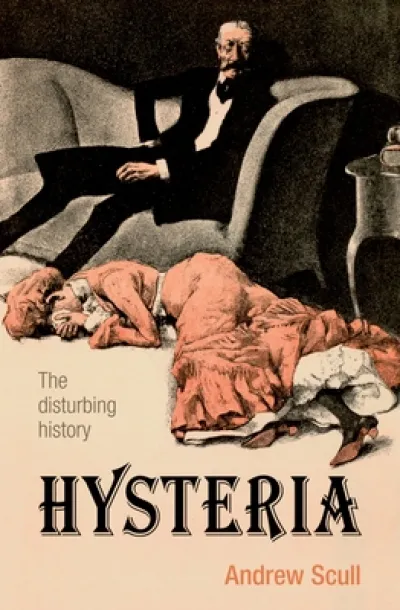
Hysteria: The Biography
by
Scull
Book Details
Format
Paperback / Softback
Book Series
Biographies of Disease
ISBN-10
019969298X
ISBN-13
9780199692989
Publisher
Oxford University Press
Imprint
Oxford University Press
Country of Manufacture
GB
Country of Publication
GB
Publication Date
Oct 13th, 2011
Print length
232 Pages
Weight
266 grams
Dimensions
12.90 x 19.60 x 1.40 cms
Product Classification:
History of medicinePsychiatryHistory of sciencePopular science
Ksh 2,350.00
Manufactured on Demand
Delivery in 14 days
3 copies in stock
Delivery Location
Delivery fee: Select location
Delivery in 14 days
Secure
Quality
Fast
The story of hysteria is a curious one, for it persists as an illness for centuries before disappearing. Andrew Scull gives a fascinating account of this socially constructed disease that came to be strongly associated with women, showing the shifts in social, cultural, and medical perceptions through history.
The nineteenth century seems to have been full of hysterical women - or so they were diagnosed. Where are they now? The very disease no longer exists. In this fascinating account, Andrew Scull tells the story of Hysteria - an illness that disappeared not through medical endeavour, but through growing understanding and cultural change. More generally, it raises the question of how diseases are framed, and how conceptions of a disease change through history.The lurid history of hysteria makes fascinating reading. Charcot''s clinics showed off flamboyantly ''hysterical'' patients taking on sexualized poses, and among the visiting professionals was one Sigmund Freud. Scull discusses the origins of the idea of hysteria, the development of a neurological approach by John Sydenham and others, hysteria as a fashionable condition, and its growth from the 17th century. Some regarded it as a peculiarly English malady, ''the natural concomitant of England''s greater civilization and refinement''. Women were the majority of patients, and the illness became associated with female biology, resulting in some gruesome ''treatments''. Charcot and Freud were key practitioners defining the nature of the illness. But curiously, the illness seemed to swap gender during the First World War when male hysterics frequently suffering from shell shock were also subjected to brutal ''treatments''. Subsequently, the ''disease'' declined and eventually disappeared, at least in professional circles, though attenuated elements remain, reclassified for instance as post-traumatic stress disorder.Hysteria: the biography is part of the Oxford series, Biographies of Diseases, edited by William and Helen Bynum. In each individual volume an expert historian or clinician tells the story of a particular disease or condition throughout history - not only in terms of growing medical understanding of its nature and cure, but also shifting social and cultural attitudes, and changes in the meaning of the name of the disease itself.
Get Hysteria: The Biography by at the best price and quality guaranteed only at Werezi Africa's largest book ecommerce store. The book was published by Oxford University Press and it has pages.

