
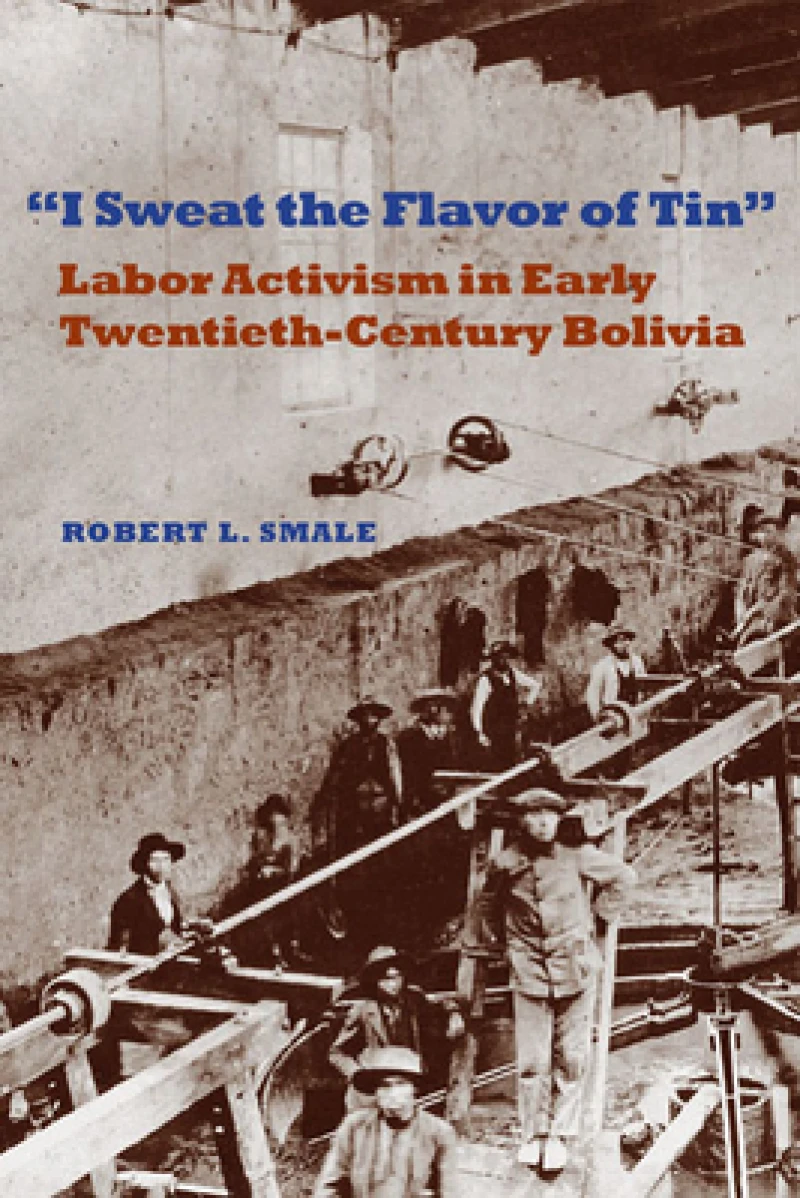
I Sweat the Flavor of Tin : Labor Activism in Early Twentieth-Century Bolivia
by
Robert Smale
Book Details
Format
Paperback / Softback
Book Series
Pitt Latin American Series
ISBN-10
0822961172
ISBN-13
9780822961178
Publisher
University of Pittsburgh Press
Imprint
University of Pittsburgh Press
Country of Manufacture
US
Country of Publication
GB
Publication Date
Sep 26th, 2010
Print length
248 Pages
Product Classification:
Industrial relations, occupational health and safetyIndustrial relations
Ksh 8,100.00
Temporarily out of stock, due soon
0 in stock
Delivery Location
Delivery fee: Select location
Secure
Quality
Fast
A study of the rise of Bolivian tin miners into a politically active labor movement during the early twentieth century, and their eventual challenge to the oligarchy controlling the nation.
On June 4, 1923, the Bolivian military turned a machine gun on striking miners in the northern Potosi town of Uncia. The incident is remembered as Bolivia's first massacre of industrial workers. The violence in Uncia highlights a formative period in the development of a working class who would eventually challenge the oligarchic control of the nation. Robert L. Smale begins his study as Bolivia's mining industry transitioned from silver to tin; specifically focusing on the region of Oruro and northern Potosi. The miners were part of a heterogeneous urban class alongside artisans, small merchants, and other laborers. Artisan mutual aid societies provided miners their first organizational models and the guidance to emancipate themselves from the mine owners' political tutelage. During the 1910s both the Workers' Labor Federation and the Socialist Party appeared in Oruro to spur more aggressive political action. In 1920 miners won a comprehensive contract that exceeded labor legislation debated in Congress in the years that followed. Relations between the working class and the government deteriorated soon after, leading to the 1923 massacre in Uncia. Smale ends his study with the onset of the Great Depression and premonitions of war with Paraguay—twin cataclysms that would discredit the old oligarchic order and open new horizons to the labor movement. This period's developments marked the entry of workers and other marginalized groups into Bolivian politics and the acquisition of new freedoms and basic rights. These events prefigure the rise of Evo Morales—a union activist born in Oruro—in the early twenty-first century.
Get I Sweat the Flavor of Tin by at the best price and quality guaranteed only at Werezi Africa's largest book ecommerce store. The book was published by University of Pittsburgh Press and it has pages.

