
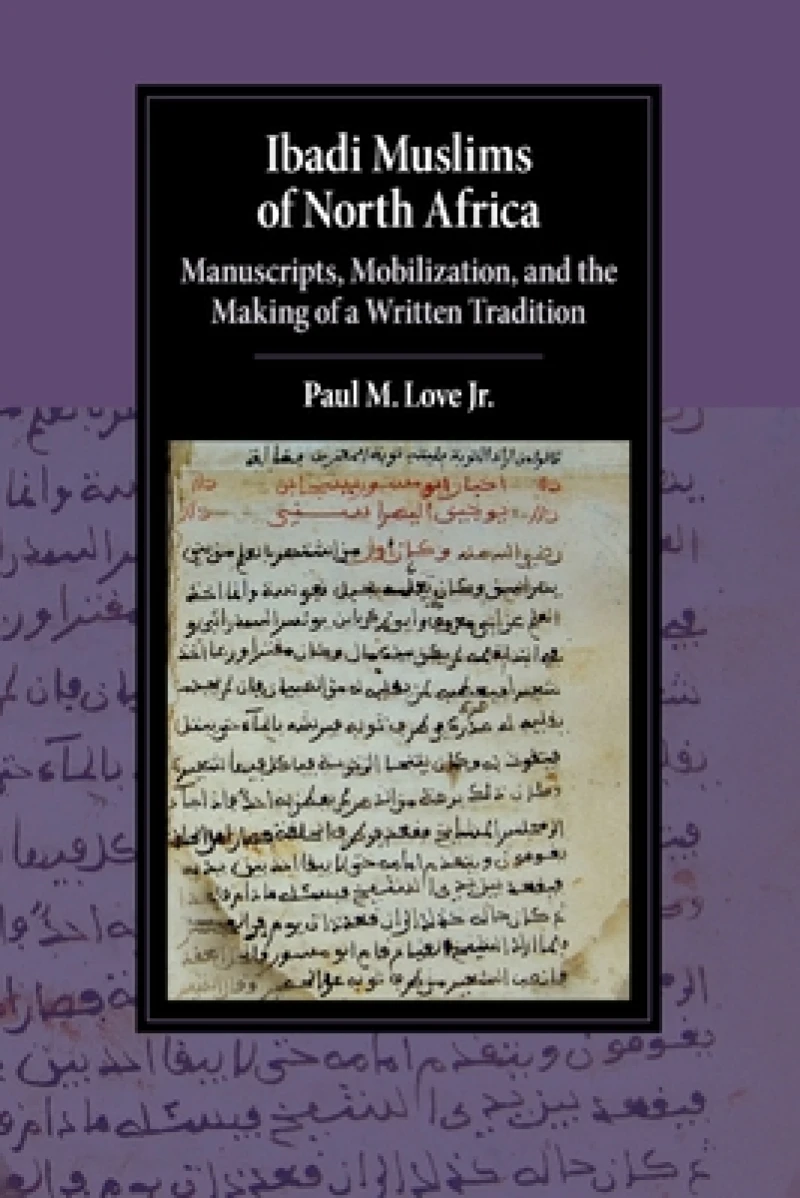
Ibadi Muslims of North Africa : Manuscripts, Mobilization, and the Making of a Written Tradition
Book Details
Format
Paperback / Softback
Book Series
Cambridge Studies in Islamic Civilization
ISBN-10
1108459013
ISBN-13
9781108459013
Publisher
Cambridge University Press
Imprint
Cambridge University Press
Country of Manufacture
GB
Country of Publication
GB
Publication Date
Jun 18th, 2020
Print length
232 Pages
Weight
348 grams
Dimensions
15.20 x 22.90 x 1.50 cms
Ksh 6,150.00
Manufactured on Demand
0 in stock
Delivery Location
Delivery fee: Select location
Secure
Quality
Fast
Examining the Ibadi Muslims of North Africa, this book traces the history of Arabic texts to tell the story of how people and their networks build religious traditions. Combining the study of Arabic manuscripts with digital tools, it explains how this religious community created and maintained a tradition over nearly a millennium.
The Ibadi Muslims, a little-known minority community, have lived in North Africa for over a thousand years. Combining an analysis of Arabic manuscripts with digital tools used in network analysis, Paul M. Love, Jr takes readers on a journey across the Maghrib and beyond as he traces the paths of a group of manuscripts and the Ibadi scholars who used them. Ibadi scholars of the Middle Period (eleventh–sixteenth century) wrote a series of collective biographies (prosopographies), which together constructed a cumulative tradition that connected Ibadi Muslims from across time and space, bringing them together into a ''written network''. From the Mzab valley in Algeria to the island of Jerba in Tunisia, from the Jebel Nafusa in Libya to the bustling metropolis of early-modern Cairo, this book shows how people and books worked in tandem to construct and maintain an Ibadi Muslim tradition in the Maghrib.
Get Ibadi Muslims of North Africa by at the best price and quality guaranteed only at Werezi Africa's largest book ecommerce store. The book was published by Cambridge University Press and it has pages.

