
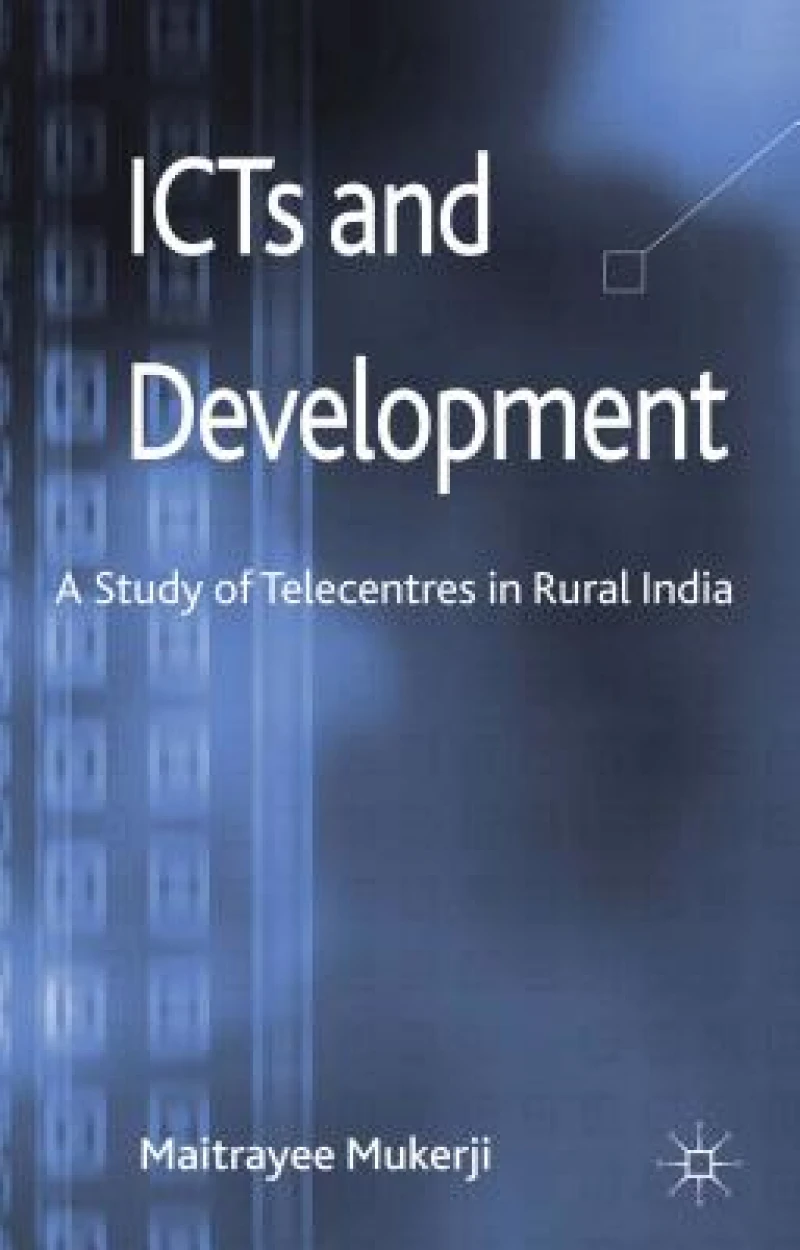
ICTs and Development : A Study of Telecentres in Rural India
by
M. Mukerji
Book Details
Format
Hardback or Cased Book
ISBN-10
113700553X
ISBN-13
9781137005533
Publisher
Palgrave Macmillan
Imprint
Palgrave Macmillan
Country of Manufacture
GB
Country of Publication
GB
Publication Date
Mar 8th, 2013
Print length
264 Pages
Weight
460 grams
Dimensions
22.60 x 15.00 x 2.00 cms
Ksh 8,100.00
Werezi Extended Catalogue
0 in stock
Delivery Location
Delivery fee: Select location
Secure
Quality
Fast
Juxtaposes the global discourse on ICT-D with in-depth case studies on the pattern of access and use of telecentres to draw implications for the possible development trajectories induced by the provision of ICTs in rural hinterlands of India.
ICT-D refers to the trend in development thinking and practice that considers deployment of new technologies like computers, mobile phones and Internet, which are important for spurring economic growth, enabling good governance and facilitating human development. In this context, telecentres have emerged as an immensely popular strategy for providing shared and mediated access to ICTs. The rapid proliferation of telecentres in rural India during the last decade was driven by multiple agencies, each with their own purpose, priorities and pre-designed set of services. This volume juxtaposes the global discourse on ICT-D and telecentres with in-depth empirical case studies on the pattern of access and use of telecenters in rural India to draw implications for policy and practice.
It suggest that access and use of telecentres and their services are mediated by the multiple contexts in which they are embedded. While they provide opportunities for people to interact with new technologies, their impact has been mainly in terms of convenience provided by some of the services vis-à-vis existing alternate channels. Particular telecentre models have brought about some change, but this is only when there was a match between the services provided and the local demand for particular information and services. The delivery structure services in terms of user fee, need for reading and computing skills, and linkages with existing institutional context have further shaped access and use.
The efficacy of telecentres in generating new jobs in rural areas, increasing efficiency and reach of e-Governance and other basic services, enhancing livelihoods and the well-being of the people, and overcoming the rural-urban divide has been limited.
It suggest that access and use of telecentres and their services are mediated by the multiple contexts in which they are embedded. While they provide opportunities for people to interact with new technologies, their impact has been mainly in terms of convenience provided by some of the services vis-à-vis existing alternate channels. Particular telecentre models have brought about some change, but this is only when there was a match between the services provided and the local demand for particular information and services. The delivery structure services in terms of user fee, need for reading and computing skills, and linkages with existing institutional context have further shaped access and use.
The efficacy of telecentres in generating new jobs in rural areas, increasing efficiency and reach of e-Governance and other basic services, enhancing livelihoods and the well-being of the people, and overcoming the rural-urban divide has been limited.
Get ICTs and Development by at the best price and quality guaranteed only at Werezi Africa's largest book ecommerce store. The book was published by Palgrave Macmillan and it has pages.

