
Cart 0
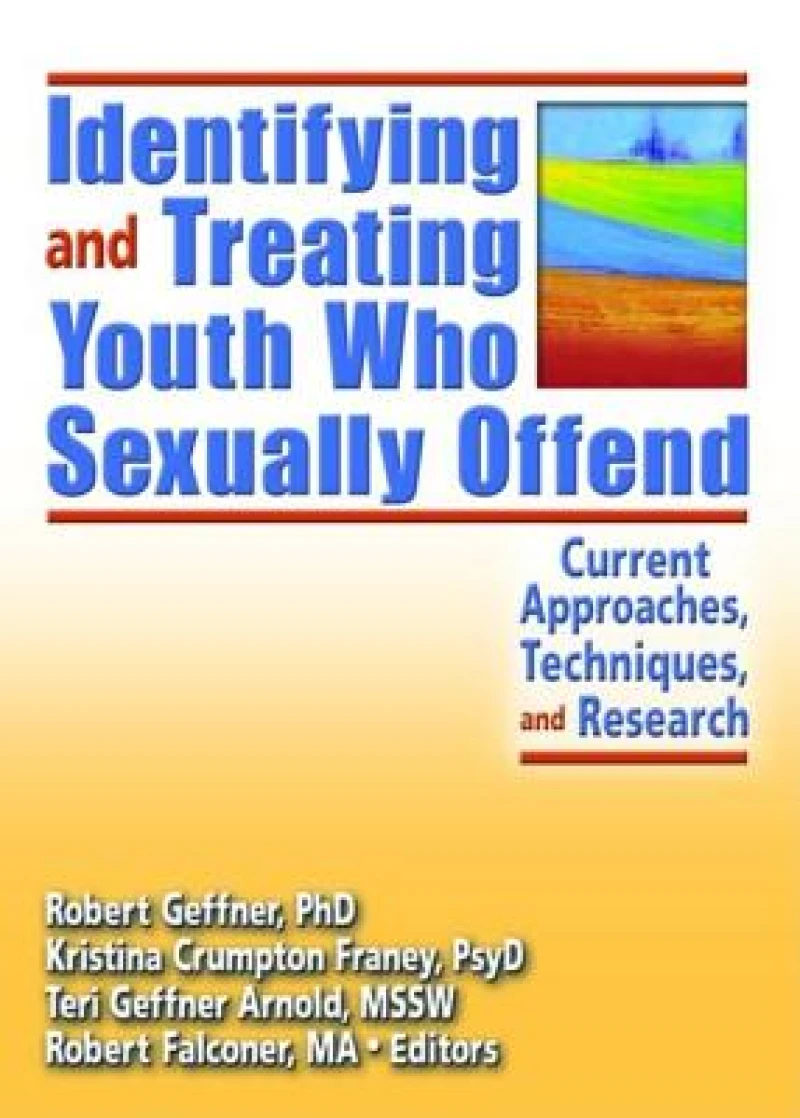
Identifying and Treating Youth Who Sexually Offend
Click to zoom

Share this book

Identifying and Treating Youth Who Sexually Offend : Current Approaches, Techniques, and Research

Book Details

Format Paperback / Softback
ISBN-10 0789027879
ISBN-13 9780789027870
Publisher Taylor & Francis Inc
Imprint Routledge
Country of Manufacture US
Country of Publication GB
Publication Date Jul 20th, 2005
Print length 356 Pages
Weight 660 grams
Ksh 13,250.00
Werezi Extended Catalogue 0 in stock

Delivery Location

Delivery fee: Select location

Secure
Quality
Fast
This book is designed to assist professionals working with youth who sexually offend. A distinguished panel of experts discusses the latest research and provides essential theory, techniques, and practical guidelines for the assessment and treatment of this challenging population.
What factors contribute to the making of a youthful sexual offender?

This book is designed to assist professionals working with youth who sexually offend. A distinguished panel of experts discusses the latest research and provides theory, techniques, and practical guidelines for the assessment and treatment of this challenging population.

Identifying and Treating Youth Who Sexually Offend: Current Approaches, Techniques, and Research lays an essential foundation with a theoretical overview that frames the subject in a clear, easy-to-follow style. This section includes:
  • a comprehensive overview of the controversies, definitions, and salient characteristics of youth who sexually offend that that provides an understanding of the factors believed to be related to sex offending among youth as well as an up-to-date review of current theory
  • an examination of an etiological model that is frequently applied to adult sex offenders—is it applicable for use with youthful offenders?
The second section of Identifying and Treating Youth Who Sexually Offend tackles the challenges professionals face when conducting assessments of sexually abusive youth. This section is designed to help the clinicians of today and tomorrow become better equipped to handle the daunting task of assessment—from choosing assessment tools to decreasing denial with specific interviewing techniques. Readers will learn:
  • how to distinguish subtypes among this population—with a research review and comparative descriptions of clinical and empirical typologies as well as discussion of the Trauma Outcome Process model and practical examples for clinicians
  • how to predict the rate of re-offense among youth who sexually offend, with a review of five risk assessment methods and four scales plus directions for using them—includes the Juvenile Sex Offender Assessment Protocol (JSOAP), the Protective Factors Scale (PFS), and the Estimate of Risk of Adolescent Sex Offender Recidivism (ERASOR)
  • the “nuts and bolts” of the interviewing and clinical assessment phase of treatment—a look at effective interviewing strategies, the process of change, and the stages of change model
  • the importance of family therapy in the treatment of these youth—ways to include parents in relapse prevention planning and ways to handle treatment providers’ misconceptions and concerns about including family therapy in this type of treatment
  • cognitive-behavioral treatment models for use in outpatient settings—with treatment strategies directed toward various individual or family clinical targets, including psychological dysfunctions, sexual deviance, adolescent development and adaptive skills, and parent/family relationships
  • an integrated (holistic) experiential approach to treatment, complete with sample exercises and a discussion of the pros and cons of many current treatment modalities
  • a multi-family group therapy (MFGT) approach—with a look at this powerful intervention mode’s advantages, including economic benefits, family-to-family support and mentoring, community-based resourcefulness, and accelerated catalyzing of emotions, and directions for how to establish a MFGT format for treatment
  • current practices in residential treatment for adolescent sex offenders—policies, testing and assessment procedures, therapeutic approaches used, number of males and females in treatment, etc.
The final section of Identifying and Treating Youth Who Sexually Offend explores what happens to youth who sexually offend after they leave treatment. This includes:
  • a survey of the literature on recidivism
  • an evaluation of the effectiveness of treatment of 644 juvenile sex offenders through the meta-analysis of 10 studies—with encouraging results!
  • a look at the life experiences of a samp

Get Identifying and Treating Youth Who Sexually Offend by at the best price and quality guaranteed only at Werezi Africa's largest book ecommerce store. The book was published by Taylor & Francis Inc and it has pages.


Mind, Body, & Spirit

Shopping Cart

Africa largest book store

Sub Total:
Ebooks

Digital Library
Coming Soon

Our digital collection is currently being curated to ensure the best possible reading experience on Werezi. We'll be launching our Ebooks platform shortly.