
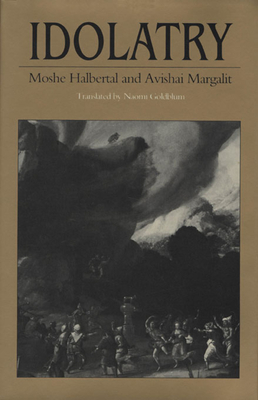
Idolatry
Book Details
Format
Paperback / softback
ISBN-10
0674443136
ISBN-13
9780674443136
Publisher
Harvard University Press
Imprint
Harvard University Press
Country of Manufacture
US
Country of Publication
GB
Publication Date
Aug 19th, 1998
Print length
312 Pages
Weight
454 grams
Dimensions
23.50 x 15.40 x 1.90 cms
KSh 6,650.00
Currently unavailable
0 in stock
Delivery Location
Delivery fee: Select location
Secure
Quality
Fast
Ranging with authority from the Talmud to Maimonides, from Marx to Nietzsche and on to G.E. Moore, this account of a subject central to our culture also has much to say about metaphor, myth, and the application of philosophical analysis to religious concepts and sensibilities.
“You shall have no other gods besides Me.” This injunction, handed down through Moses three thousand years ago, marks one of the most decisive shifts in Western culture: away from polytheism toward monotheism. Despite the momentous implications of such a turn, the role of idolatry in giving it direction and impetus is little understood. This book examines the meaning and nature of idolatry—and, in doing so, reveals much about the monotheistic tradition that defines itself against this sin. The authors consider Christianity and Islam, but focus primarily on Judaism. They explore competing claims about the concept of idolatry that emerges in the Hebrew Bible as a “whoring after false gods.” Does such a description, grounded in an analogy of sexual relations, presuppose the actual existence of other gods with whom someone might sin? Or are false gods the product of “men’s hands,” simply a matter of misguided belief? The authors show how this debate, over idolatry as practice or error, has taken shape and has in turn shaped the course of Western thought—from the differentiation between Jewish and Christian conceptions of God to the distinctions between true and false belief that inform the tradition of religious enlightenment. Ranging with authority from the Talmud to Maimonides, from Marx to Nietzsche and on to G.E. Moore, this brilliant account of a subject central to our culture also has much to say about metaphor, myth, and the application of philosophical analysis to religious concepts and sensibilities. Its insights into pluralism and intolerance, into the logic and illogic of the arguments religions aim at each other, make Idolatry especially timely and valuable in these days of dark and implacable religious difference.
Get Idolatry by Avishai Margalit, Moshe Halbertal at the best price and quality guaranteed only at Werezi Africa's largest book ecommerce store. The book was published by Harvard University Press and it has 312 pages.
Customers Who Bought This Also Bought

Pilgrims Regress
KSh 2,000.00

The Scriptures, the Cross and the Power of God
KSh 1,600.00

The Holy Year
KSh 2,350.00

Watch for the Light
KSh 3,400.00

Bread and Wine
KSh 3,400.00

Worship by the Book
KSh 3,400.00

The Biblical Doctrine of Infant Baptism
KSh 4,000.00

The Beauty of the Liturgy
KSh 5,200.00

The Intercession of Rees Howells
KSh 2,350.00

Trinitarian Doxology
KSh 4,900.00

Celebrating Biblical Feasts
KSh 2,350.00

Inclusive yet Discerning
KSh 3,600.00
More by Avishai Margalit, Moshe Halbertal

Captive Minds
KSh 4,500.00
People of the Book
KSh 6,300.00

Nahmanides
KSh 9,100.00

Maimonides – Life and Thought
KSh 4,500.00
The Beginning of Politics – Power in the Biblical Book of Samuel
KSh 3,250.00
The Decent Society
KSh 4,850.00

On Compromise and Rotten Compromises
KSh 3,400.00
The Beginning of Politics
KSh 6,300.00

On Sacrifice
KSh 3,250.00

The Ethics of Memory
KSh 4,850.00

On Betrayal
KSh 6,450.00

Apostasie
KSh 5,500.00
