
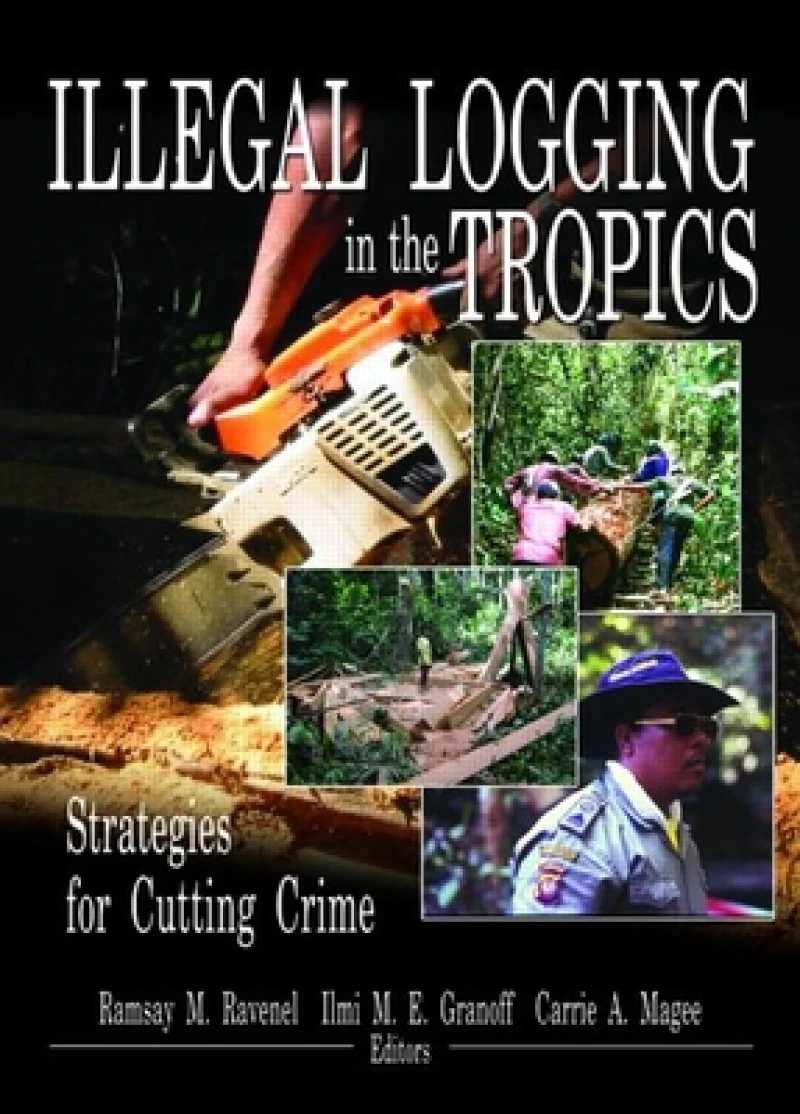
Illegal Logging in the Tropics : Strategies for Cutting Crime
Book Details
Format
Hardback or Cased Book
ISBN-10
156022116X
ISBN-13
9781560221166
Publisher
Taylor & Francis Inc
Imprint
CRC Press Inc
Country of Manufacture
GB
Country of Publication
GB
Publication Date
Jan 21st, 2005
Print length
408 Pages
Weight
794 grams
Dimensions
22.10 x 15.90 x 3.10 cms
Ksh 37,800.00
Re-Printing
0 in stock
Delivery Location
Delivery fee: Select location
Secure
Quality
Fast
Examine why illegal logging is so pervasive—and how this problem can be addressed
In March 2002, the Yale chapter of the International Society of Tropical Foresters brought together social and natural scientists, resource managers, policymakers, community leaders, and other interested parties to share experiences, strategies, successes, and failures in addressing illegal logging and corruption. The results were the conference Illegal Logging in Tropical Forests: Ecology, Economics, and Politics of Resource Misuse and this book, which brings together analyses from the perspectives, of anthropology, economics, forestry, law, political science, and sociology.
Illegal Logging in the Tropics: Strategies for Cutting Crime suggests specific policy interventions aimed at curbing illegal logging and identifying solutions to forest crime. It presents both thematic analyses of illegal logging at the global level and case studies on both the local and national levels in African, Latin American, and Asian countries. The contributors draw on their experiences in Benin, Brazil, Cameroon, India, Indonesia, Mexico, and Vietnam.
Illegal Logging in the Tropics: Strategies for Cutting Crime examines:
In March 2002, the Yale chapter of the International Society of Tropical Foresters brought together social and natural scientists, resource managers, policymakers, community leaders, and other interested parties to share experiences, strategies, successes, and failures in addressing illegal logging and corruption. The results were the conference Illegal Logging in Tropical Forests: Ecology, Economics, and Politics of Resource Misuse and this book, which brings together analyses from the perspectives, of anthropology, economics, forestry, law, political science, and sociology.
Illegal Logging in the Tropics: Strategies for Cutting Crime suggests specific policy interventions aimed at curbing illegal logging and identifying solutions to forest crime. It presents both thematic analyses of illegal logging at the global level and case studies on both the local and national levels in African, Latin American, and Asian countries. The contributors draw on their experiences in Benin, Brazil, Cameroon, India, Indonesia, Mexico, and Vietnam.
Illegal Logging in the Tropics: Strategies for Cutting Crime examines:
- global governance—with a cross-country regression analysis of deforestation and various aspects of governance
- global forest trade—with extensive reviews of data on global trade in forest products
- community perspectives on illegal logging—including a system dynamics model of villagers’ willingness to log, a description of community involvement in broader networks of illegal trade, and a chapter that challenges the credibility of illegality as defined by a corrupt government or agency
- the efforts of NGOs to combat illegal logging
- how illegal logging is typically symptomatic of broader failures of governance
- the role of monitoring in cutting forest crime
- whether illegal logging is better combated via law enforcement or by local communities—with pros and cons for each approach
- the proximate causes of illegal logging, including access to forests and equipment, and economic factors
- the efforts of Transparency International—a widely lauded organization combating corruption—to address illegal logging at the international policy level
Get Illegal Logging in the Tropics by at the best price and quality guaranteed only at Werezi Africa's largest book ecommerce store. The book was published by Taylor & Francis Inc and it has pages.

