

Imaginary Languages : Myths, Utopias, Fantasies, Illusions, and Linguistic Fictions
Book Details
Format
Paperback / softback
ISBN-10
0262547155
ISBN-13
9780262547154
Publisher
MIT Press Ltd
Imprint
MIT Press
Country of Manufacture
GB
Country of Publication
GB
Publication Date
Sep 19th, 2023
Print length
352 Pages
Weight
350 grams
Dimensions
12.20 x 19.70 x 2.10 cms
Product Classification:
Language: reference & general
KSh 4,150.00
Werezi Extended Catalogue
Delivery in 4 days
1 copies in stock
Delivery Location
Delivery fee: Select location
Delivery in 4 days
Secure
Quality
Fast
An exploration of the practice of inventing languages, from speaking in tongues to utopian schemes of universality to the discoveries of modern linguistics. In Imaginary Languages, Marina Yaguello explores the history and practice of inventing languages, from religious speaking in tongues to politically utopian schemes of universality to the discoveries of modern linguistics. She looks for imagined languages that are autonomous systems, complete unto themselves and meant for communal use; imaginary, and therefore unlike both natural languages and historically attested languages; and products of an individual effort to lay hold of language. Inventors of languages, Yaguello writes, are madly in love: they love an object that belongs to them only to the extent that they also share it with a community. Yaguello investigates the sources of imaginary languages, in myths, dreams, and utopias. She takes readers on a tour of languages invented in literature from the sixteenth to the twentieth century, including that in More’s Utopia, Leibniz’s “algebra of thought,” and Bulwer-Lytton’s linguistic fiction. She examines the linguistic fantasies (or madness) of Georgian linguist Nikolai Marr and Swiss medium Hélène Smith; and considers the quest for the true philosophical language. Yaguello finds two abiding (and somewhat contradictory) forces: the diversity of linguistic experience, which stands opposed to unifying endeavors, and, on the other hand, features shared by all languages (natural or not) and their users, which justifies the universalist hypothesis. Recent years have seen something of a boom in invented languages, whether artificial languages meant to facilitate international communication or imagined languages constructed as part of science fiction worlds. In Imaginary Languages (an updated and expanded version of the earlier Les Fous du langage, published in English as Lunatic Lovers of Language), Yaguello shows that the invention of language is above all a passionate, dizzying labor of love.
An exploration of the practice of inventing languages, from speaking in tongues to utopian schemes of universality to the discoveries of modern linguistics.
In Imaginary Languages, Marina Yaguello explores the history and practice of inventing languages, from religious speaking in tongues to politically utopian schemes of universality to the discoveries of modern linguistics. She looks for imagined languages that are autonomous systems, complete unto themselves and meant for communal use; imaginary, and therefore unlike both natural languages and historically attested languages; and products of an individual effort to lay hold of language. Inventors of languages, Yaguello writes, are madly in love: they love an object that belongs to them only to the extent that they also share it with a community.
Yaguello investigates the sources of imaginary languages, in myths, dreams, and utopias. She takes readers on a tour of languages invented in literature from the sixteenth to the twentieth century, including that in More’s Utopia, Leibniz’s “algebra of thought,” and Bulwer-Lytton’s linguistic fiction. She examines the linguistic fantasies (or madness) of Georgian linguist Nikolai Marr and Swiss medium Hélène Smith; and considers the quest for the true philosophical language. Yaguello finds two abiding (and somewhat contradictory) forces: the diversity of linguistic experience, which stands opposed to unifying endeavors, and, on the other hand, features shared by all languages (natural or not) and their users, which justifies the universalist hypothesis.
Recent years have seen something of a boom in invented languages, whether artificial languages meant to facilitate international communication or imagined languages constructed as part of science fiction worlds. In Imaginary Languages (an updated and expanded version of the earlier Les Fous du langage, published in English as Lunatic Lovers of Language), Yaguello shows that the invention of language is above all a passionate, dizzying labor of love.
In Imaginary Languages, Marina Yaguello explores the history and practice of inventing languages, from religious speaking in tongues to politically utopian schemes of universality to the discoveries of modern linguistics. She looks for imagined languages that are autonomous systems, complete unto themselves and meant for communal use; imaginary, and therefore unlike both natural languages and historically attested languages; and products of an individual effort to lay hold of language. Inventors of languages, Yaguello writes, are madly in love: they love an object that belongs to them only to the extent that they also share it with a community.
Yaguello investigates the sources of imaginary languages, in myths, dreams, and utopias. She takes readers on a tour of languages invented in literature from the sixteenth to the twentieth century, including that in More’s Utopia, Leibniz’s “algebra of thought,” and Bulwer-Lytton’s linguistic fiction. She examines the linguistic fantasies (or madness) of Georgian linguist Nikolai Marr and Swiss medium Hélène Smith; and considers the quest for the true philosophical language. Yaguello finds two abiding (and somewhat contradictory) forces: the diversity of linguistic experience, which stands opposed to unifying endeavors, and, on the other hand, features shared by all languages (natural or not) and their users, which justifies the universalist hypothesis.
Recent years have seen something of a boom in invented languages, whether artificial languages meant to facilitate international communication or imagined languages constructed as part of science fiction worlds. In Imaginary Languages (an updated and expanded version of the earlier Les Fous du langage, published in English as Lunatic Lovers of Language), Yaguello shows that the invention of language is above all a passionate, dizzying labor of love.
Get Imaginary Languages by Erik Butler, Marina Yaguello at the best price and quality guaranteed only at Werezi Africa's largest book ecommerce store. The book was published by MIT Press Ltd and it has 352 pages.
Customers Who Bought This Also Bought
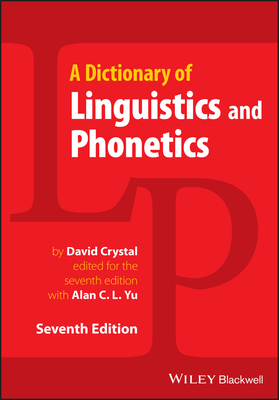
Dictionary of Linguistics and Phonetics, Seventh Edition
KSh 7,200.00

Biblical Names and Their Meanings
KSh 800.00

Thinking Through Translation
KSh 5,050.00

John Stuart Mill and the Writing of Character
KSh 6,400.00

Hunting Lieutenant Chadbourne
KSh 4,800.00

The Language of the American South
KSh 4,000.00

French as Language of Intimacy in the Modern Age
KSh 8,650.00

The Routledge Hispanic Studies Companion to Nineteenth-Century Latin America
KSh 10,250.00

Golosa
KSh 26,100.00

Malayalam
KSh 12,900.00

The Old English Version of the enlarged «Rule of Chrodegang»
KSh 16,550.00

Chinese Children''s Reading Acquisition
KSh 16,200.00
More by Erik Butler, Marina Yaguello

The Devil and His Advocates
KSh 4,850.00

Star Power
KSh 4,850.00

The Bellum Grammaticale and the Rise of European Literature
KSh 7,800.00

The Bellum Grammaticale and the Rise of European Literature
KSh 30,950.00

Sexus Botanicus
KSh 4,700.00

Language through the Looking Glass
KSh 25,150.00

Star Power
KSh 3,800.00
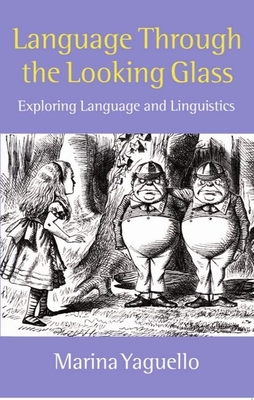
Language Through the Looking Glass
KSh 10,350.00
More in This Genre
Dictionary of Linguistics and Phonetics, Seventh Edition
KSh 7,200.00
Biblical Names and Their Meanings
KSh 800.00
Thinking Through Translation
KSh 5,050.00
John Stuart Mill and the Writing of Character
KSh 6,400.00
Hunting Lieutenant Chadbourne
KSh 4,800.00
The Language of the American South
KSh 4,000.00
