

Book Details
Format
Hardback
ISBN-10
3319946366
ISBN-13
9783319946368
Edition
2018 ed.
Publisher
Springer International Publishing AG
Imprint
Springer International Publishing AG
Country of Manufacture
GB
Country of Publication
GB
Publication Date
Aug 30th, 2018
Print length
301 Pages
Product Classification:
Mathematical theory of computation
KSh 12,600.00
Temporarily out of stock, due soon
0 in stock
Delivery Location
Delivery fee: Select location
Secure
Quality
Fast
John Vince explains how complex numbers simplify trigonometric identities, wave combinations and phase differences in circuit analysis, and how geometric algebra resolves geometric problems, and quaternions rotate 3D vectors.
The imaginary unit i = v-1 has been used by mathematicians for nearly five-hundred years, during which time its physical meaning has been a constant challenge. Unfortunately, René Descartes referred to it as “imaginary”, and the use of the term “complex number” compounded the unnecessary mystery associated with this amazing object. Today, i = v-1 has found its way into virtually every branch of mathematics, and is widely employed in physics and science, from solving problems in electrical engineering to quantum field theory. John Vince describes the evolution of the imaginary unit from the roots of quadratic and cubic equations, Hamilton’s quaternions, Cayley’s octonions, to Grassmann’s geometric algebra. In spite of the aura of mystery that surrounds the subject, John Vince makes the subject accessible and very readable. The first two chapters cover the imaginary unit and its integration with real numbers. Chapter 3 describes how complex numbers work with matrices, and shows how to compute complex eigenvalues and eigenvectors. Chapters 4 and 5 cover Hamilton’s invention of quaternions, and Cayley’s development of octonions, respectively. Chapter 6 provides a brief introduction to geometric algebra, which possesses many of the imaginary qualities of quaternions, but works in space of any dimension. The second half of the book is devoted to applications of complex numbers, quaternions and geometric algebra. John Vince explains how complex numbers simplify trigonometric identities, wave combinations and phase differences in circuit analysis, and how geometric algebra resolves geometric problems, and quaternions rotate 3D vectors. There are two short chapters on the Riemann hypothesis and the Mandelbrot set, both of which use complex numbers. The last chapter references the role of complex numbers in quantum mechanics, and ends with Schrödinger’s famous wave equation. Filled with lots of clear examples and useful illustrations, this compact book provides an excellent introduction to imaginary mathematics for computer science.
Get Imaginary Mathematics for Computer Science by John Vince at the best price and quality guaranteed only at Werezi Africa's largest book ecommerce store. The book was published by Springer International Publishing AG and it has 301 pages.
Customers Who Bought This Also Bought

Polynomial Solutions of Linear Differential Equations
KSh 22,950.00

Quantum Optics
KSh 10,800.00

Computational Geometry
KSh 12,050.00
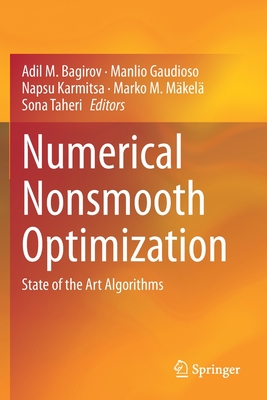
Numerical Nonsmooth Optimization
KSh 28,800.00

Autonomous Search
KSh 16,200.00

Computability and Complexity Theory
KSh 13,500.00

Spring Cloud Data Flow
KSh 11,700.00

Two-Level Functional Languages
KSh 9,550.00

Foundational and Practical Aspects of Resource Analysis
KSh 8,100.00
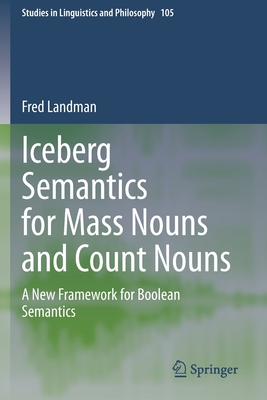
Iceberg Semantics for Mass Nouns and Count Nouns
KSh 16,200.00
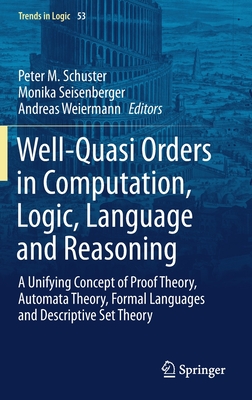
Well-Quasi Orders in Computation, Logic, Language and Reasoning
KSh 28,800.00

Information Processing and Management of Uncertainty in Knowledge-Based Systems
KSh 19,800.00
More by John Vince

Imaginary Mathematics for Computer Science
KSh 9,000.00

Vector Analysis for Computer Graphics
KSh 8,100.00
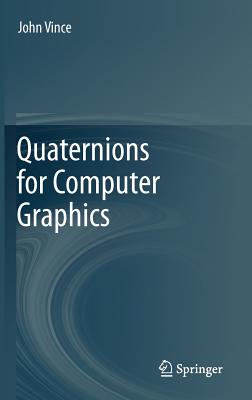
Quaternions for Computer Graphics
KSh 12,700.00
Vector Analysis for Computer Graphics
KSh 9,900.00

Mathematics for Computer Graphics
KSh 9,900.00

Mathematics for Computer Graphics
KSh 11,700.00
Virtual Worlds on the Internet
KSh 18,900.00
Quaternions for Computer Graphics
KSh 10,800.00
Calculus for Computer Graphics
KSh 9,900.00

Foundation Mathematics for Computer Science
KSh 10,800.00

Quaternions for Computer Graphics
KSh 8,100.00
