
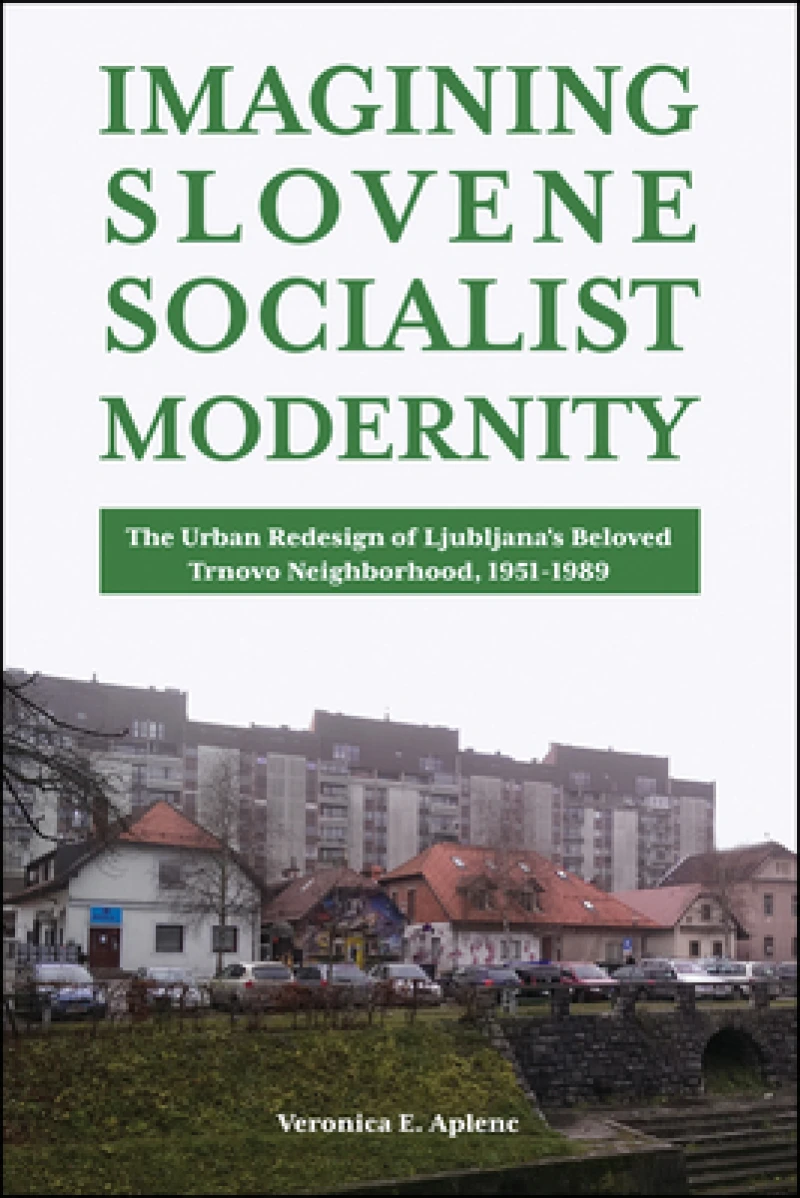
Imagining Slovene Socialist Modernity : The Urban Redesign of Ljubljana's Beloved Trnovo Neighborhood, 1951-1989
Book Details
Format
Paperback / Softback
Book Series
Central European Studies
ISBN-10
1612498132
ISBN-13
9781612498133
Publisher
Purdue University Press
Imprint
Purdue University Press
Country of Manufacture
GB
Country of Publication
GB
Publication Date
Mar 15th, 2023
Print length
250 Pages
Weight
376 grams
Dimensions
15.30 x 22.90 x 1.70 cms
Product Classification:
City & town planning - architectural aspectsCity and town planning: architectural aspectsEuropean historyUrban communities / city lifeUrban communitiesFar-left political ideologies and movementsMarxism & CommunismEuropean historyUrban & municipal planningUrban and municipal planning and policy
Ksh 7,550.00
Werezi Extended Catalogue
0 in stock
Delivery Location
Delivery fee: Select location
Secure
Quality
Fast
Explores how urban planners, architects, historic preservationists, neighborhood residents, and even folklorists transformed Ljubljana’s beloved Trnovo neighbourhood into a Slovene socialist city district.
After the Second World War, Yugoslavia's small regional cities represented a challenge for the new socialist state. These cities' older buildings, local historic sites, and low-quality housing clashed with socialism's promises and ideals. How would the state transform these cities' everyday neighborhoods? In the Slovene republic's capital city of Ljubljana, the Trnovo neighborhood embodied this challenge through its modest housing, small medieval section, vast gardens, acclaimed interwar architecture, and iconic local reputation. Imagining Slovene Socialist Modernity explores how urban planners, architects, historic preservationists, neighborhood residents, and even folklorists transformed this beloved neighborhood into a Slovene socialist city district. Aplenc demonstrates that this urban redesign centered on republic-level interpretations of a Yugoslav socialist built environment, versus a re-envisioned Slovene national past or design style. This interdisciplinary study sheds light on how Yugoslav state socialism operated at the republic level, within a decentralized system, and on the diverse forces behind success or failure. With its focus on vernacular architecture, small-scale historic sites, single-family homes, and illegal housing, this book expands our understanding of the everyday built environment in socialist cities.
Get Imagining Slovene Socialist Modernity by at the best price and quality guaranteed only at Werezi Africa's largest book ecommerce store. The book was published by Purdue University Press and it has pages.

