
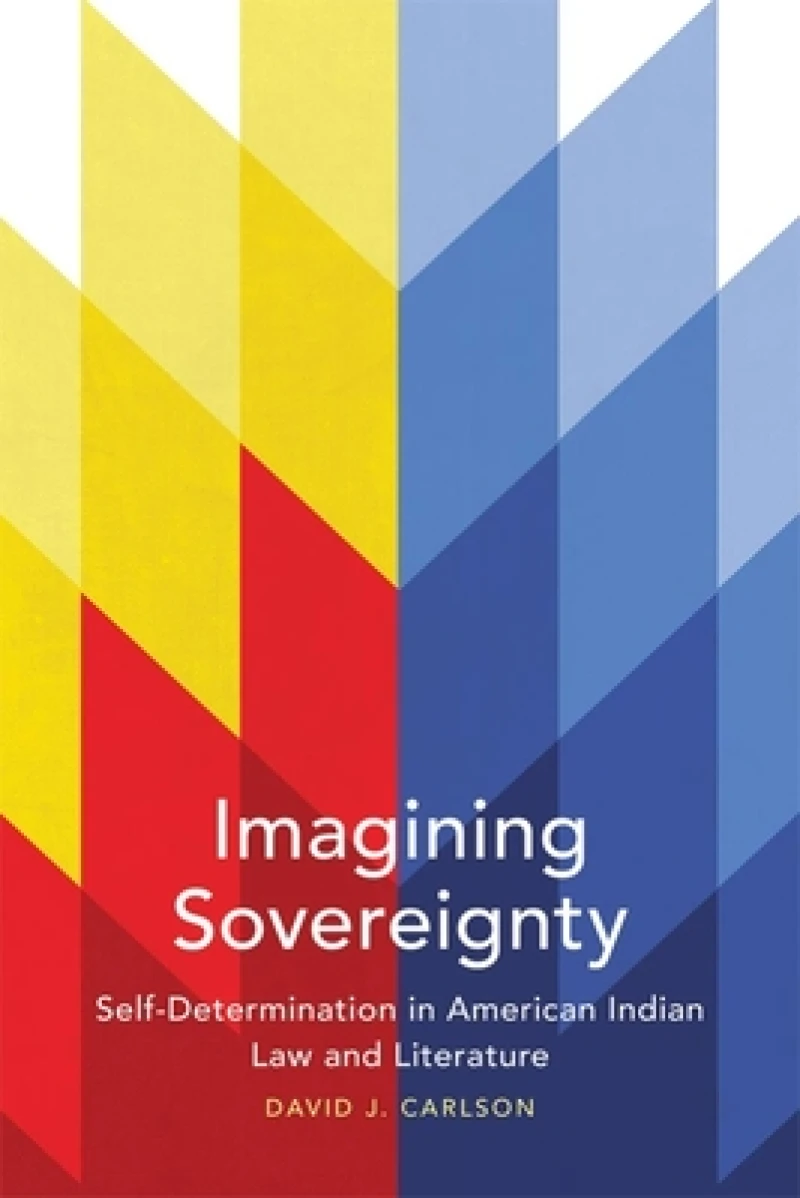
Imagining Sovereignty : Self-Determination in American Indian Law and Literature
Book Details
Format
Paperback / Softback
ISBN-10
0806151978
ISBN-13
9780806151977
Publisher
University of Oklahoma Press
Imprint
University of Oklahoma Press
Country of Manufacture
US
Country of Publication
GB
Publication Date
Mar 8th, 2016
Print length
242 Pages
Weight
361 grams
Dimensions
22.90 x 15.20 x 1.50 cms
Ksh 4,150.00
Werezi Extended Catalogue
0 in stock
Delivery Location
Delivery fee: Select location
Secure
Quality
Fast
Sovereignty” is perhaps the most ubiquitous term in American Indian writing today - but its meaning and function are anything but universally understood. This is as it should be, David J. Carlson suggests, for a concept frequently at the centre of various - and often competing - claims to authority.
Sovereignty"" is perhaps the most ubiquitous term in American Indian writing today - but its meaning and function are anything but universally understood. This is as it should be, David J. Carlson suggests, for a concept frequently at the center of various - and often competing - claims to authority. In Imagining Sovereignty, Carlson explores sovereignty as a discursive middle ground between tribal communities and the United States as a settler-colonial power. His work reveals the complementary ways in which legal and literary texts have generated politically significant representations of the world, which in turn have produced particular effects on readers and advanced the cause of tribal self-determination.
Drawing on western legal historical sources and American Indian texts, Carlson traces a dual genealogy of sovereignty. Imagining Sovereignty identifies the concept as a marker, one that allows both the colonizing power of the United States and the resisting powers of various American Indian nations to organize themselves and their various claims to authority. In the process, sovereignty also functions as a point of exchange where these claims compete with and complicate one another. To this end, Carlson analyzes how several contemporary American Indian writers and critics have sought to fuse literary practices and legal structures into fully formed discourses of self-determination. After charting the development of the concept of sovereignty in natural law and its permutations in federal Indian policy, Carlson maps out the nature and function of sovereignty discourses in the work of contemporary Native scholars such as Russel Barsh, Gerald Taiaiake Alfred, D''Arcy McNickle, and Vine Deloria, and in the work of more expressly literary American Indian writers such as Craig Womack, Elizabeth Cook-Lynn, Gerald Vizenor, and Francisco Patencio.
Often read in opposition, the writings of these indigenous authors emerge in Imagining Sovereignty as a coherent literary and political tradition - one whose varied discourse of sovereignty aptly reflects American Indian people''s diverse political contexts.
Drawing on western legal historical sources and American Indian texts, Carlson traces a dual genealogy of sovereignty. Imagining Sovereignty identifies the concept as a marker, one that allows both the colonizing power of the United States and the resisting powers of various American Indian nations to organize themselves and their various claims to authority. In the process, sovereignty also functions as a point of exchange where these claims compete with and complicate one another. To this end, Carlson analyzes how several contemporary American Indian writers and critics have sought to fuse literary practices and legal structures into fully formed discourses of self-determination. After charting the development of the concept of sovereignty in natural law and its permutations in federal Indian policy, Carlson maps out the nature and function of sovereignty discourses in the work of contemporary Native scholars such as Russel Barsh, Gerald Taiaiake Alfred, D''Arcy McNickle, and Vine Deloria, and in the work of more expressly literary American Indian writers such as Craig Womack, Elizabeth Cook-Lynn, Gerald Vizenor, and Francisco Patencio.
Often read in opposition, the writings of these indigenous authors emerge in Imagining Sovereignty as a coherent literary and political tradition - one whose varied discourse of sovereignty aptly reflects American Indian people''s diverse political contexts.
Get Imagining Sovereignty by at the best price and quality guaranteed only at Werezi Africa's largest book ecommerce store. The book was published by University of Oklahoma Press and it has pages.

