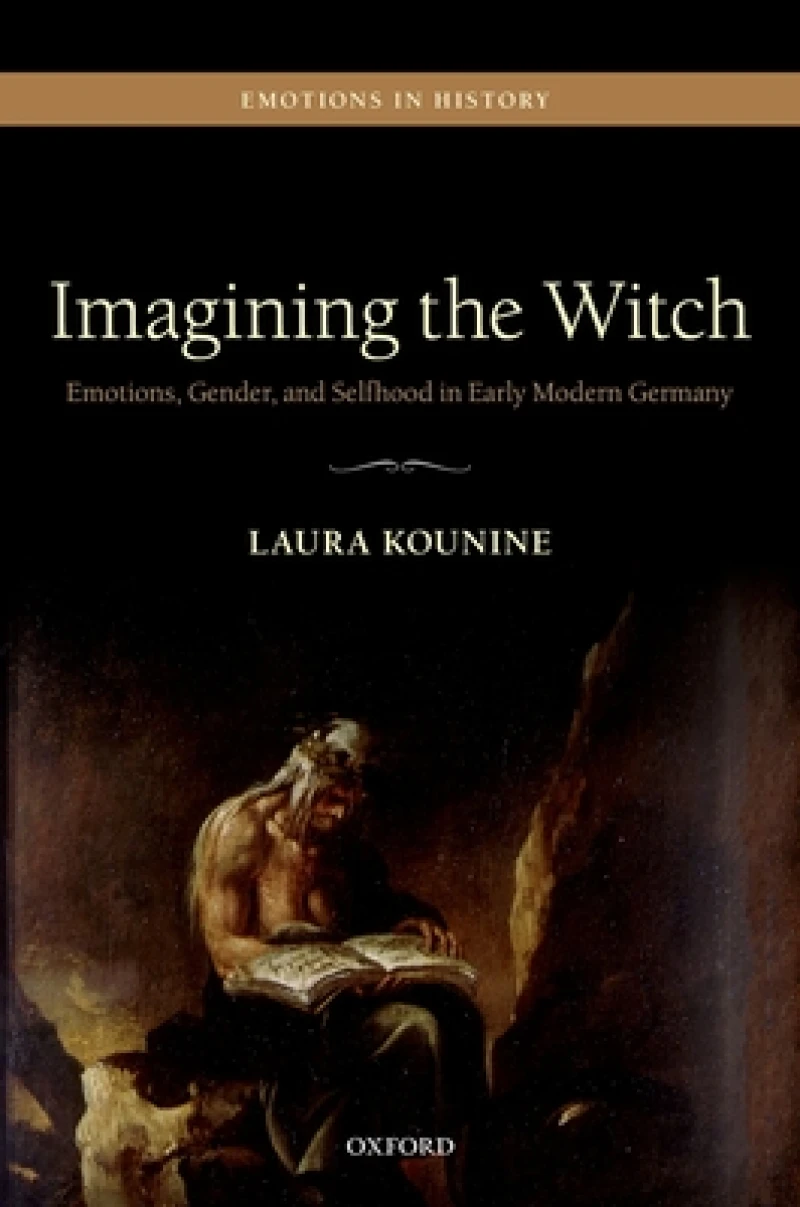
Imagining the Witch : Emotions, Gender, and Selfhood in Early Modern Germany
Book Details
Format
Hardback or Cased Book
Book Series
Emotions in History
ISBN-10
019879908X
ISBN-13
9780198799085
Publisher
Oxford University Press
Imprint
Oxford University Press
Country of Manufacture
GB
Country of Publication
GB
Publication Date
Nov 13th, 2018
Print length
292 Pages
Weight
614 grams
Dimensions
16.50 x 24.00 x 3.00 cms
Product Classification:
European historyEarly modern history: c 1450/1500 to c 1700Social & cultural historyWitchcraft
Ksh 20,450.00
Manufactured on Demand
0 in stock
Delivery Location
Delivery fee: Select location
Secure
Quality
Fast
The Holy Roman Empire was the heartland of the witch craze, with around 23,000 witches executed in the early modern period. In this book, Laura Kounine uses case studies of witch trials in early modern Württemberg to examine how people sought to identify witches, and the ways in which ordinary men and women fought for their life to avoid the stake.
Imagining the Witch explores emotions, gender, and selfhood through the lens of witch-trials in early modern Germany. Witch-trials were clearly a gendered phenomenon, but witchcraft was not a uniquely female crime. While women constituted approximately three quarters of those tried for witchcraft in the Holy Roman Empire, a significant minority were men. Witchcraft was also a crime of unbridled passion: it centred on the notion that one person''s emotions could have tangible and deadly physical consequences. Yet it is also true that not all suspicions of witchcraft led to a formal accusation, and not all witch-trials led to the stake. Indeed, just over half the total number put on trial for witchcraft in early modern Europe were executed. In order to understand how early modern people imagined the witch, we must first begin to understand how people understood themselves and each other; this can help us to understand how the witch could be a member of the community, living alongside their accusers, yet inspire such visceral fear. Through an examination of case studies of witch-trials that took place in the early modern Lutheran duchy of Württemberg in southwestern Germany, Laura Kounine examines how the community, church, and the agents of the law sought to identify the witch, and the ways in which ordinary men and women fought for their lives in an attempt to avoid the stake. The study further explores the visual and intellectual imagination of witchcraft in this period in order to piece together why witchcraft could be aligned with such strong female stereotypes on the one hand, but also be imagined as a crime that could be committed by any human, whether young or old, male or female. By moving beyond stereotypes of the witch, Imagining the Witch argues that understandings of what constituted witchcraft and the ''witch'' appear far more contested and unstable than has previously been suggested. It also suggests new ways of thinking about early modern selfhood which moves beyond teleological arguments about the development of the ''modern'' self. Indeed, it is the trial process itself that created the conditions for a diverse range of people to reflect on, and give meaning, to emotions, gender, and the self in early modern Lutheran Germany.
Get Imagining the Witch by at the best price and quality guaranteed only at Werezi Africa's largest book ecommerce store. The book was published by Oxford University Press and it has pages.