
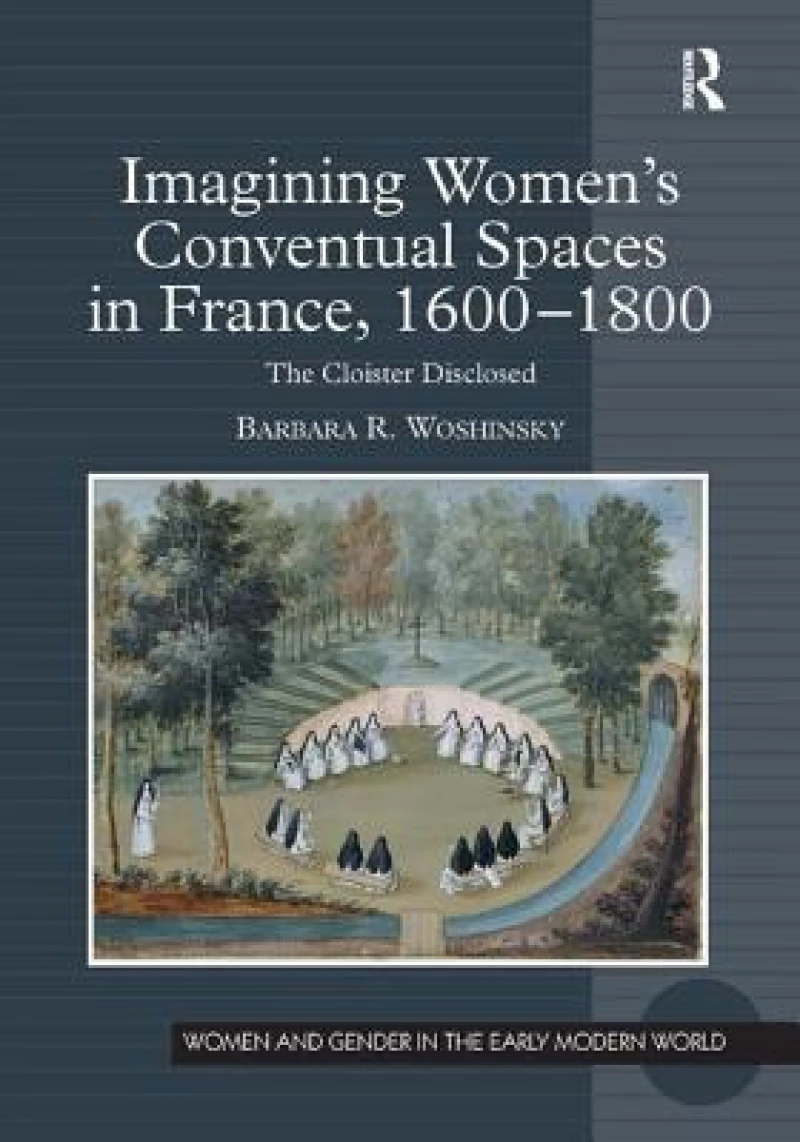
Imagining Women's Conventual Spaces in France, 1600–1800 : The Cloister Disclosed
Book Details
Format
Hardback or Cased Book
Book Series
Women and Gender in the Early Modern World
ISBN-10
0754667545
ISBN-13
9780754667544
Publisher
Taylor & Francis Ltd
Imprint
Routledge
Country of Manufacture
GB
Country of Publication
GB
Publication Date
Oct 28th, 2010
Print length
362 Pages
Weight
840 grams
Dimensions
17.00 x 24.30 x 3.30 cms
Product Classification:
Church historyChristian communities & monasticismGender studies: women
Ksh 28,800.00
Werezi Extended Catalogue
0 in stock
Delivery Location
Delivery fee: Select location
Secure
Quality
Fast
Blending history and architecture with literary analysis, this study explores the convent's place in the early modern imagination. This title focuses on two pivotal events: the Council of Trent imposing strict enclosure on cloistered nuns, and the French Revolution expelling them from their cloisters two centuries later.
Blending history and architecture with literary analysis, this ground-breaking study explores the convent''s place in the early modern imagination. The author brackets her account between two pivotal events: the Council of Trent imposing strict enclosure on cloistered nuns, and the French Revolution expelling them from their cloisters two centuries later. In the intervening time, women within convent walls were both captives and refugees from an outside world dominated by patriarchal power and discourses. Yet despite locks and bars, the cloister remained "porous" to privileged visitors. Others could catch a glimpse of veiled nuns through the elaborate grills separating cloistered space from the church, provoking imaginative accounts of convent life. Not surprisingly, the figure of the confined religious woman represents an intensified object of desire in male-authored narrative. The convent also spurred "feminutopian" discourses composed by women: convents become safe houses for those fleeing bad marriages or trying to construct an ideal, pastoral life, as a counter model to the male-dominated court or household. Recent criticism has identified certain privileged spaces that early modern women made their own: the ruelle, the salon, the hearth of fairy tale-telling. Woshinsky''s book definitively adds the convent to this list.
Get Imagining Women's Conventual Spaces in France, 1600–1800 by at the best price and quality guaranteed only at Werezi Africa's largest book ecommerce store. The book was published by Taylor & Francis Ltd and it has pages.

