
Book Details
Delivery Location
Delivery fee: Select location
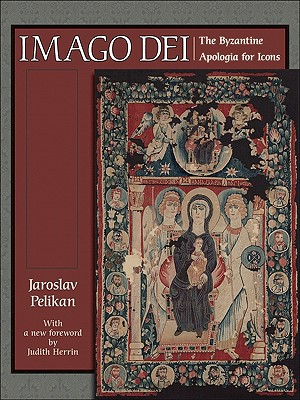
A sweeping account of the controversies surrounding the worship of images in the early Byzantine church
In 726, the Byzantine emperor, Leo III, issued an edict that all religious images in the empire were to be destroyed, a directive that was later endorsed by a synod of the church in 753 under his son, Constantine V. If the policy of Iconoclasm had succeeded, the entire history of Christian art—and of the Christian church, at least in the East—would have been altered.
Iconoclasm was defeated by Byzantine politics, popular revolts, monastic piety, and, most fundamentally of all, by theology, just as it had been theology that the opponents of images had used to justify their actions. Analyzing an intriguing chapter in the history of ideas, the renowned scholar Jaroslav Pelikan shows how a faith that began by attacking the worship of images ended first in permitting and then in commanding it.
Pelikan charts the theological defense of icons during the iconoclastic controversies of the eighth and ninth centuries, whose high point came in 787, when the Second Council of Nicaea restored the cult of images in the church. He demonstrates how the dogmas of the Trinity and the Incarnation eventually provided the basic rationale for images: because the invisible God had become human and therefore personally visible in Jesus Christ, it became permissible to make images of that Image. And because not only the human nature of Christ, but that of his Mother had been transformed by the Incarnation, she, too, could be “iconized,” together with all the other saints and angels.
The iconographic “text” of the book is provided by one of the very few surviving icons from the period before Iconoclasm, the Egyptian tapestry Icon of the Virgin now in the Cleveland Museum of Art. Other icons serve to illustrate the theological argument, just as the theological argument serves to explain the icons.
In an incisive foreword, Judith Herrin explains the enduring importance of the book and discusses how later scholars have built on Pelikan’s work.
Get Imago Dei by Jaroslav Pelikan at the best price and quality guaranteed only at Werezi Africa's largest book ecommerce store. The book was published by Princeton University Press and it has 224 pages.
Customers Who Bought This Also Bought
History of the Decline and Fall of the Roman Empire
KSh 4,850.00

The Inferno
KSh 12,800.00
Art and Beauty in the Middle Ages
KSh 2,000.00
Art of the Middle Ages
KSh 2,550.00
Viking Art
KSh 3,050.00

Unexpected Dante
KSh 12,800.00
Anglo-Saxon Crucifixion Iconography and the Art of the Monastic Revival
KSh 7,750.00

Aedificia Nova
KSh 4,200.00

The History of Art: A Global View
KSh 21,700.00

Allegory in Byzantium
KSh 12,600.00

The Bayeux Tapestry
KSh 8,100.00

Gewalt, Krieg und Geschlecht im Mittelalter
KSh 14,100.00
More by Jaroslav Pelikan
The Encyclopedia of Christianity, Volume 5 (Si-Z)
KSh 14,050.00
The Encyclopedia of Christianity, Vol 4 (P-Sh)
KSh 15,500.00

The Encyclopedia of Christianity, Volume 1 (A-D)
KSh 14,750.00

The Encyclopedia of Christianity, Volume 2 (E-I)
KSh 14,050.00
The Encyclopedia of Christianity, Volume 3 (J-O)
KSh 14,400.00

Acts
KSh 4,500.00

The Christian Tradition: A History of the Development of Doctrine, Volume 4
KSh 5,300.00
Mary Through the Centuries
KSh 3,700.00
The Christian Tradition: A History of the Develo – The Growth of Medieval Theology (600–1300)
KSh 4,700.00
Jesus Through the Centuries
KSh 3,750.00
What Has Athens to Do with Jerusalem?
KSh 9,650.00
The Christian Tradition: A History of the Development of Doctrine, Volume 2
KSh 4,450.00
