
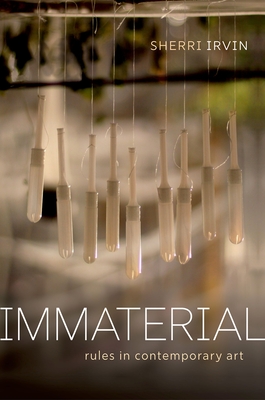
Immaterial : Rules in Contemporary Art
by
Sherri Irvin
Book Details
Format
Hardback
ISBN-10
0199688214
ISBN-13
9780199688210
Publisher
Oxford University Press
Imprint
Oxford University Press
Country of Manufacture
GB
Country of Publication
GB
Publication Date
Feb 17th, 2022
Print length
282 Pages
Weight
632 grams
Dimensions
16.50 x 24.00 x 2.60 cms
KSh 6,550.00
Currently unavailable
0 in stock
Delivery Location
Delivery fee: Select location
Secure
Quality
Fast
Contemporary art can seem chaotic: sometimes it made of weird things, sometimes it just comprises ideas. Sherri Irvin shows that, despite these unruly appearances, making rules is a key part of what many contemporary artists do: they use rules to create distinctive meanings and to provide powerful immersive experiences.
Irvin argues that rules are the key to understanding what''s going on in contemporary art.Contemporary art can seem chaotic: it may be made of toilet paper, candies you can eat, or meat that is thrown out after each exhibition. Some works fill a room with obsessively fabricated objects, while others purport to include only concepts, thoughts, or language. Immaterial argues that, despite these unruly appearances, making rules is a key part of what many contemporary artists do when they make their works, and these rules can explain disparate developments in installation art, conceptual art, time-based media art, and participatory art.Sherri Irvin shows how rules are now an artistic medium: they are part of the work''s structure and shape what it expresses. Rules are meaningful in themselves and help to activate the meanings of non-art materials and found objects, so audiences need to know about the rules to get the most out of their art experiences. Loss of information about the rules, like loss of a chunk of marble, can seriously damage the work, and preserving rules as well as objects is reshaping how museums maintain their collections. Where rules collide with real-world circumstances, they may be broken maliciously, mistakenly, or for good reasons, threatening the work''s meanings and sometimes its very existence.Should we celebrate the prominence of rules in contemporary art? Irvin argues that, while rules aren''t always used well, they can be used to create distinctive meanings and provide powerful immersive experiences not achievable through any other means.
Get Immaterial by Sherri Irvin at the best price and quality guaranteed only at Werezi Africa's largest book ecommerce store. The book was published by Oxford University Press and it has 282 pages.
Customers Who Bought This Also Bought

World According to Colour
KSh 2,700.00
What Art Does
KSh 2,700.00

Art on My Mind
KSh 2,000.00

Modern Classics Ways of Seeing
KSh 2,000.00
Monsters
KSh 2,350.00

Create Dangerously
KSh 700.00

Danse Macabre
KSh 2,500.00

Thinking About Art – A Thematic Guide to Art History
KSh 5,800.00

Monsters
KSh 3,600.00

The Artist''s Way
KSh 4,500.00
The Artist''s Way Toolkit
KSh 2,350.00

Goya''s Last Portrait/A Question of Geography
KSh 2,350.00
