

Immunity : The Evolution of an Idea
Book Details
Format
Hardback
ISBN-10
0190651245
ISBN-13
9780190651244
Publisher
Oxford University Press Inc
Imprint
Oxford University Press Inc
Country of Manufacture
GB
Country of Publication
GB
Publication Date
Mar 9th, 2017
Print length
324 Pages
Weight
580 grams
Dimensions
16.60 x 24.30 x 3.10 cms
Product Classification:
History of Western philosophyImmunologyPhilosophy of science
KSh 19,950.00
Temporarily out of stock, due soon
0 in stock
Delivery Location
Delivery fee: Select location
Secure
Quality
Fast
In Immunity, Alfred Tauber sets forth a new theory of immunology that rejects the common principle of self and non-self, and the immune system''s role as a protector of the self from external threats. Rather than serving to defend an independent entity, he argues, immunity participates in a large, complex eco-system of porous and flexible boundaries. Tauber''s new approach to immunology necessitates a new biology in which symbiosis is the rule, not the exception.
Senior scholar Alfred Tauber argues in this bold account that common approaches to the study of immunology are inherently flawed in its strict dichotomy of the self and non-self, or external invaders. The relationship between what is self and what is non-self is in reality a complex, dymanic, relational one. Autonomous agents are constantly in the midst of dialectical exchanges in which immunity mediates both noxious and benign encounters. Namely: rather than serving to defend an independent entity, immunity participates in an eco-system. Contemporary transplantation biology and autoimmunity have demonstrated phenomena that upset rigid adherence to the self/non-self dichotomy. Placing tolerant immune mechanisms within a broad ecological context has highlighted the balance of co-operative and competitive relationships in which immunity functions. By understanding immunity this way, as a ''symbiotic turn,'' we come to see that immune reactivity (rejection or tolerance) is a second-order response to the cognitive functions of the immune system. Organisms have a complex capacity to respond to environment, and, through Tauber''s insignts, we appreciate them more fully when we grasp the flexibility of the borders of organisms.After first providing an overview of the history of immunology, and explaining why the dominant understanding of it is incomplete and limiting, Tauber argues for this new approach to immunology and explains how it will usher in a new biology in which symbiosis is the rule, not the exception.
Get Immunity by Alfred I. Tauber at the best price and quality guaranteed only at Werezi Africa's largest book ecommerce store. The book was published by Oxford University Press Inc and it has 324 pages.
Customers Who Bought This Also Bought

Thus Spoke Zarathustra
KSh 2,000.00

On War
KSh 1,200.00

Ecce Homo
KSh 1,800.00

On War
KSh 4,500.00

Kierkegaard
KSh 1,800.00

On Art, Religion, and the History of Philosophy
KSh 3,100.00

Critique Of Pure Reason
KSh 2,700.00

Grounding for the Metaphysics of Morals
KSh 2,700.00

Critique of Pure Reason, Abridged
KSh 3,600.00

Discourse on Political Economy and The Social Contract
KSh 1,800.00

Discourse on the Origin of Inequality
KSh 2,150.00

Selected Letters of Friedrich Nietzsche
KSh 4,700.00
More by Alfred I. Tauber

William James and Sigmund Freud on the Mind
KSh 6,750.00

Freud, the Reluctant Philosopher
KSh 6,300.00

Henry David Thoreau & the Moral Agency of Knowing
KSh 5,200.00

Immunity
KSh 8,800.00

The Triumph of Uncertainty – Science and Self in the Postmodern Age
KSh 13,850.00

The Triumph of Uncertainty – Science and Self in the Postmodern Age
KSh 5,150.00
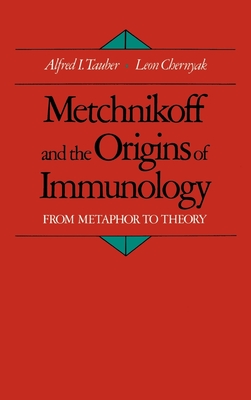
Metchnikoff and the Origins of Immunology
KSh 44,150.00

The Immune Self
KSh 16,550.00
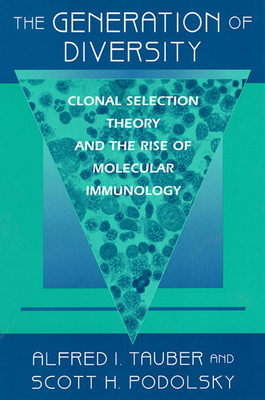
The Generation of Diversity
KSh 7,900.00

The Immune Self
KSh 8,350.00

William James and Sigmund Freud on the Mind
KSh 30,950.00
