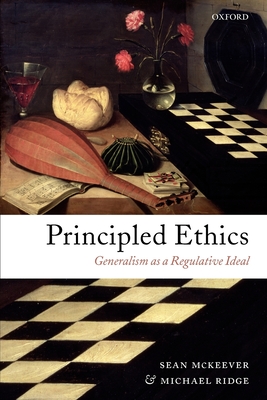
Impassioned Belief
Book Details
Format
Hardback
ISBN-10
0199682666
ISBN-13
9780199682669
Publisher
Oxford University Press
Imprint
Oxford University Press
Country of Manufacture
GB
Country of Publication
GB
Publication Date
Mar 13th, 2014
Print length
278 Pages
Weight
574 grams
Dimensions
24.10 x 15.80 x 2.00 cms
KSh 14,500.00
Currently unavailable
0 in stock
Delivery Location
Delivery fee: Select location
Secure
Quality
Fast
Michael Ridge presents an original expressivist theory of normative judgments--Ecumenical Expressivism--which offers distinctive treatments of key problems in metaethics, semantics, and practical reasoning. He argues that normative judgments are hybrid states partly constituted by ordinary beliefs and partly constituted by desire-like states.
We all form judgments about what ways of life are worthwhile, what we are morally required to do and so on. These so-called "normative" judgments have seemed puzzling in part because they exhibit both belief-like and desire-like features. Traditional cognitivist theories hold that these judgments are beliefs rather than desires; traditional non-cognitivist theories hold that they are desires rather than beliefs. Each of these traditions tries to accommodate or explain away what the other tradition handles so easily. One often gets the sense that the defenders of these increasingly complex theories are trying to force a square peg into a round hole. So-called "hybrid theories" try to have the best of both worlds by understanding normative judgments as constituted by both belief-like and desire-like states. In Impassioned Belief, Michael Ridge defends a distinctive hybrid theory he calls "Ecumenical Expressivism."Ridge provides a useful critical taxonomy of the by now bewildering array of rival hybrid theories in the literature and argues for the superiority of his more expressivist hybrid theory. By emphasizing the often neglected distinction between meta-semantics and semantics, Ecumenical Expressivism accommodates both the context-sensitivity of normative predicates and a broadly truth-conditional approach to semantics. The resulting theory is better informed by the insights of modern linguistics. The hybrid structure of Ecumenical Expressivism offers a more elegant and satisfying solution to the dreaded "Frege-Geach" problem for expressivism. Ridge builds on this solution with a theory of propositions which accommodates irreducible normative propositions in an expressivist framework. This, in turn, sets the stage for a theory of truth which does not depend on controversial "deflationist" assumptions, but can be combined with any otherwise plausible conception of truth. Finally, Ridge develops and defends a novel theory of disagreement and a more cognitivist hybrid theory of talk of rationality. Ecumenical Expressivism thereby offers a systematic conception of normative thought and discourse which aspires to transcend the false dichotomies and deep problems associated with more traditional approaches.
Get Impassioned Belief by Michael Ridge at the best price and quality guaranteed only at Werezi Africa's largest book ecommerce store. The book was published by Oxford University Press and it has 278 pages.
Customers Who Bought This Also Bought

Recognising the Stranger
KSh 1,800.00
The Origin of Language
KSh 4,500.00
Sharing Thoughts
KSh 17,000.00
An Inquiry Into Meaning and Truth
KSh 3,750.00
Semiotics and the Philosophy of Language
KSh 3,400.00
An Introduction to Logic
KSh 6,650.00

Walker Percy''s Search for Community
KSh 5,950.00
Film Figures
KSh 16,450.00

The Tacit Dimensions of Language and Logic
KSh 15,800.00

Metaphors in Action
KSh 21,600.00
Frontiers in Semiotics
KSh 3,000.00

A Theory of Death
KSh 11,900.00