
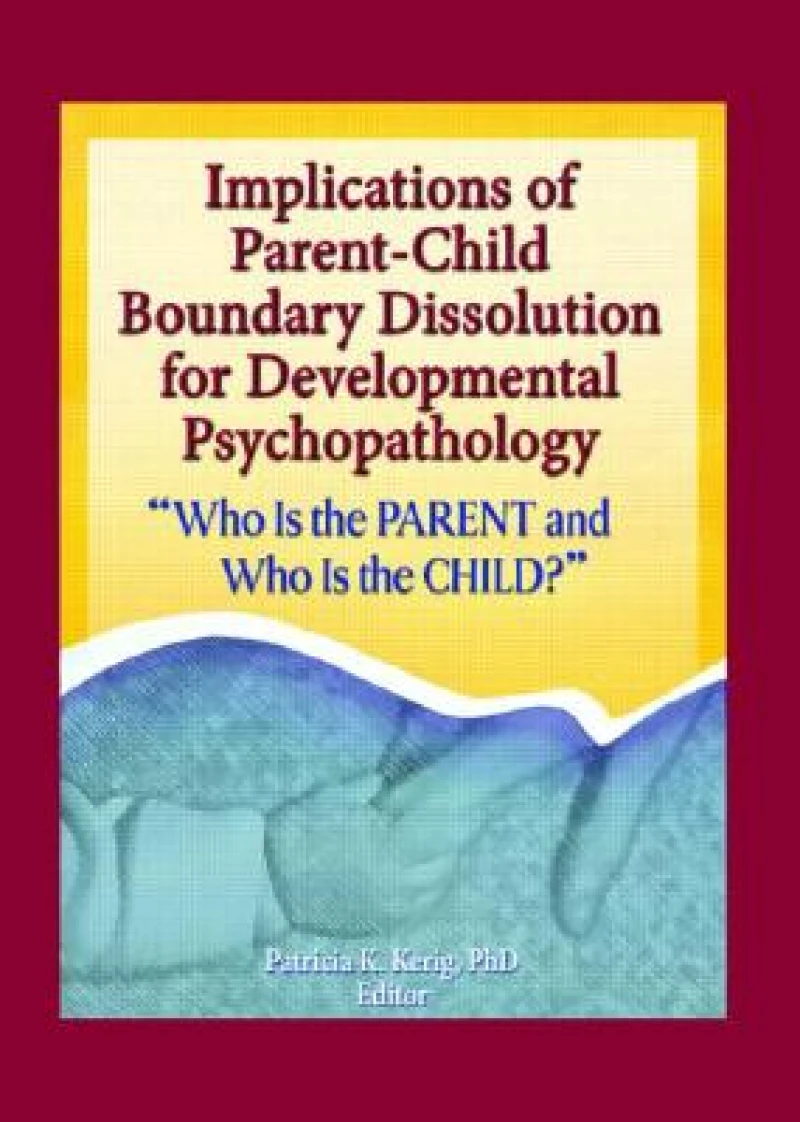
Implications of Parent-child Boundary Dissolution for Developmental Psychopathology : "Who Is the Parent and Who Is the Child?"
Book Details
Format
Paperback / Softback
ISBN-10
0789030918
ISBN-13
9780789030917
Publisher
Taylor & Francis Inc
Imprint
Routledge
Country of Manufacture
US
Country of Publication
GB
Publication Date
Apr 21st, 2006
Print length
316 Pages
Weight
580 grams
Ksh 11,000.00
Werezi Extended Catalogue
0 in stock
Delivery Location
Delivery fee: Select location
Secure
Quality
Fast
Comprehensively examines how the burden of meeting the emotional needs of the parent interferes with the child's healthy development. Separated into four sections to focus on several aspects of the problem, this book is a useful read for researchers and clinicians who deal with families and psychopathology.
Gain a better understanding of parent-child boundaries and the mechanisms for their dissolution
The breakdown of appropriate generational boundaries between parent and child can threaten the child?s psychological development. Implications of Parent-Child Boundary Dissolution for Developmental Psychopathology: Who Is the Parent and Who Is the Child? explores this covert and oftentimes ignored form of emotional abuse, discussing in detail the various ways it can manifest. This revealing text comprehensively examines how the burden of meeting the emotional needs of the parent interferes with the child?s healthy development. The boundary dissolution patterns of role reversal, enmeshment, psychological control, and triangulation are closely examined with an eye toward providing appropriate strategies for dealing with the problem.
Implications of Parent-Child Boundary Dissolution for Developmental Psychopathology is separated into four sections to focus extensively on every aspect of the problem. The first section discusses definitions, concepts, and methodological concerns of the phenomena, including a consideration of the child?s developmental responses to boundary dissolution. The second section explores the empirical research concerning boundary dissolution within the family system, and includes intriguing information on the actual mechanism that passes the pattern of role reversal on to the following generation. The next section closely examines boundary violations within high-risk families, with a focus on those undergoing divorce. The final section concentrates on cultural contexts of boundary dissolution and includes a look at the perception of familial responsibility and its effects on Bosnian youths. This one-of-a-kind resource is extensively referenced, and provides a solid foundation to inspire a new generation of theory, research, and clinical work.
Implications of Parent-Child Boundary Dissolution for Developmental Psychopathology examines:
The breakdown of appropriate generational boundaries between parent and child can threaten the child?s psychological development. Implications of Parent-Child Boundary Dissolution for Developmental Psychopathology: Who Is the Parent and Who Is the Child? explores this covert and oftentimes ignored form of emotional abuse, discussing in detail the various ways it can manifest. This revealing text comprehensively examines how the burden of meeting the emotional needs of the parent interferes with the child?s healthy development. The boundary dissolution patterns of role reversal, enmeshment, psychological control, and triangulation are closely examined with an eye toward providing appropriate strategies for dealing with the problem.
Implications of Parent-Child Boundary Dissolution for Developmental Psychopathology is separated into four sections to focus extensively on every aspect of the problem. The first section discusses definitions, concepts, and methodological concerns of the phenomena, including a consideration of the child?s developmental responses to boundary dissolution. The second section explores the empirical research concerning boundary dissolution within the family system, and includes intriguing information on the actual mechanism that passes the pattern of role reversal on to the following generation. The next section closely examines boundary violations within high-risk families, with a focus on those undergoing divorce. The final section concentrates on cultural contexts of boundary dissolution and includes a look at the perception of familial responsibility and its effects on Bosnian youths. This one-of-a-kind resource is extensively referenced, and provides a solid foundation to inspire a new generation of theory, research, and clinical work.
Implications of Parent-Child Boundary Dissolution for Developmental Psychopathology examines:
- a multidimensional model of boundary dissolution?with supporting research
- a comprehensive review of published literature in the areas of attachment theory, developmental capacities of the infant, child-rearing practices, and parental beliefs
- the theoretical background supporting the construct of boundary dissolution
- the boundary disturbance patterns of enmeshment and control
- the relationships between interparental conflict, parental responses to children?s emotions, and representations of role reversal and vulnerability in children?s family drawings
- the ?spill over? effect of marital conflict
- role reversal in high-risk families
- children?s rejection of one parent over another in custody disputes
- post-war adjustment of Bosnian adolescents
- psychological control in individualist and collectivist groups
- representations of parents and children in twentieth century American novels
Get Implications of Parent-child Boundary Dissolution for Developmental Psychopathology by at the best price and quality guaranteed only at Werezi Africa's largest book ecommerce store. The book was published by Taylor & Francis Inc and it has pages.

