

Improbable War : China, the United States and the Logic of Great Power Conflict
Book Details
Format
Paperback / softback
ISBN-10
1849048789
ISBN-13
9781849048781
Publisher
C Hurst & Co Publishers Ltd
Imprint
C Hurst & Co Publishers Ltd
Country of Manufacture
GB
Country of Publication
GB
Publication Date
Sep 14th, 2017
Print length
240 Pages
Weight
314 grams
Dimensions
14.10 x 21.60 x 1.80 cms
Product Classification:
ChinaUnited States of America, USAInternational relationsWarfare & defenceWarfare and defence
KSh 3,050.00
Currently unavailable
0 in stock
Delivery Location
Delivery fee: Select location
Secure
Quality
Fast
This latest incisive work from Christopher Coker is a prescient analysis of the likelihood of a US-China conflict and how it might be avoided.
The Improbable War explains why conflict between the USA and China cannot be ruled out. In 1914 war between the Great Powers was considered unlikely, yet it happened. We learn only from history, and popular though the First World War analogy is, the lessons we draw from its outbreak are usually mistaken. Among these errors is the tendency to over-estimate human rationality. All major conflicts of the past 300 years have been about the norms and rules of the international system. In China and the US the world confronts two ''exceptional'' powers whose values differ markedly, with China bidding to challenge the current order. The ''Thucydidean Trap'' -when a conservative status quo power confronts a rising new one-may also play its part in precipitating hostilities. To avoid stumbling into an avoidable war both Beijing and Washington need a coherent strategy, which neither of them has. History also reveals that war evolves continually. The next global conflict is likely to be played out in cyberspace and outer space and like all previous wars it will have devastating consequences.Such a war between the United States and China may seem improbable, but it is all too possible, which is why we need to discuss it now.
Christopher Coker takes aim at what he considers a dangerous liberal misconception: that today''s world of complex, interlocked economies and shared interests has made war between major powers, such as China and the United States, irrational and therefore unlikely. . . . As Coker explains, ideology and emotional appeals to ''national purpose'' have just as much influence on states as sober cost-benefit assessments of the national interest. He stops short of predicting a Sino-American war, but he convincingly argues that the rise of China will be as disruptive to the U.S.-led international order as the rise of Germany after 1870 was to the British-led order of that era.
Christopher Coker is one of a kind among scholars of international relations. In this sobering and stimulating book he opens a fascinating window on a looming confrontation, after which nothing will ever be the same again.
This is a brilliant book that, despite its brevity, is far superior to its more alarmist counterparts that seem to get published far too frequently these days.
Provides an exceptionally clear and succinct discussion of what may well be the most important question of our age: does war between major states have a future, and, if so, what will it be like?
Christopher Coker has put forward a challenging argument: not that conflict between the US and China is inevitable, but that it is possible, and that both sides will have to sharpen their understanding of one another to avoid it. Coker draws richly on history, philosophy, and international relations theory to make his case. This is a highly stimulating account by a major thinker on one of the most important geopolitical questions of our time.
''The Improbable War'' is a fresh, original book of great insight that advances a deeply troubling scenario. At issue is whether Beijing''s attempt to dictate the terms of US-China relations will so destabilise East Asia as to make conflict unavoidable. Christopher Coker asks if past is prologue. We must believe that it is not. A brilliant book, and a great read.
Get Improbable War by Christopher Coker at the best price and quality guaranteed only at Werezi Africa's largest book ecommerce store. The book was published by C Hurst & Co Publishers Ltd and it has 240 pages.
Customers Who Bought This Also Bought

Black Wave
KSh 2,700.00

Siege
KSh 2,000.00

Extractive Capitalism
KSh 2,150.00

Strategy
KSh 4,350.00

Fourth Industrial Revolution
KSh 2,700.00

On China
KSh 3,400.00

Dead Aid
KSh 3,400.00
The Bottom Billion
KSh 2,500.00

Leadership
KSh 2,700.00
How to Win a Trade War
KSh 3,050.00

Understanding Global Conflict and Cooperation: An Introduction to Theory and History
KSh 14,000.00

Nuclear Age
KSh 5,400.00
More by Christopher Coker
NATO the Warsaw Pact and Africa
KSh 23,400.00

Improbable War
KSh 3,050.00
Rise of the Civilizational State
KSh 3,450.00
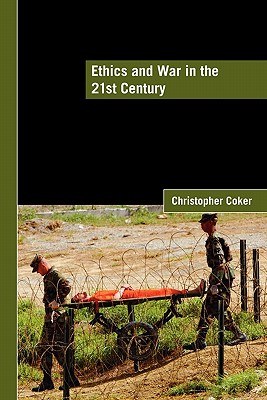
Ethics and War in the 21st Century
KSh 8,800.00

Men at War
KSh 4,950.00
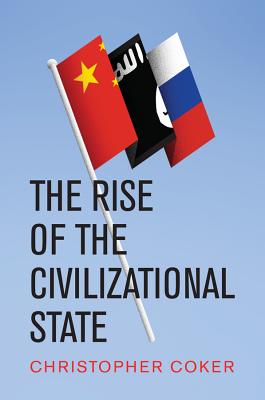
The Rise of the Civilizational State
KSh 9,900.00

Why War?
KSh 3,600.00
The Warrior Ethos
KSh 33,850.00
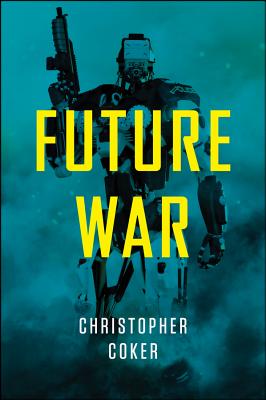
Future War
KSh 3,450.00
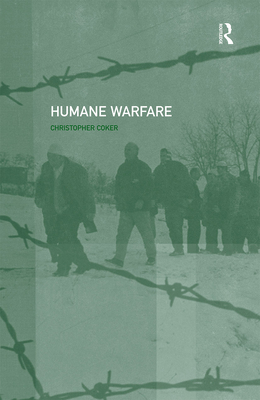
Humane Warfare
KSh 9,900.00

Globalisation and Insecurity in the Twenty-First Century
KSh 6,350.00

Humane Warfare
KSh 30,950.00
