
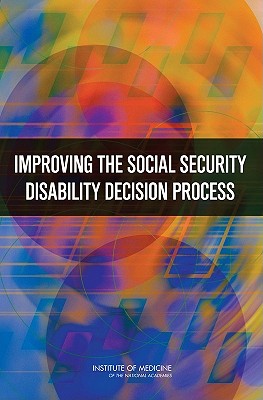
Improving the Social Security Disability Decision Process
Book Details
Delivery Location
Delivery fee: Select location
The Social Security Administration (SSA) provides Social Security Disability Insurance (SSDI) benefits to disabled persons of less than full retirement age and to their dependents. SSA also provides Supplemental Security Income (SSI) payments to disabled persons who are under age 65. For both programs, disability is defined as a "medically determinable physical or mental impairment" that prevents an individual from engaging in any substantial gainful activity and is expected to last at least 12 months or result in death.
Assuming that an applicant meets the nonmedical requirements for eligibility (e.g., quarters of covered employment for SSDI; income and asset limits for SSI), the file is sent to the Disability Determination Services (DDS) agency operated by the state in which he or she lives for a determination of medical eligibility. SSA reimburses the states for the full costs of the DDSs.
The DDSs apply a sequential decision process specified by SSA to make an initial decision whether a claim should be allowed or denied. If the claim is denied, the decision can be appealed through several levels of administrative and judicial review. On average, the DDSs allow 37 percent of the claims they adjudicate through the five-step process. A third of those denied decide to appeal, and three-quarters of the appeals result in allowances. Nearly 30 percent of the allowances made each year are made during the appeals process after an initial denial.
In 2003, the Commissioner of Social Security announced her intent to develop a "new approach" to disability determination. In late 2004, SSA asked the Institute of Medicine (IOM) to help in two areas related to its initiatives to improve the disability decision process: 1) Improvements in the criteria for determining the severity of impairments, and 2) Improvements in the use of medical expertise in the disability decision process.
This interim report provides preliminary recommendations addressing the three tasks that relate to medical expertise issues, with a special focus on the appropriate qualifications of medical and psychological experts involved in disability decision making. After further information gathering and analyses of the effectiveness of the disability decision process in identifying those who qualify for benefits and those who do not, the committee may refine its recommendations concerning medical and psychological expertise in the final report. The final report will address a number of issues with potential implications for the qualifications of the medical experts involved in the disability decision process.
Get Improving the Social Security Disability Decision Process by Board on Military and Veterans Health, Committee on Improving the Disability Decision Process: SSA's Listing of Impairments and Agency Acc at the best price and quality guaranteed only at Werezi Africa's largest book ecommerce store. The book was published by National Academies Press and it has 290 pages.
Customers Who Bought This Also Bought
The Behavior of Social Justice
KSh 11,250.00

Youth Entrepreneurship and Sustainability in Kenya’s Blue-Green Economy
KSh 30,950.00

Police Social Work
KSh 30,950.00

Police Social Work
KSh 7,900.00

Essential Health Care Services Addressing Intimate Partner Violence
KSh 5,400.00

Learning to Liberate
KSh 8,100.00

Foster Children, Rights and the Law
KSh 8,650.00

Biomaterials and Regenerative Medicine
KSh 28,300.00

Textbook of Contraceptive Practice
KSh 9,800.00

Review of the Department of Defense Enhanced Particulate Matter Surveillance Program Report
KSh 8,800.00

History of the International Federation
KSh 15,500.00
Gulf War and Health
KSh 23,950.00
More by Board on Military and Veterans Health, Committee on Improving the Disability Decision Process: SSA's Listing of Impairments and Agency Acc
Evaluation of PEPFAR
KSh 13,300.00
Medicolegal Death Investigation System
KSh 8,300.00

Neurodegeneration
KSh 5,950.00

Challenges and Opportunities for Change in Food Marketing to Children and Youth
KSh 4,850.00

Veterans and Agent Orange
KSh 20,150.00
Effectiveness and Outcomes in Health Care
KSh 30,050.00
Toward Quality Measures for Population Health and the Leading Health Indicators
KSh 5,750.00
Exploring the Biological Contributions to Human Health
KSh 9,900.00
Policy Issues in the Development and Adoption of Biomarkers for Molecularly Targeted Cancer Therapies
KSh 5,400.00
Isotopes for Medicine and the Life Sciences
KSh 20,150.00
Psychological Testing in the Service of Disability Determination
KSh 8,300.00
Environmental Medicine
KSh 25,900.00
More in Medicine
The Behavior of Social Justice
KSh 11,250.00
Youth Entrepreneurship and Sustainability in Kenya’s Blue-Green Economy
KSh 30,950.00
Police Social Work
KSh 30,950.00
Police Social Work
KSh 7,900.00
Essential Health Care Services Addressing Intimate Partner Violence
KSh 5,400.00
Learning to Liberate
KSh 8,100.00
