
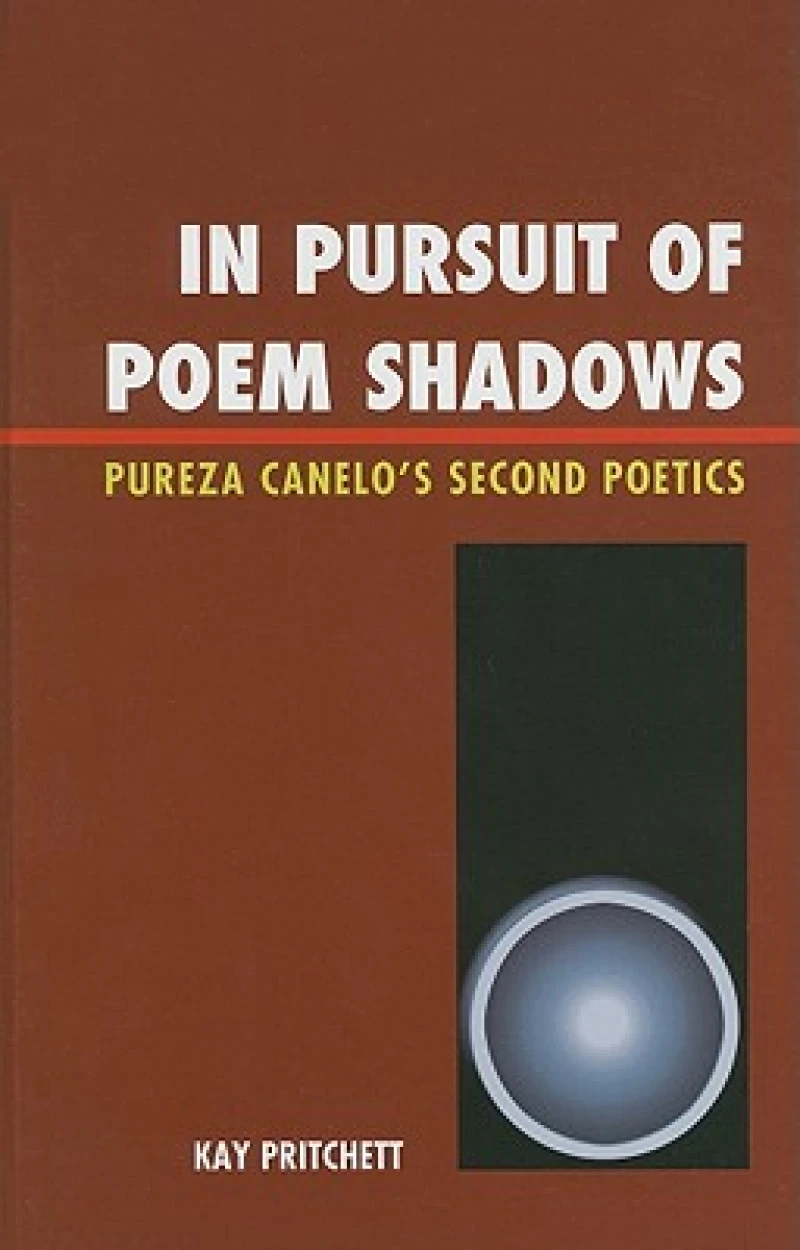
In Pursuit of Poem Shadows : Pureza Cantelo's Second Poetics
Book Details
Format
Hardback or Cased Book
ISBN-10
1611480167
ISBN-13
9781611480160
Publisher
Bucknell University Press
Imprint
Bucknell University Press
Country of Manufacture
US
Country of Publication
GB
Publication Date
Apr 7th, 2011
Print length
226 Pages
Weight
417 grams
Dimensions
24.10 x 15.80 x 1.70 cms
Product Classification:
Literary studies: from c 1900 -Literary studies: poetry & poets
Ksh 15,650.00
Werezi Extended Catalogue
0 in stock
Delivery Location
Delivery fee: Select location
Secure
Quality
Fast
Born in the small Extremaduran town of Moraleja in 1946, Spanish poet Pureza Canelo, at the age of twenty-five, published her first collections of poetry, Celda verde and Lugar comun (winner of the 1970 Adonais Prize). By 1979, she had settled upon an understanding of her own aesthetic evolution, which she elaborated in Habitable (Primera poetica). Then, in 1986, after a period of disenchantment with the written word during which she published only two chapbooks-Espacio de emocion (1981) and Vega de la paloma (1984)-she redefined her position in Tendido verso (Segunda poetica). Designed to complement Nature's Colloquy with the Word: Pureza Canelo's First Poetics (Bucknell, 2004), the current text deciphers the intricate poetic language of the poet's mature works, which, at the time of writing, included the two above-mentioned chapbooks as well as Tendido verso, Pasion inedita (1990), and No escribir (1999). The author traces recurrent aesthetic and philosophical positions that serve to differentiate the poet's first and second poetics. Tendido verso is the volume in which temporality supersedes essence and, in so doing, breaks with insights expressed by Juan Ramon Jimenez during his Modernist phase. In Pasion inedita the intimate pronominal discourse between poet and creative other allows them to coalesce into an indeterminate being. At this point the desired goal of the creative process is achieved; the "holy wedding" (hieros gamos) of poet and creative other occurs. No escribir abandons the struggle of Canelo's previous books and carries out the method prescribed by her second poetics. She recognizes that only the creative process can satisfy her desire, and that love, the dominant symbol for creation, indeed, allows the pain of poetic failure to cease. Passion, nonetheless, must stop short of fulfillment, since the written poem, laden with the poet's gaze and subjectivity, cannot exist apart from its shadow.
Born in the small Extremaduran town of Moraleja in 1946, Spanish poet Pureza Canelo, at the age of twenty-five, published her first collections of poetry, Celda verde and Lugar común (winner of the 1970 Adonais Prize). By 1979, she had settled upon an understanding of her own aesthetic evolution, which she elaborated in Habitable (Primera poética). Then, in 1986, after a period of disenchantment with the written word during which she published only two chapbooks-Espacio de emoción (1981) and Vega de la paloma (1984)-she redefined her position in Tendido verso (Segunda poética). Designed to complement Nature''s Colloquy with the Word: Pureza Canelo''s First Poetics (Bucknell, 2004), the current text deciphers the intricate poetic language of the poet''s mature works, which, at the time of writing, included the two above-mentioned chapbooks as well as Tendido verso, Pasión inédita (1990), and No escribir (1999). The author traces recurrent aesthetic and philosophical positions that serve to differentiate the poet''s first and second poetics. Tendido verso is the volume in which temporality supersedes essence and, in so doing, breaks with insights expressed by Juan Ramón Jiménez during his Modernist phase. In Pasión inédita the intimate pronominal discourse between poet and creative other allows them to coalesce into an indeterminate being. At this point the desired goal of the creative process is achieved; the "holy wedding" (hieros gamos) of poet and creative other occurs.No escribir abandons the struggle of Canelo''s previous books and carries out the method prescribed by her second poetics. She recognizes that only the creative process can satisfy her desire, and that love, the dominant symbol for creation, indeed, allows the pain of poetic failure to cease. Passion, nonetheless, must stop short of fulfillment, since the written poem, laden with the poet''s gaze and subjectivity, cannot exist apart from its shadow.
Get In Pursuit of Poem Shadows by at the best price and quality guaranteed only at Werezi Africa's largest book ecommerce store. The book was published by Bucknell University Press and it has pages.

