
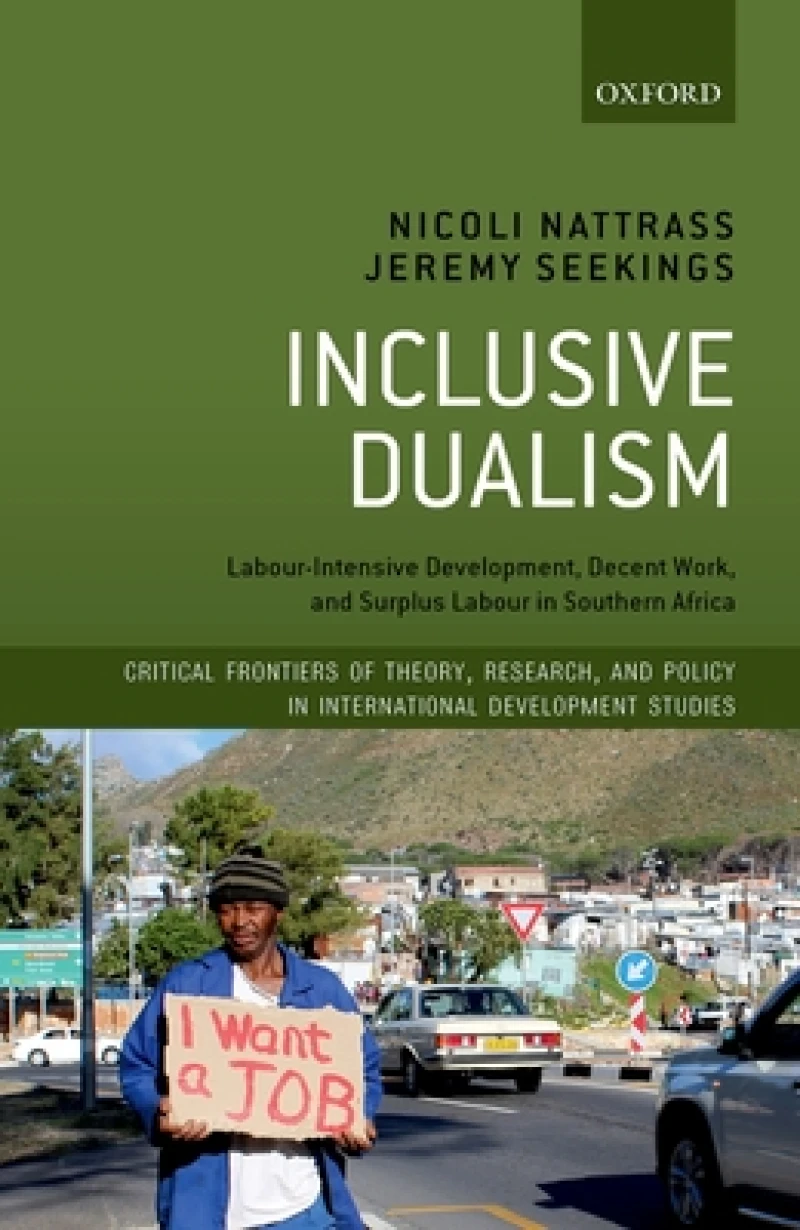
Inclusive Dualism : Labour-intensive Development, Decent Work, and Surplus Labour in Southern Africa
Book Details
Format
Hardback or Cased Book
ISBN-10
0198841469
ISBN-13
9780198841463
Publisher
Oxford University Press
Imprint
Oxford University Press
Country of Manufacture
GB
Country of Publication
GB
Publication Date
May 29th, 2019
Print length
230 Pages
Weight
498 grams
Dimensions
24.10 x 16.00 x 2.40 cms
Product Classification:
Labour economicsDevelopment economics & emerging economiesPolitical economy
Ksh 14,950.00
Manufactured on Demand
0 in stock
Delivery Location
Delivery fee: Select location
Secure
Quality
Fast
This book uses the South African case to argue for inclusive dualism as a development strategy in surplus labour countries. It shows that low- and high- productivity firms can co-exist and challenges the notion that a race to the bottom is inevitable.
W. Arthur Lewis, the founding father of development economics, proposed a dualist model of economic development in which ''surplus'' (predominantly under-employed) labour shifted from lower to higher productivity work. In practice, historically, this meant that labour was initially drawn out of subsistence agriculture into low-wage, labour-intensive manufacturing, including in clothing production, before shifting into higher-wage work. This development strategy has become unfashionable. The International Labour Organisation (ILO) worries that low-wage, labour-intensive industry promises little more than an impoverishing ''race to the bottom''. Inclusive Dualism: Labour-intensive Development, Decent Work, and Surplus Labour in Southern Africa argues that decent work fundamentalism, that is the promotion of higher wages and labour productivity at the cost of lower-wage job destruction, is a utopian vision with potentially dystopic consequences for countries with high open unemployment, many of which are in Southern Africa. Using the South African clothing industry as a case study Inclusive Dualism argues that decent work fundamentalism ignores the inherently differentiated character of industry resulting in the unnecessary destruction of labour-intensive jobs and the bifurcation of society into highly-paid, high-productivity insiders and low-paid or unemployed outsiders. It demonstrates the broader relevance of the South Africa case, examining the growth in surplus labour across Africa. It shows that low- and high-productivity firms can co-exist, and challenges the notion that a race to the bottom is inevitable. Inclusive Dualism instead favours multi-pronged development strategies that prioritise labour-intensive job creation as well as facilitating productivity growth elsewhere without destroying jobs.
Get Inclusive Dualism by at the best price and quality guaranteed only at Werezi Africa's largest book ecommerce store. The book was published by Oxford University Press and it has pages.

