
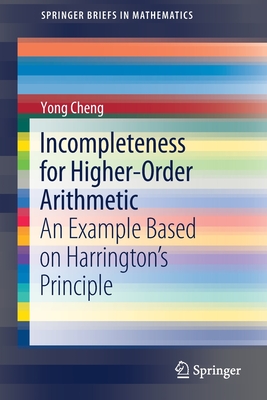
Incompleteness for higher order arithmetic : An Example Based on Harrington’s Principle
2019 ed.
by
Yong Cheng
Book Details
Format
Paperback / softback
Book Series
SpringerBriefs in Mathematics
ISBN-10
9811399484
ISBN-13
9789811399480
Edition
2019 ed.
Publisher
Springer Verlag, Singapore
Imprint
Springer Verlag, Singapore
Country of Manufacture
GB
Country of Publication
GB
Publication Date
Sep 11th, 2019
Print length
122 Pages
Product Classification:
Mathematical foundationsMathematical logic
KSh 9,900.00
Currently unavailable
0 in stock
Delivery Location
Delivery fee: Select location
Secure
Quality
Fast
The book examines the following foundation question: are all theorems in classic mathematics which are expressible in second order arithmetic provable in second order arithmetic? In this book, the author gives a counterexample for this question and isolates this counterexample from Martin-Harrington theorem in set theory. It shows that the statement “Harrington’s principle implies zero sharp” is not provable in second order arithmetic. The book also examines what is the minimal system in higher order arithmetic to show that Harrington’s principle implies zero sharp and the large cardinal strength of Harrington’s principle and its strengthening over second and third order arithmetic.
Get Incompleteness for higher order arithmetic by Yong Cheng at the best price and quality guaranteed only at Werezi Africa's largest book ecommerce store. The book was published by Springer Verlag, Singapore and it has 122 pages.
Customers Who Bought This Also Bought

Foundations of Mathematics, Second Edition
KSh 10,000.00
Advanced Problems in Mathematics
KSh 4,800.00

How to Succeed Studying Mathematics
KSh 5,400.00
Fuzzy Set Theory—and Its Applications
KSh 47,350.00

Higher Category Theory
KSh 20,000.00
Introduction to Recognition and Deciphering of Patterns
KSh 9,700.00

Introduction to Soergel Bimodules
KSh 25,200.00

Problem Solving In Operation Management
KSh 14,400.00

Mathematical Puzzle Tales from Mount Olympus
KSh 11,900.00

Belief Change
KSh 32,400.00
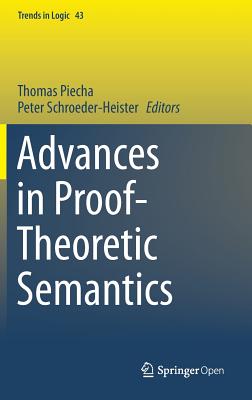
Advances in Proof-Theoretic Semantics
KSh 8,100.00
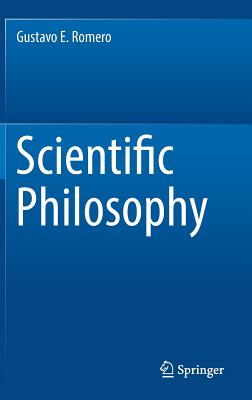
Scientific Philosophy
KSh 12,600.00

More in This Genre
Foundations of Mathematics, Second Edition
KSh 10,000.00
Advanced Problems in Mathematics
KSh 4,800.00
How to Succeed Studying Mathematics
KSh 5,400.00
Fuzzy Set Theory—and Its Applications
KSh 47,350.00
Higher Category Theory
KSh 20,000.00
Introduction to Recognition and Deciphering of Patterns
KSh 9,700.00
