
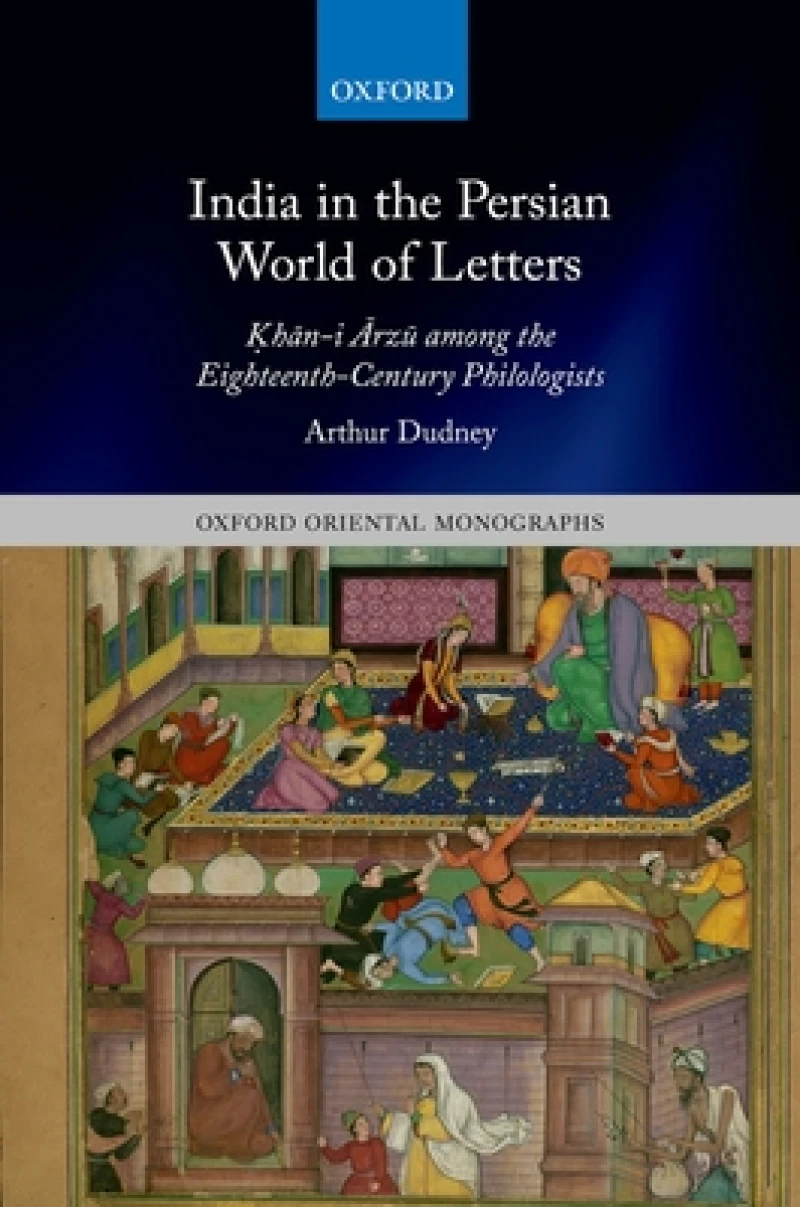
India in the Persian World of Letters : Khan-i Arzu among the Eighteenth-Century Philologists
Book Details
Format
Hardback or Cased Book
Book Series
Oxford Oriental Monographs
ISBN-10
019285741X
ISBN-13
9780192857415
Publisher
Oxford University Press
Imprint
Oxford University Press
Country of Manufacture
GB
Country of Publication
GB
Publication Date
Apr 15th, 2022
Print length
338 Pages
Weight
518 grams
Dimensions
22.40 x 14.50 x 2.50 cms
Product Classification:
India18th century, c 1700 to c 1799Language: history & general worksLanguage: history and general worksHistorical & comparative linguisticsHistorical and comparative linguisticsPoetry / poems by individual poetsPoetry by individual poetsLiterary studies: poetry & poetsLiterary studies: poetry and poets
Ksh 18,800.00
Werezi Extended Catalogue
0 in stock
Delivery Location
Delivery fee: Select location
Secure
Quality
Fast
This book traces the development of philology (the study of literary language) in Persian tradition in India, focusing socio-political ramifications, and provides an intellectual biography of Arzu, an innovative and influential eighteenth-century scholar and poet in India.
This is an open access title available under the terms of a CC BY-NC-ND 4.0 International licence. It is free to read at Oxford Scholarship Online and offered as a free PDF download from OUP and selected open access locations. This book traces the development of philology (the study of literary language) in the Persian tradition in India, concentrating on its socio-political ramifications. The most influential Indo-Persian philologist of the eighteenth-century was Siraj al-Din ''Ali Khan, (d. 1756), whose pen-name was Arzu. Besides being a respected poet, Arzu was a rigorous theoretician of language whose Intellectual legacy was side-lined by colonialism. His conception of language accounted for literary innovation and historical change in part to theorize the tazah-go''i [literally, "fresh-speaking"] movement in Persian literary culture. Although later scholarship has tended to frame this debate in anachronistically nationalist terms (Iranian native-speakers versus Indian imitators), the primary sources show that contemporary concerns had less to do with geography than with the question of how to assess innovative "fresh-speaking" poetry, a situation analogous to the Quarrel of the Ancients and the Moderns in early modern Europe. Arzu used historical reasoning to argue that as a cosmopolitan language Persian could not be the property of one nation or be subject to one narrow kind of interpretation. Arzu also shaped attitudes about re?htah, the Persianized form of vernacular poetry that would later be renamed and reconceptualized as Urdu, helping the vernacular to gain acceptance in elite literary circles in northern India. This study puts to rest the persistent misconception that Indians started writing the vernacular because they were ashamed of their poor grasp of Persian at the twilight of the Mughal Empire.
Get India in the Persian World of Letters by at the best price and quality guaranteed only at Werezi Africa's largest book ecommerce store. The book was published by Oxford University Press and it has pages.

