

India''s First Dictatorship : The Emergency, 1975–1977
Book Details
Format
Hardback
ISBN-10
1787384020
ISBN-13
9781787384026
Publisher
C Hurst & Co Publishers Ltd
Imprint
C Hurst & Co Publishers Ltd
Country of Manufacture
GB
Country of Publication
GB
Publication Date
Dec 17th, 2020
Print length
600 Pages
Weight
762 grams
Dimensions
14.70 x 22.40 x 3.80 cms
KSh 9,000.00
Currently unavailable
0 in stock
Delivery Location
Delivery fee: Select location
Secure
Quality
Fast
In June 1975 Prime Minister Indira Gandhi imposed a state of emergency, resulting in a 21-month suspension of democracy. Jaffrelot and Anil explore this black page in India''s history, a constitutional dictatorship of unequal impact, with South India largely spared thanks to the resilience of Indian federalism.India''s First Dictatorship focuses on Mrs Gandhi and her son, Sanjay, who was largely responsible for the mass sterilisation programmes and deportation of urban slum-dwellers. However, it equally exposes the facilitation of authoritarian rule by Congressmen, Communists, trade unions, businessmen and the urban middle class, as well as the complacency of the judiciary and media. While opposition leaders eventually closed ranks in jail, many of them—especially in the RSS—tried to collaborate with the new regime. Those who resisted the Emergency, in the media or on the streets, were few in number.This episode was an acid test for India''s political culture. While a tiny minority of citizens fought for democracy during the Emergency, in large numbers the people bowed to the strong woman in power, even worshipped her. Equally importantly, Hindu nationalists were endowed with a new legitimacy. Yet, the Emergency was neither a parenthesis, nor so much a turning point but a concentrate of a style of rule that is very much alive today.
Get India''s First Dictatorship by Christophe Jaffrelot, Pratinav Anil at the best price and quality guaranteed only at Werezi Africa's largest book ecommerce store. The book was published by C Hurst & Co Publishers Ltd and it has 600 pages.
Customers Who Bought This Also Bought

From Third World to First
KSh 3,200.00

Breakneck
KSh 4,500.00

India After Gandhi
KSh 4,850.00

Anarchy
KSh 2,700.00

On China
KSh 3,400.00
Apostles of Development
KSh 5,600.00
Shattered Lands
KSh 2,000.00
Indira Gandhi and the Years that Transformed India
KSh 5,050.00
India: A Wounded Civilization
KSh 2,000.00
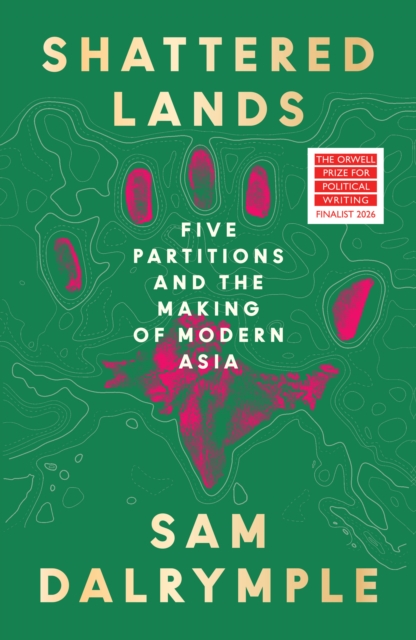
Shattered Lands
KSh 3,200.00

Games without Rules
KSh 2,900.00

Ghost Nation
KSh 3,950.00
More by Christophe Jaffrelot, Pratinav Anil

Hindu Nationalist Movement and Indian Politics
KSh 9,000.00

Pakistan Paradox
KSh 4,600.00

India's Silent Revolution
KSh 3,450.00

Religion, Caste and Politics in India
KSh 5,100.00

Modi's India – Hindu Nationalism and the Rise of Ethnic Democracy
KSh 4,950.00
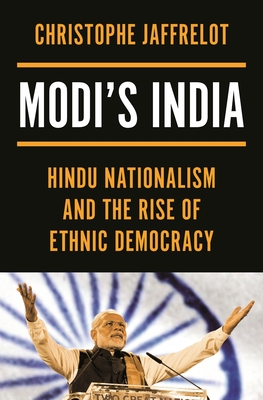
Modi's India – Hindu Nationalism and the Rise of Ethnic Democracy
KSh 5,900.00

Another India
KSh 4,600.00

Gujarat Under Modi
KSh 5,400.00

Revolutionary Passions
KSh 8,450.00
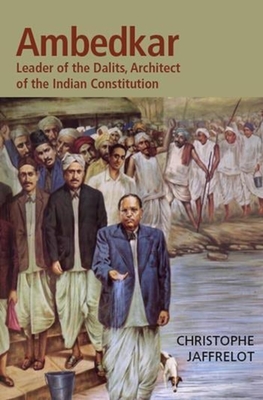
Dr. Ambedkar and Untouchability
KSh 11,150.00

Dr Ambedkar and Untouchability
KSh 6,300.00

Hindu Nationalist Movement and Indian Politics
KSh 4,450.00
