
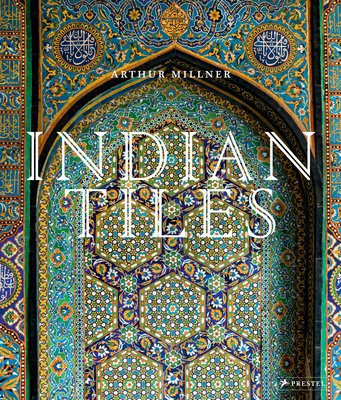
Indian Tiles : Architectural Ceramics from Sultanate and Mughal India and Pakistan
Book Details
Format
Hardback
ISBN-10
3791387669
ISBN-13
9783791387666
Publisher
Prestel
Imprint
Prestel
Country of Manufacture
SK
Country of Publication
GB
Publication Date
Sep 14th, 2021
Print length
304 Pages
Weight
3,116 grams
Dimensions
30.20 x 35.00 x 3.40 cms
Product Classification:
IndiaCeramic arts, pottery, glassCeramics, mosaic and glass: artworks
KSh 13,300.00
Werezi Extended Catalogue
Delivery in 12 days
2 copies in stock
Delivery Location
Delivery fee: Select location
Delivery in 12 days
Secure
Quality
Fast
This definitive book tells the visual history of tile decoration in the Indian subcontinent, through vibrant photography and thorough research.
This definitive book tells the visual history of tile decoration in the Indian subcontinent, through vibrant photography and thorough research.
Historic India, which now encompasses the modern nations of India, Pakistan and Bangladesh, is celebrated for the richness of its architectural and decorative arts, but less well known for glazed tiles. Arthur Millner opens up this hitherto neglected subject with a richly illustrated narrative of the development of tiles across the South Asian Subcontinent. Millner traces the craft’s roots in Muslim Persia, Afghanistan and Central Asia, showing how imported glazing techniques combined with an ancient local tradition of clay craftsmanship. He explores the production, designs and influences in Indian tiles from antiquity to the colonial period, tracing the historical evolution through a series of key eras, including the Delhi Sultanate and the Mughal Empire in Northern India as well as the independent sultanates in the Deccan, Bengal, Central India and the Indus region. Although glazed tiles are generally associated with Islam, they also briefly flourished in both Hindu strongholds, such as Gwalior and Orchha, and in Christian Portuguese-ruled Goa. More than four hundred photographs, many of little-known sites, are drawn from the author’s years of travel as well as from colleagues, the archives of the Victoria and Albert Museum, auction houses and other celebrated institutions. These images capture both the architectural context and the visual appeal of the vibrant colors and intricate designs, and provide a visual compendium of the different styles and techniques. Taken together they offer a unique chronicle of an important and environmentally threatened aspect of the region’s cultural, artistic and religious evolution over centuries—one that will appeal to both the specialist and general reader including anyone with an interest in Indian history and architecture, as well as those interested in Islamic art and ceramics.
Historic India, which now encompasses the modern nations of India, Pakistan and Bangladesh, is celebrated for the richness of its architectural and decorative arts, but less well known for glazed tiles. Arthur Millner opens up this hitherto neglected subject with a richly illustrated narrative of the development of tiles across the South Asian Subcontinent. Millner traces the craft’s roots in Muslim Persia, Afghanistan and Central Asia, showing how imported glazing techniques combined with an ancient local tradition of clay craftsmanship. He explores the production, designs and influences in Indian tiles from antiquity to the colonial period, tracing the historical evolution through a series of key eras, including the Delhi Sultanate and the Mughal Empire in Northern India as well as the independent sultanates in the Deccan, Bengal, Central India and the Indus region. Although glazed tiles are generally associated with Islam, they also briefly flourished in both Hindu strongholds, such as Gwalior and Orchha, and in Christian Portuguese-ruled Goa. More than four hundred photographs, many of little-known sites, are drawn from the author’s years of travel as well as from colleagues, the archives of the Victoria and Albert Museum, auction houses and other celebrated institutions. These images capture both the architectural context and the visual appeal of the vibrant colors and intricate designs, and provide a visual compendium of the different styles and techniques. Taken together they offer a unique chronicle of an important and environmentally threatened aspect of the region’s cultural, artistic and religious evolution over centuries—one that will appeal to both the specialist and general reader including anyone with an interest in Indian history and architecture, as well as those interested in Islamic art and ceramics.
Get Indian Tiles by Arthur Millner at the best price and quality guaranteed only at Werezi Africa's largest book ecommerce store. The book was published by Prestel and it has 304 pages.
Customers Who Bought This Also Bought

Thousand Feasts PB+
KSh 2,350.00

Force of Nature
KSh 9,300.00

Baldwin & Guggisberg
KSh 6,400.00

Abstraction and Calligraphy
KSh 7,900.00

Brothers in Clay
KSh 9,600.00

Great and Noble Jar
KSh 8,250.00

From Mud to Jug
KSh 7,950.00

Contemporary Studio Porcelain
KSh 8,950.00

Plain Pottery Traditions of the Eastern Mediterranean and Near East
KSh 30,950.00

Mosaics and Micromosaics
KSh 6,450.00

(Yuyao Qiannian)
KSh 21,600.00

Image and Word
KSh 3,600.00

